- Specialities
- Center of Excellence
- Specialitites
- ANAESTHESIA & INTENSIVIST
- BREAST SURGERY
- CRITICAL CARE
- DERMATOLOGY
- DIALYSIS
- DENTISTRY & MAXILLOFACIAL SURGERY
- ENT
- INTERNAL MEDICINE
- INTERVENTIONAL RADIOLOGY
- LAPAROSCOPIC & GENERAL SURGERY
- OBSTETRICS & GYNAECOLOGY & COSMETOLOGY
- OPHTHALMOLOGY (EYE CARE)
- PEDIATRIC CARE & NEONATOLOGY
- PHYSIOTHERAPY & REHABILITATION
- Services
- AMBULANCE SERVICES (24/7)
- BONE MARROW TRANSPLANT
- BLOOD CENTER (OPEN 24/7)
- EMERGENCY SERVICES (AVAILABLE 24/7)
- LAB AND PATHOLOGY (OPEN 24/7)
- NEONATAL INTENSIVE CARE UNIT (NICU) & PEDIATRIC INTENSIVE CARE UNIT (PICU)
- NUTRITION & DIETETICS
- PHYSIOTHERAPY & REHABILITATION SERVICES
- PREVENTIVE HEALTH CHECKUPS
- PHARMACY (OPEN 24/7)
- PET/CT SCAN
- RADIOLOGY & IMAGING SERVICES
- Blogs
- Health Library
- Our Empanelment
- About Sarvesh
- Specialities
- Center of Excellence
- Specialitites
- ANAESTHESIA & INTENSIVIST
- BREAST SURGERY
- CRITICAL CARE
- DERMATOLOGY
- DIALYSIS
- DENTISTRY & MAXILLOFACIAL SURGERY
- ENT
- INTERNAL MEDICINE
- INTERVENTIONAL RADIOLOGY
- LAPAROSCOPIC & GENERAL SURGERY
- OBSTETRICS & GYNAECOLOGY & COSMETOLOGY
- OPHTHALMOLOGY (EYE CARE)
- PEDIATRIC CARE & NEONATOLOGY
- PHYSIOTHERAPY & REHABILITATION
- Services
- AMBULANCE SERVICES (24/7)
- BONE MARROW TRANSPLANT
- BLOOD CENTER (OPEN 24/7)
- EMERGENCY SERVICES (AVAILABLE 24/7)
- LAB AND PATHOLOGY (OPEN 24/7)
- NEONATAL INTENSIVE CARE UNIT (NICU) & PEDIATRIC INTENSIVE CARE UNIT (PICU)
- NUTRITION & DIETETICS
- PHYSIOTHERAPY & REHABILITATION SERVICES
- PREVENTIVE HEALTH CHECKUPS
- PHARMACY (OPEN 24/7)
- PET/CT SCAN
- RADIOLOGY & IMAGING SERVICES
- Blogs
- Health Library
- Our Empanelment
- About Sarvesh
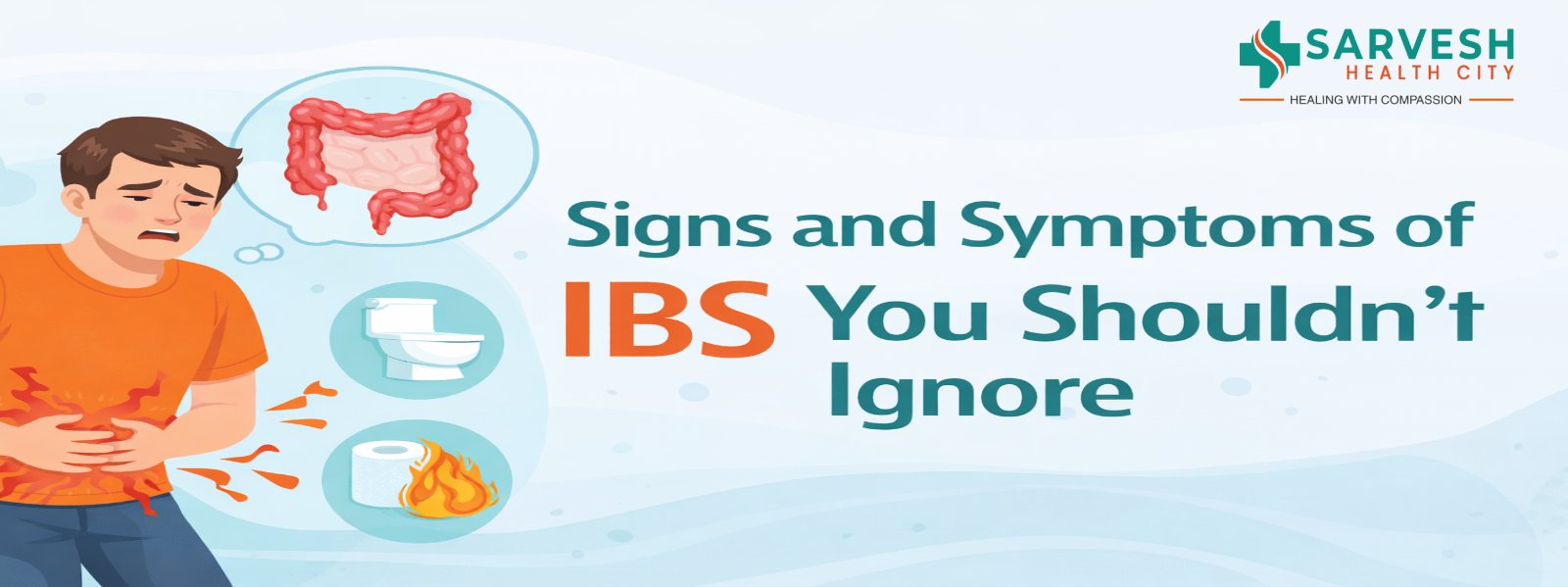
Irritable bowel syndrome, or IBS, is a common digestive disorder affecting millions of people around the world. Understanding the causes, symptoms, and treatment options for IBS can help patients improve their quality of life. Here, we’ll look at some of the causes, symptoms, and treatment options for IBS.
What is IBS?
Irritable bowel syndrome (IBS) is a common disorder that affects the stomach and intestines, commonly referred to as the digestive tract. Symptoms include cramping, stomach pain, bloating, gas, and either diarrhea or constipation. It is a chronic condition that requires long-term care. Few people with IBS have severe symptoms. Some people can manage their symptoms by adjusting their diet, lifestyle, and stress. Medication and counseling can help manage more severe symptoms. Contact Sarvesh Health City, the best gastroenterology hospital in Hisar. IBS does not alter gut tissue or raise the risk of colorectal cancer.
What the Research Says About Colonoscopy After 70
There is a general consensus among specialists regarding the age at which adults have to start colon cancer screening. However, experts still debate about the age when one should discontinue the procedure. According to a recent study of close to 10,000 seniors between the ages of 70 and 85, less than 1% had colorectal cancer. This suggests that regular surveillance may be of little help to older adults, particularly those who have already undergone several routine tests.
Guidelines for earlier stages have recommended the cessation of screenings around 75 years of age, but new research indicates that some healthy adults aged 75 to 85 can still gain the benefit.
Symptoms of IBS
The first step in identifying IBS is to understand its symptoms. The common signs are the following:
- Abdominal pain and cramps
- Bowel habits change
- Bloating and gas
- Mucus in the stool
- Fatigue and sleep disturbances.
Causes of IBS
The exact cause of IBS is unknown. Factors that seem to play a role include:
- Muscle contractions in the intestinal tract.
- Nervous system.
- A serious infection.
- Early life stress.
- Changes in gut microbiome.
Triggers
IBS symptoms can be caused by the following:
- Food: The role of food allergies or intolerance in IBS is not well understood. True food allergies rarely cause IBS. However, many people experience worsening IBS symptoms after eating or drinking certain foods or beverages. It includes wheat, dairy products, citrus fruits, beans, cabbage, milk, carbonated beverages, etc.
- Stress: Most people with IBS have worse or more frequent symptoms during times of high stress. However, while stress may exacerbate symptoms, it does not cause them.
Risk factors
Many people experience occasional IBS symptoms. It includes the following factors:
- Are still young: IBS is more common among people under the age of 50.
- Are female: IBS is more common in women. Estrogen therapy, whether before or after menopause, increases the risk of developing IBS.
- Have a family history of IBS: Genes, shared environmental factors within a family, or a mix of genes and environment may all play a role.
- Have anxiety, depression, or other mental health problems: A history of sexual, physical, or emotional abuse may be a risk factor.
Complications
Long-term constipation or diarrhea can result in hemorrhoids. In addition, IBS is linked to:
- Poor quality of life
- Mood disorders
Diagnoses
If medical care and additional information are needed, call Sarvesh Health City, the best gastroenterology hospital in Hisar. If you suspect that you have IBS.
- Examine your medical history.
- Performing a physical exam.
- To rule out other conditions, procedures such as stool analysis, blood tests, and colonoscopies are used.
- IBS is commonly diagnosed after all other disorders have been ruled out and your symptoms meet certain criteria.
Treatment for IBS
While there is no known cure for IBS, there are several treatments that can help control the symptoms and improve your quality of life:
- Dietary modifications
- Managing stress
- Drugs (antispasmodics, laxatives, or antidiarrheal medications).
- Probiotics
- Lifestyle changes (Regular exercise, hydration, and a consistent sleep schedule)
When to see a doctor
If you have a persistent change in bowel patterns or other IBS symptoms, consult a healthcare expert. They may indicate a more serious problem, such as colon cancer. More significant symptoms include weight loss, nighttime diarrhea, rectal bleeding, iron deficiency anemia, unexplained vomiting, and pain that does not go away with gas or stool.
Conclusion
IBS can be difficult to deal with, but you do not have to go it alone. The right method can help you control symptoms and improve your quality of life. Avoid allowing shame to prevent you from seeking treatment; your health is too important to ignore. Are you experiencing IBS symptoms? Schedule a consultation at Sarvesh Health City, the best gastroenterology hospital in Hisar.
FAQs
Q1. Is IBS a life-threatening condition?
Ans. IBS is a persistent functional digestive condition that is not life-threatening. It does not create permanent intestinal damage or increase the risk of colon cancer.
Q2: How does IBS differ from other digestive disorders?
Ans. IBS (unlike IBD and celiac disease) does not cause inflammation, ulcers, or structural damage to the digestive system. It is primarily diagnosed based on symptoms after ruling out other causes.
Q3. Is it possible to cure IBS completely?
Ans. There is no cure for IBS, although symptoms can be adequately managed. Most people are able to successfully manage IBS with dietary adjustments, stress management, medicines, and lifestyle modifications.
Q4. What foods commonly cause IBS symptoms?
Ans. Common trigger foods include dairy products, wheat, beans, cabbage, onions, carbonated beverages, fatty foods, and citrus fruits.
Q5. When should someone suffering from IBS seek immediate medical attention?
Ans. Seek medical assistance if you have unexplained weight loss, rectal bleeding, nocturnal diarrhea, chronic vomiting, iron deficiency anemia, or severe abdominal pain.
Media Enquiries
- Sarvesh Health City
- Sarvesh Health City Site No. 1, Sector 14, Hisar – 125001 (Haryana)
- +91 6901 626262
- +91 6901 636363
Social Media
Healthcare at your fingertips



GASTROENTEROLOGIST