- Specialities
- Center of Excellence
- Specialitites
- ANAESTHESIA & INTENSIVIST
- BREAST SURGERY
- CRITICAL CARE
- DERMATOLOGY
- DIALYSIS
- DENTISTRY & MAXILLOFACIAL SURGERY
- ENT
- INTERNAL MEDICINE
- INTERVENTIONAL RADIOLOGY
- LAPAROSCOPIC & GENERAL SURGERY
- OBSTETRICS & GYNAECOLOGY & COSMETOLOGY
- OPHTHALMOLOGY (EYE CARE)
- PEDIATRIC CARE & NEONATOLOGY
- PHYSIOTHERAPY & REHABILITATION
- Services
- AMBULANCE SERVICES (24/7)
- BONE MARROW TRANSPLANT
- BLOOD CENTER (OPEN 24/7)
- EMERGENCY SERVICES (AVAILABLE 24/7)
- LAB AND PATHOLOGY (OPEN 24/7)
- NEONATAL INTENSIVE CARE UNIT (NICU) & PEDIATRIC INTENSIVE CARE UNIT (PICU)
- NUTRITION & DIETETICS
- PHYSIOTHERAPY & REHABILITATION SERVICES
- PREVENTIVE HEALTH CHECKUPS
- PHARMACY (OPEN 24/7)
- PET/CT SCAN
- RADIOLOGY & IMAGING SERVICES
- Blogs
- Health Library
- Our Empanelment
- About Sarvesh
- Specialities
- Center of Excellence
- Specialitites
- ANAESTHESIA & INTENSIVIST
- BREAST SURGERY
- CRITICAL CARE
- DERMATOLOGY
- DIALYSIS
- DENTISTRY & MAXILLOFACIAL SURGERY
- ENT
- INTERNAL MEDICINE
- INTERVENTIONAL RADIOLOGY
- LAPAROSCOPIC & GENERAL SURGERY
- OBSTETRICS & GYNAECOLOGY & COSMETOLOGY
- OPHTHALMOLOGY (EYE CARE)
- PEDIATRIC CARE & NEONATOLOGY
- PHYSIOTHERAPY & REHABILITATION
- Services
- AMBULANCE SERVICES (24/7)
- BONE MARROW TRANSPLANT
- BLOOD CENTER (OPEN 24/7)
- EMERGENCY SERVICES (AVAILABLE 24/7)
- LAB AND PATHOLOGY (OPEN 24/7)
- NEONATAL INTENSIVE CARE UNIT (NICU) & PEDIATRIC INTENSIVE CARE UNIT (PICU)
- NUTRITION & DIETETICS
- PHYSIOTHERAPY & REHABILITATION SERVICES
- PREVENTIVE HEALTH CHECKUPS
- PHARMACY (OPEN 24/7)
- PET/CT SCAN
- RADIOLOGY & IMAGING SERVICES
- Blogs
- Health Library
- Our Empanelment
- About Sarvesh
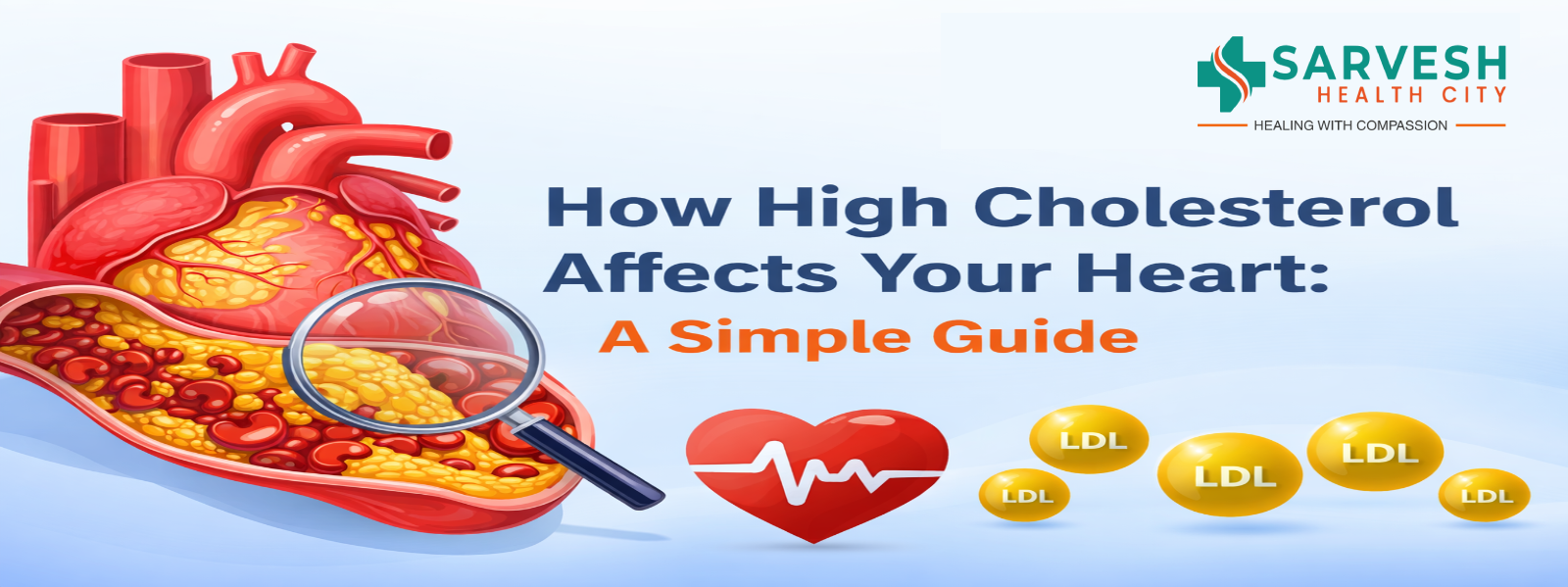
High cholesterol is a silent danger to heart health because it rarely shows any symptoms in the initial stages. Meanwhile, people do not realize that the cholesterol they have accumulated is slowly harming their blood vessels that eventually, cholesterol imbalance becomes one of the major causes of heart diseases. This alarming increase in heart diseases in India, has made it critical to find the connection between cholesterol and the heart.
This article describes what cholesterol is, how a high cholesterol level can cause damage to the heart, and the importance of early detection and cardiac treatment like that offered by the best cardiologist in Hisar at Sarvesh Health City.
What Is Cholesterol and Why the Body Needs It
Cholesterol is a waxy fat-like material present in the blood and mainly produced by the liver. It helps to carry out several functions such as forming new cells, producing hormones, enabling the skin to make vitamin D, and digesting food. Cholesterol itself is not a bad substance, on the contrary, the human body relies on it to function normally.
The trouble starts when the levels of cholesterol surpass the healthy range, especially if the excess cholesterol remains in the blood instead of being used or removed correctly. At that point, the surplus can slowly build up in the arteries, leading to the development of heart disease.
Types of Cholesterol and Their Role in Heart Health
Cholesterol binds to proteins in the blood and these complexes are called lipoproteins. Physicians mainly care about three substances:
- LDL (Low-Density Lipoprotein): LDL is often referred to as “bad cholesterol” and its function is to carry cholesterol to the tissues. In the case of high amounts, it gets deposited inside the artery walls leading to plaque buildup.
- HDL (High-Density Lipoprotein): As “good cholesterol,” HDL works in the opposite way. It extracts the surplus cholesterol out of the blood and transports it back to the liver for removal.
- Triglycerides: These are a type of fat that is used for energy storage. High levels of triglycerides, particularly when LDL are high and HDL are low, increases the risk of heart diseases.
How High Cholesterol Damages the Heart and Blood Vessels
Healthcare professionals generally suggest that total cholesterol should be maintained under 200 mg/dL. Levels of LDL above 160 mg/dL are viewed as a serious risk factor for heart disease. Concerns are raised when HDL is below 40 mg/dL, but levels over 60 mg/dL give protective effects. If triglycerides are higher than 200 mg/dL, this may call for medical treatment, the decision being based on the overall risk.
When LDL cholesterol remains elevated over a long period it results in the formation of fatty deposits called plaques in the arteries. This disease (atherosclerosis) damages the arteries by making the walls of the arteries thick and less flexible due to which the blood flow gets restricted to reach the heart. The less blood means less nutrients and less oxygen to the heart.
Eventually, this may cause coronary artery disease, chest pain or even a heart attack. When plaques burst, blood clots may be produced which will stop the heart’s blood supply. At the same time, stroke is at risk if there are blockages in arteries that feed the brain. Cholesterol at high levels also makes the heart work more forcefully, causing high blood pressure and heart damage over time.
Causes and Risk Factors of High Cholesterol
High cholesterol is mainly the result of lifestyle choices, the genetic influence, and the natural metabolic changes with age. Since in most cases, this disease develops without any signs, the first step in avoiding heart disease should be timely testing and, if necessary, advanced cardiac examination. The common risk factors and causes of high cholesterol include:
- Eating fried, processed, and high-fat foods regularly
- No physical and regular exercise routine
- Being overweight or obese
- Smoking and drinking alcohol excessively
- Having diabetes, high blood pressure, or any other metabolic disorder
- Inheriting genes from parents who have had high cholesterol or heart diseases at an early age
- Getting older, which also decreases the body’s capacity to eliminate LDL cholesterol
How Doctors Diagnose High Cholesterol
Since high cholesterol rarely causes symptoms in the early stages, the diagnosis is usually made through medical testing rather than physical examination. Routine screening can uncover abnormal cholesterol levels before they cause severe heart problems. The most common cholesterol tests include:
- Lipid profile blood test to determine total cholesterol, LDL, HDL, and triglycerides
- Testing regularly for adults, particularly those with risk factors or a family history
- Coronary angiography, which is an examination advised if there are symptoms like chest pain, breathing difficulty or abnormal results of cardiac tests that indicate the presence of narrowed or blocked coronary arteries.
The angiography produces very clear images of the blood vessels in the heart and this helps cardiologists in making an accurate assessment of blockages and deciding on the best treatment plan.
Managing and Preventing High Cholesterol
The ultimate goal of cholesterol management is to protect the heart over time. Eating a healthy, balanced diet that includes lots of fruits, vegetables, whole grains, and healthy fats is one of the main ways to positively improve lipid levels. Exercise also increases the good cholesterol or HDL as well as the overall heart condition. In addition, keeping a normal weight, quitting smoking, and reducing alcohol intake are all beneficial in minimizing the risk of cardiovascular disease.
If it happens that making changes to the lifestyle is not enough, the best cardiologist in Hisar might consider prescribing cholesterol-lowering drugs such as statins.
Final Thoughts
High cholesterol management goes beyond just reducing your blood test numbers, it is about protecting the heart for a longer term. It is about sustaining your heart health over time. Finding out early, receiving lifestyle advice, and undergoing prompt treatment can significantly help in averting heart attack or stroke due to cholesterol issues.
Sarvesh Health City has a complete range of cardiac and endocrine services to take care of cholesterol problems from the initial to the most severe stages. Equipped with state-of-the-art diagnostics, angiography facilities, and the highly skilled cardiology team of the best cardiologist in Hisar, the doctors deliver a tailor-made patient’s care plan that emphasizes on prevention, accuracy, and a healthy heart for the long run.
FAQs
Q1. Can we reverse high cholesterol without medication?
Ans. Often, simple and natural method changes such as improving your diet, getting more physical activity, and losing weight will most of the time bring down your cholesterol level greatly, particularly if you act quickly after the first detection.
Q2. When should cholesterol levels be checked?
Ans. As a rule, adults with no health issues are normally advised to check every four to six years, however, if there are risk factors present, the frequency of checks may be higher.
Q3. Do all patients with high cholesterol require angiography?
Ans. To everyone, angiography is not a standard procedure and is only the case when there are symptoms or test results indicating blockages in the coronary arteries.
Q4. Does stress affect cholesterol levels?
Ans. Long-term and unresolved stress through unhealthy lifestyles and hormone imbalance may result in a rise in cholesterol levels.
Media Enquiries
- Sarvesh Health City
- Sarvesh Health City Site No. 1, Sector 14, Hisar – 125001 (Haryana)
- +91 6901 626262
- +91 6901 636363
Social Media
Healthcare at your fingertips


CARDIOLOGIST
Top-rated heart expert! Book Dr. Abhishek Gupta, leading cardiologist, for trusted care, advanced treatments & second opinions. Your heart deserves the best.