Understanding Recovery After Hernia Surgery
The healing from hernia surgery doesn’t start right away. The body starts repairing the operative site, mild pains, swelling, and feeling tired are the usual symptoms during the first days. Since the incisions are smaller in laparoscopic surgery, usually the recovery is faster while open surgery would probably take a bit longer as there is a larger wound area. However, the time of healing not only depends on your age, and overall health, but also on the type of hernia. Keep in mind that recovery is a step-by-step process, you cannot get back to full activity immediately. Time for healing plus slight activity is the best condition for a safe and steady return to normal life.
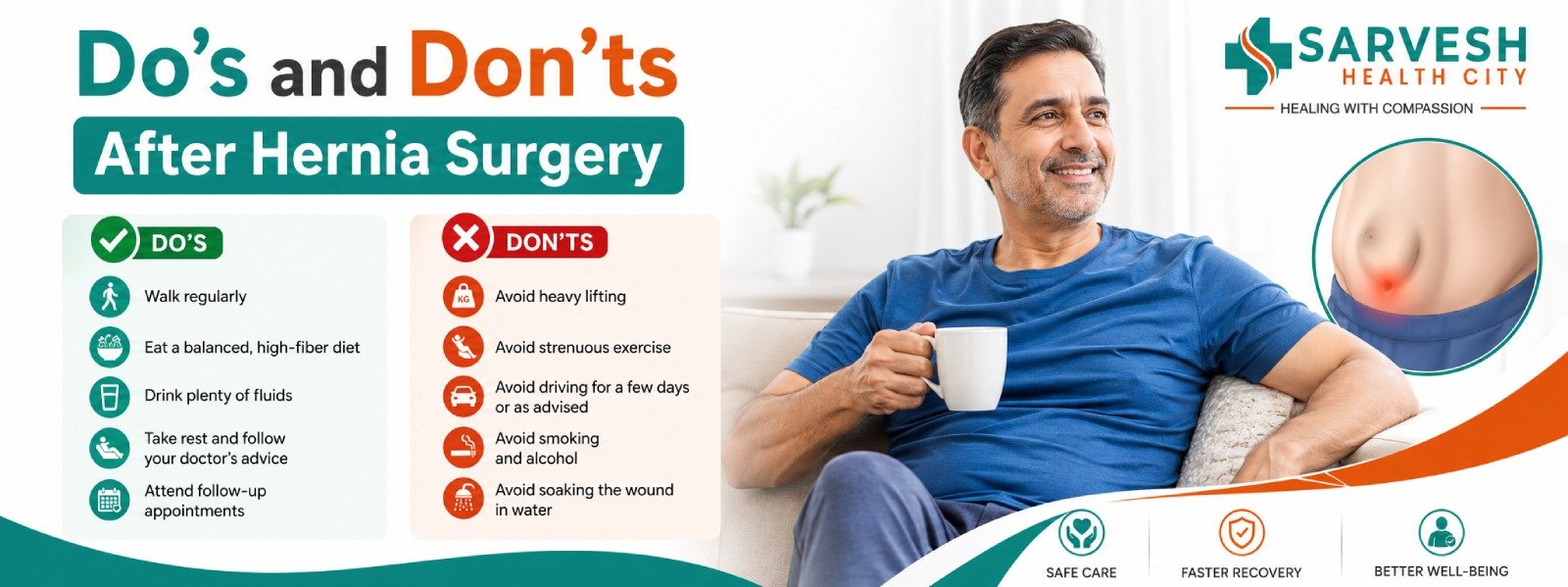
Do’s and Don’ts for a Smooth & Safe Recovery
Recovering from hernia surgery doesn’t mean just having a good rest. In fact, every little thing you do through the day, from your eating habits to your movements, can turn out to be quite effective in the end of how your body heals.
1. Diet & Nutrition
Your dietary intake has a great say in how fast your wound heals and your level of comfort after the operation. Besides, it is the diet that helps in tissue repair and at the same time, causes unnecessary abdominal strain, if you make the wrong choice.
What to Do
- You can rebuild your tissues and support muscle healing by incorporating a variety of animal and plant-based protein sources such as eggs, milk and milk derivatives, pulses and lean meat.
- You should also pay attention to eating foods high in dietary fiber such as fruits, vegetables, and whole grains as they help to prevent constipation which can increase pressure on the surgical site.
- Drinking plenty of water daily to keep yourself hydrated also help in improving the functioning of your body systems, but it also facilitates digestion and recovery.
What to Avoid
- It is best to stay away from foods that produce gas and cause abdominal bloating and discomfort.
- Processed and junk foods should be avoided or limited as they raise the level of inflammation and slow down the healing process.
- While you are on medications, it is best not to drink alcohol as it can interfere with help recovery and healing.
2. Physical Activity & Exercise
After surgery, an active lifestyle is quite essential, but you need to be very cautious. The adequate balance between motion and rest is the key to uninterrupted healing.
What to Do
- First, introduce light walking at the early stage, as it not only facilitates blood circulation but also significantly decreases the likelihood of certain post-surgical complications, such as blood clots.
- Once your body is more comfortable and strong, progressively increase your physical activity levels.
- Comply with your doctor’s recovery schedule so that you can safely resume normal activities.
What to Avoid
- Refrain from lifting heavy weights for a minimum period of 4, 6 weeks, as it might challenge and potentially harm the surgical repair area.
- Do not engage in vigorous physical activities, including those workouts in the gym or running.
- Frequent or very intense sudden movements that might cause your abdominal muscles to overwork should be strictly avoided.
3. Daily Habits & Wound Care
Proper care of your surgical site and daily habits can greatly reduce the risk of infection and other problems.
What to Do
- In order to promote the healing of your wound, keep the incision clean and dry, following your doctor’s instructions.
- Choose loose and comfy clothing to avoid damaging the surgery area
- Take your medicine correctly and also visit the best general surgeon in Hisar for the proper consultation on a regular basis.
What to Avoid
- Swimming or bathing should be avoided right after the surgery since it can lead a wound to get infected.
- Whatever clothing you wear, make sure it’s not a tight one that the wound will be rubbed against or pressed by.
- To be able to see the progress of healing, check-ups are necessary and skipping them should be avoided.
4. Lifestyle & Recovery Behavior
Your day-to-day habits and choices affect the success of your recovery, but also prevents the likelihood of hernia coming back.
Things You Should Do
- Get enough sleep since your body needs time to repair and strengthen itself.
- Continue doing simple exercises because staying in bed all the time can hinder your recovery and cause other problems.
- Keep your body weight in a healthy range so that there is less strain on the muscles of your abdomen.
Things You Should Not Do
- Stay away from smoking if you want to heal faster and have stronger tissues.
- Do not dismiss unusual symptoms, even if they are minor.
- Do not stop moving completely because movement is necessary to recover well.
Final Thoughts
Getting back to normal after hernia surgery can be a hassle, but you can manage it with the right precautions. If you keep a sound lifestyle, stay moderately active, and watch carefully for the symptoms that you shouldn’t ignore, then your healing will be relatively flawless. Since a patient’s recovery is a very personal matter, the best thing to do is to take the doctor’s customized instructions as your guidelines. The best general surgeon in Hisar of Sarvesh Health City takes care of your health and guides you towards a safe recovery.