- Specialities
- Center of Excellence
- Specialitites
- ANAESTHESIA & INTENSIVIST
- BREAST SURGERY
- CRITICAL CARE
- DERMATOLOGY
- DIALYSIS
- DENTISTRY & MAXILLOFACIAL SURGERY
- ENT
- INTERNAL MEDICINE
- INTERVENTIONAL RADIOLOGY
- LAPAROSCOPIC & GENERAL SURGERY
- OBSTETRICS & GYNAECOLOGY & COSMETOLOGY
- OPHTHALMOLOGY (EYE CARE)
- PEDIATRIC CARE & NEONATOLOGY
- PHYSIOTHERAPY & REHABILITATION
- Services
- AMBULANCE SERVICES (24/7)
- BONE MARROW TRANSPLANT
- BLOOD CENTER (OPEN 24/7)
- EMERGENCY SERVICES (AVAILABLE 24/7)
- LAB AND PATHOLOGY (OPEN 24/7)
- NEONATAL INTENSIVE CARE UNIT (NICU) & PEDIATRIC INTENSIVE CARE UNIT (PICU)
- NUTRITION & DIETETICS
- PHYSIOTHERAPY & REHABILITATION SERVICES
- PREVENTIVE HEALTH CHECKUPS
- PHARMACY (OPEN 24/7)
- PET/CT SCAN
- RADIOLOGY & IMAGING SERVICES
- Blogs
- Health Library
- Our Empanelment
- About Sarvesh
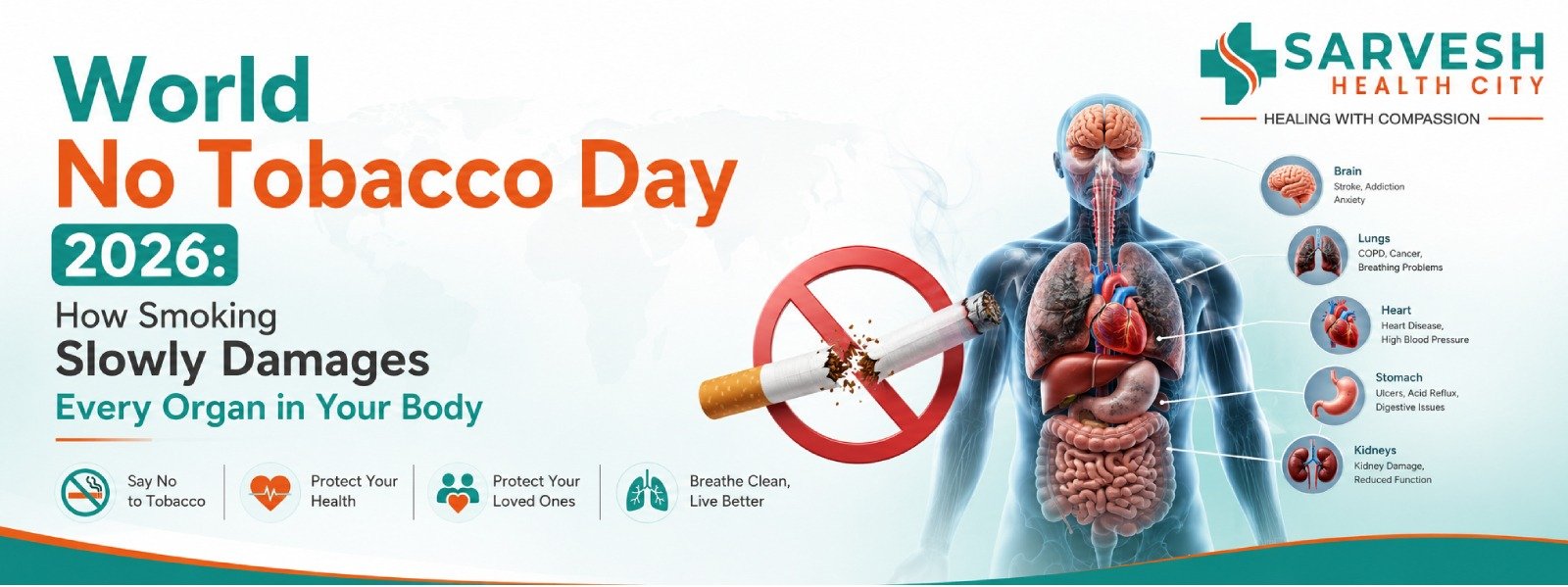
Every year on 31st May, millions of people around the world celebrate World No Tobacco Day 2026 to raise awareness about the dangers of tobacco and to encourage people to stop smoking. While most people know that smoking is bad for your lungs, few have a true understanding of how tobacco affects almost every organ in the human body.
Smoking is more than a bad habit. It is a slow poison, slowly damaging the heart, brain, lungs, kidneys, liver, digestive system, skin, bones, even mental health. Studies in global health have pointed to tobacco use as a leading cause of preventable deaths worldwide. Cigarettes and other tobacco products contain substances that damage the body from within, and over time, cause deadly illnesses such as cancer, stroke, heart disease and respiratory problems.
Sarvesh Health City’s healthcare specialists work tirelessly to create awareness about tobacco-related diseases and promote preventive healthcare. Best Medical Oncology Hospital In Hisar ensures to create awareness of early diagnosis and cancer prevention, to keep communities safe from serious diseases caused by smoking.