- Specialities
- Center of Excellence
- Specialitites
- ANAESTHESIA & INTENSIVIST
- BREAST SURGERY
- CRITICAL CARE
- DERMATOLOGY
- DIALYSIS
- DENTISTRY & MAXILLOFACIAL SURGERY
- ENT
- INTERNAL MEDICINE
- INTERVENTIONAL RADIOLOGY
- LAPAROSCOPIC & GENERAL SURGERY
- OBSTETRICS & GYNAECOLOGY & COSMETOLOGY
- OPHTHALMOLOGY (EYE CARE)
- PEDIATRIC CARE & NEONATOLOGY
- PHYSIOTHERAPY & REHABILITATION
- Services
- AMBULANCE SERVICES (24/7)
- BONE MARROW TRANSPLANT
- BLOOD CENTER (OPEN 24/7)
- EMERGENCY SERVICES (AVAILABLE 24/7)
- LAB AND PATHOLOGY (OPEN 24/7)
- NEONATAL INTENSIVE CARE UNIT (NICU) & PEDIATRIC INTENSIVE CARE UNIT (PICU)
- NUTRITION & DIETETICS
- PHYSIOTHERAPY & REHABILITATION SERVICES
- PREVENTIVE HEALTH CHECKUPS
- PHARMACY (OPEN 24/7)
- PET/CT SCAN
- RADIOLOGY & IMAGING SERVICES
- Blogs
- Health Library
- Our Empanelment
- About Sarvesh
- Specialities
- Center of Excellence
- Specialitites
- ANAESTHESIA & INTENSIVIST
- BREAST SURGERY
- CRITICAL CARE
- DERMATOLOGY
- DIALYSIS
- DENTISTRY & MAXILLOFACIAL SURGERY
- ENT
- INTERNAL MEDICINE
- INTERVENTIONAL RADIOLOGY
- LAPAROSCOPIC & GENERAL SURGERY
- OBSTETRICS & GYNAECOLOGY & COSMETOLOGY
- OPHTHALMOLOGY (EYE CARE)
- PEDIATRIC CARE & NEONATOLOGY
- PHYSIOTHERAPY & REHABILITATION
- Services
- AMBULANCE SERVICES (24/7)
- BONE MARROW TRANSPLANT
- BLOOD CENTER (OPEN 24/7)
- EMERGENCY SERVICES (AVAILABLE 24/7)
- LAB AND PATHOLOGY (OPEN 24/7)
- NEONATAL INTENSIVE CARE UNIT (NICU) & PEDIATRIC INTENSIVE CARE UNIT (PICU)
- NUTRITION & DIETETICS
- PHYSIOTHERAPY & REHABILITATION SERVICES
- PREVENTIVE HEALTH CHECKUPS
- PHARMACY (OPEN 24/7)
- PET/CT SCAN
- RADIOLOGY & IMAGING SERVICES
- Blogs
- Health Library
- Our Empanelment
- About Sarvesh
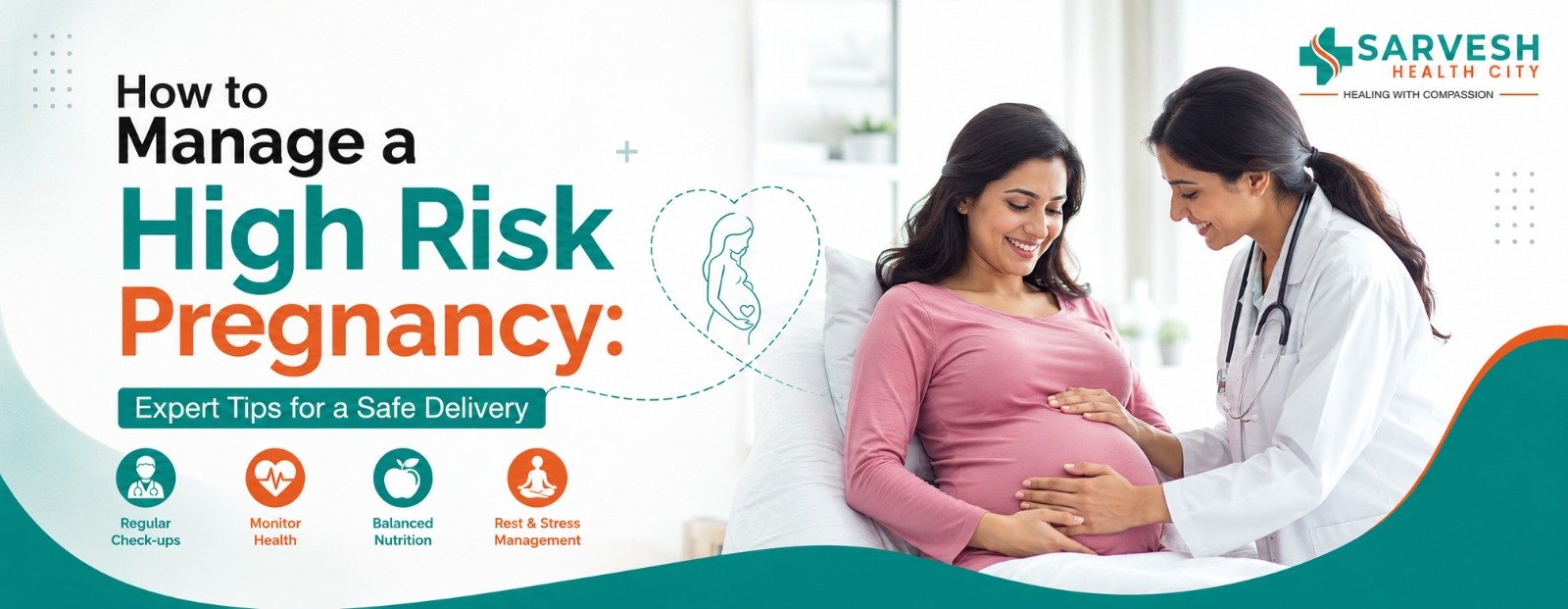
Having a high-risk pregnancy do not automatically mean that you will experience any complications. It just means that the pregnancy will need to be closely monitored and that both the mother and the baby will have to be looked after with specialized care. Most women with high-risk pregnancies, however, with the help of timely medical interventions, prenatal care and with an expert gynecologist, have safe deliveries and healthy babies.
The team at Sarvesh Health City uses high-tech diagnostics, conducts frequent fetal monitoring, and maternity care to deal with high-risk pregnancies to meet the specific needs of each mother. The Best Gynaecologist in Hisar through early risk detection, medical treatment at the right time and a safe delivery can really ensure the safe and delivery of a healthy baby.
What Is a High-Risk Pregnancy?
A pregnancy is considered as high-risk if certain health problems, pregnancy complications, or maternal factors increases the health issues during pregnancy, labor, or delivery.
Being labeled as high-risk does not imply that problems are certain. On the contrary, it allows health practitioners to set up a more individualized schedule of check-ups and therapy aimed at minimizing risks and ensuring positive results.
Most women who undergo high-risk pregnancies with appropriate medical attention succeed in bringing their pregnancies to term and giving birth to healthy children.
What Factors Can Make a Pregnancy High-Risk?
There are multiple contributing factors that escalates the risk in pregnancy and make it highly risky:
1. Pre-Existing Medical Conditions
Women who suffer from certain health problems prior to pregnancy may be needed to have more regular checkups during pregnancy.
Such conditions include:
- Diabetes
- Hypertension
- Thyroid disorders
- Kidney problems
- Heart-related problems
- Autoimmune conditions
2. Pregnancy-Related Complications
At times, problems arise suddenly after pregnancy and they must be closely watched.
Typical cases are:
- Gestational diabetes
- Preeclampsia
- Placenta previa
- Fetal growth restriction
- Excess or lack of amniotic fluid
3. Maternal Age and Multiple Pregnancy
A pregnancy of a woman below 17 years or above 35 years of age may require more frequent tests. On the other hand, women who are pregnant with twins, triplets, or higher-order multiples are usually considered high-risk because of the greater possibility of preterm labor and other problems.
4. Previous Pregnancy Complications
If a woman has had cases of miscarriage, preterm delivery, stillbirth, or pregnancy-induced hypertension, she may have a more requirement for special prenatal care during pregnancies.
How Is a High-Risk Pregnancy Managed?
Managing a high-risk pregnancy starts with providing continuous care, regular monitoring by a gynecologist & early diagnosis to determine the most suitable treatment.
Below, we have explained the management ways more clearly:
1. High-risk pregnancy means more frequent visits to the doctor
Women who have high-risk pregnancy usually need more prenatal visits than those who have low-risk pregnancies. These visits help doctors to closely monitor the mother’s and fetus, as well as to identify any changes in the developing fetus before any complications.
2. The Mother Needs Advanced Fetal Monitoring
To manage high-risk pregnancy, doctors suggest advanced and extra tests to keep a check on fetus growth and oxygen supply, such as detailed ultrasound examinations, Non-Stress Tests (NST), Biophysical Profile (BPP), and Doppler studies, if needed.
3. It Needs Care From a Multidisciplinary Team
Pregnancy care is likely to involve multiple specialists if pregnancy complications arises.
There may be different specialist involved in these cases, such as:
- Obstetricians and gynecologists
- Maternal-fetal medicine specialists
- Endocrinologists
- Cardiologists
- Nutritionists
- Mental health professionals
What Lifestyle Changes Support a Healthy High-Risk Pregnancy?
While medical interventions are indispensable, making the right lifestyle decisions is also a significant factor in maintaining the health of a mother and a baby.
- Follow a Healthy Diet for Pregnancy: A healthy nutritional diet is a supporting element during pregnancy for developing fetus and health of mother. Meals rich in colorful fruits and vegetables, high-fiber cereals, and rich proteins sources are must include nutrition. Also, don’t forget to drink plenty of fluids. A woman affected by diabetes in pregnancy may have to follow a special meal plan that helps keep her blood sugar levels in check.
- Stay Physically Active When Approved: It is suggested that women with high-risk pregnancy carry out activities such as brisk walking or yoga after consulting the doctor. Apart from getting the blood running, such mild forms of exercise will help you relax, and definitely raise your general fitness level.
- Prioritize Rest and Stress Relief Exercise: It is totally normal to be worried about one’s gestation, especially when one is under extra medical check-ups. However, you can feel stress free through deep breathing, meditation, prenatal yoga, and with your family members’ love.
Can Women With High-Risk Pregnancies Have Normal Deliveries?
Absolutely! Many women with high-risk pregnancies have normal deliveries. However, the safe way of delivery varies in each cases depending upon mother’s and baby’s health condition. Sometimes the doctor advises a C-section in advance for certain conditions like placenta previa, severe preeclampsia, or fetal distress.
Ultimately, the choice is made with the goal of ensuring maximum safety for both the mother and the baby.
When Should You Contact Your Doctor Immediately?
These are few signs that you should monitor and call for help right away:
- Bleeding from the vagina
- Unbearable pain in the abdomen
- Swelling of face or hands which happens very fast
- Headache which is very intense
- Vision that is not clear
- Fetal movements that are less frequent or missing
- Breaking of waters or amniotic fluid
- Uterine contractions that do not stop and occur before the due date
- If you get checked out quickly it might stop bad things happening and you could have a better result.
If you get help quickly it might stop serious complications from worsening and you could have a better result.
Final Thoughts
Handling a high-risk pregnancy requires the employment of highly qualified medical professionals, state-of-the-art diagnostic tools, and uninterrupted maternal-fetal monitoring.
Sarvesh Health City is dedicated to providing quality comprehensive care for pregnant women. They are supported by the latest diagnostic facilities, treatment plans that are tailored to the individual’s requirements and advice by knowledgeable professionals at each step of the way. “Their patient-first philosophy is directed at safeguarding both mother and child through the different stages from prenatal care to delivery, ” says the hospital.
Women in need of the best gynecologist in Hisar can benefit from having their pregnancies carefully examined, appropriately treated, and receiving gentle maternity care, all with the aim of promoting successful pregnancy results.
Frequently Asked Questions
Q1. What causes leads to high-risk pregnancy?
Ans. The most common causes are health problems like diabetes, high blood pressure, sometimes getting pregnant at an older age, and problems such as preeclampsia that leads to high-risk pregnancy.
Q2. Is it possible to have a healthy baby through a high-risk pregnancy?
Ans. Absolutely, with adequate care, proper supervision, and timely intervention, high-risk pregnancies can also result in a healthy delivery of a baby.
Q3. Does a high-risk pregnancy always mandate bed rest?
Ans. Not in all cases. In fact, currently, doctors generally recommend exercise and activity that are personally suited to the patient rather than complete bed rest. The latter is usually given only when the doctor thinks it is highly necessary.
Q4. Can gestational diabetes make a pregnancy high-risk?
Ans. Certainly. Diabetes during pregnancy is a factor that raises the possibility of problems; however, it is mostly kept under control through the combination of diet, exercise, monitoring, and medication if necessary.
Q5. What is the correct time to visit a gynecologist during pregnancy?
Ans. Women should seek out gynecologist consultation as soon as pregnancy is confirmed and notify right away if these symptoms occur such as bleeding, severe headaches, very little baby movement, or sudden swelling.
Media Enquiries
- Sarvesh Health City
- Sarvesh Health City Site No. 1, Sector 14, Hisar – 125001 (Haryana)
- +91 6901 626262
- +91 6901 636363
Social Media
Healthcare at your fingertips


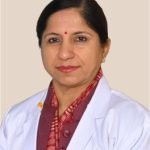
CO-CHAIRMAN & SR. OBSTETRICIAN AND GYNAECOLOGIST
Meet Dr. Sarita Kalra, Co-Chairman & Sr. Gynaecologist, trusted by thousands for expert care in women’s health. Book your appointment today!