- Specialities
- Center of Excellence
- Specialitites
- ANAESTHESIA & INTENSIVIST
- BREAST SURGERY
- CRITICAL CARE
- DERMATOLOGY
- DIALYSIS
- DENTISTRY & MAXILLOFACIAL SURGERY
- ENT
- INTERNAL MEDICINE
- INTERVENTIONAL RADIOLOGY
- LAPAROSCOPIC & GENERAL SURGERY
- OBSTETRICS & GYNAECOLOGY & COSMETOLOGY
- OPHTHALMOLOGY (EYE CARE)
- PEDIATRIC CARE & NEONATOLOGY
- PHYSIOTHERAPY & REHABILITATION
- Services
- AMBULANCE SERVICES (24/7)
- BONE MARROW TRANSPLANT
- BLOOD CENTER (OPEN 24/7)
- EMERGENCY SERVICES (AVAILABLE 24/7)
- LAB AND PATHOLOGY (OPEN 24/7)
- NEONATAL INTENSIVE CARE UNIT (NICU) & PEDIATRIC INTENSIVE CARE UNIT (PICU)
- NUTRITION & DIETETICS
- PHYSIOTHERAPY & REHABILITATION SERVICES
- PREVENTIVE HEALTH CHECKUPS
- PHARMACY (OPEN 24/7)
- PET/CT SCAN
- RADIOLOGY & IMAGING SERVICES
- Blogs
- Health Library
- Our Empanelment
- About Sarvesh
- Specialities
- Center of Excellence
- Specialitites
- ANAESTHESIA & INTENSIVIST
- BREAST SURGERY
- CRITICAL CARE
- DERMATOLOGY
- DIALYSIS
- DENTISTRY & MAXILLOFACIAL SURGERY
- ENT
- INTERNAL MEDICINE
- INTERVENTIONAL RADIOLOGY
- LAPAROSCOPIC & GENERAL SURGERY
- OBSTETRICS & GYNAECOLOGY & COSMETOLOGY
- OPHTHALMOLOGY (EYE CARE)
- PEDIATRIC CARE & NEONATOLOGY
- PHYSIOTHERAPY & REHABILITATION
- Services
- AMBULANCE SERVICES (24/7)
- BONE MARROW TRANSPLANT
- BLOOD CENTER (OPEN 24/7)
- EMERGENCY SERVICES (AVAILABLE 24/7)
- LAB AND PATHOLOGY (OPEN 24/7)
- NEONATAL INTENSIVE CARE UNIT (NICU) & PEDIATRIC INTENSIVE CARE UNIT (PICU)
- NUTRITION & DIETETICS
- PHYSIOTHERAPY & REHABILITATION SERVICES
- PREVENTIVE HEALTH CHECKUPS
- PHARMACY (OPEN 24/7)
- PET/CT SCAN
- RADIOLOGY & IMAGING SERVICES
- Blogs
- Health Library
- Our Empanelment
- About Sarvesh
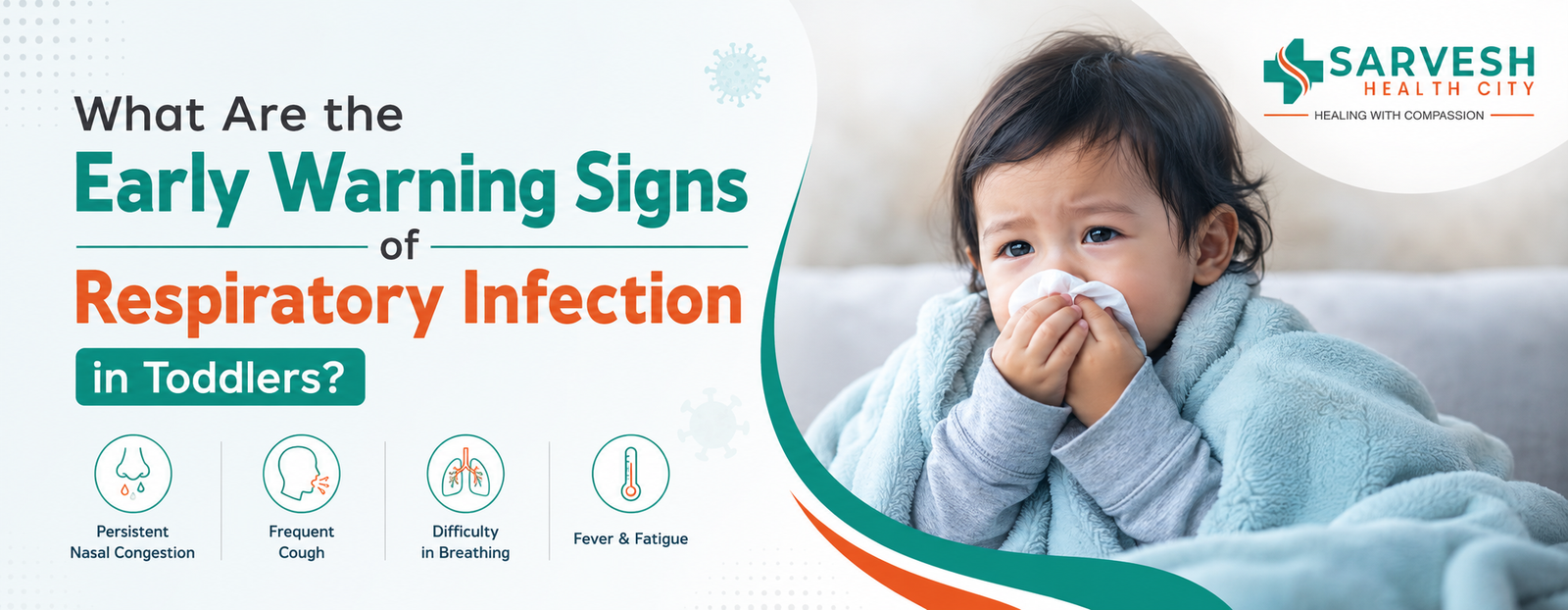
Respiratory infections are one of the main reasons toddlers are brought to the doctor. Whereas most infections like the common cold get better with general remedies, few illnesses can turn into a dangerous condition like bronchiolitis or pneumonia if the early warning signs of respiratory infection in toddlers are not identified and treated early.
Detecting a toddler’s illness early through their breathing, body language, and feeding behavior is important for parents, especially as little ones can not explain how they feel.
At Sarvesh Health City, the pediatricians advise parents to pay close attention to the first indications of a respiratory infection in their child. The early diagnosis can significantly reduce the potential complications of this disease.
Seeking professional help at the best pediatric hospital In hisar can help your child with swift recovery while reducing the chance of severe illness.
Quick Facts About Respiratory Infections in Toddlers
- What is the common cause of respiratory infections?
It is viruses (RSV, influenza, common cold viruses) and bacteria. - Who is the most affected age group?
It is mostly children under 5 years, especially toddlers. - What are the early symptoms?
Runny nose, cough, fever, and reduced appetite. - Can respiratory infections be prevented?
Many can be reduced through vaccination, hygiene, and avoiding smoke exposure.
Understanding What Is a Respiratory Infection
Respiratory infection is an illness of the airways, lungs or the passage to the lungs that can also affect the ability to breathe. It can either affect the upper respiratory tract (that is, nose and throat) or the lower respiratory tract (lungs and bronchi) or both.
Respiratory infections common in the toddler stage are:
- Common cold
- Flu (Influenza)
- Bronchiolitis
- Pneumonia
- Croup
Generally, most of the infections result from the attack by viruses, but sometimes there may also be a bacterial infection that is treatable by the use of medications.
Why Are Toddlers More Vulnerable to Respiratory Infections?
Toddlers are more likely to get sick because of their still-developing immune systems which are really not ready for fighting viruses and other germs. They may be in contact with viruses constantly as they are mostly spending their time in daycare or schools, parks, playgrounds and other such social settings.
In addition, factors that contribute to making the environment more susceptible to viruses such as premature birth, smoking, bad nutrition, seasonal virus, and the presence of asthma or another chronic lung disease might be the causes.
With the early detection of the disease it is possible to intervene and thus avoid an infection from getting serious.
What Are the Early Warning Signs of a Respiratory Infection?
Recognizing warning signs and taking your child for a check-up before complications begins is the best and only way a parent can save their children from respiratory disease getting severe.
So let’s have a look at those warning signs:
1. Persistent Cough
Cough is usually one of the very first signs of a respiratory infection.
At the beginning, it may be a dry one, but when the infection is getting worse, it can turn into a productive cough or because more frequent, particularly during the night.
Call your pediatrician if the cough lasts for days on end or even gets worse over time.
2. Fever
When your child has a common viral infection, it may be natural to have a low to moderate fever as the immune system fights off the illness.
If your child is continuously having a fever then it’s important that this issue is addressed. The same applies if the fever comes back frequently or if the temperature is accompanied by breathing problems.
3. Runny or Stuffy Nose
Stuffy nose is usually first symptom of any infection.
Even though it might be insignificant at the beginning, increased congestion can result in difficulty in feeding, getting asleep, and breathing comfortably in babies.
4. Reduced Appetite
It is quite common for children with respiratory infections to eat less since nasal obstruction and sore throat result in a great discomfort while taking the food.
Paying attention to your child’s fluid intake is also necessary as dehydration is a quick problem to arise in young kids.
When Should Parents Be Concerned?
Below are some indications that might show a respiratory infection is affecting the lungs or making breathing hard for the toddler, it is a cause for concern, such as:
1. Fast or Difficult Breathing
Fast breathing is one of the most important signs that the child is suffering from a very serious respiratory infection.
In such cases where the child’s breathing is faster than normal or they seem to be working hard at breathing, you should consult a doctor straight away.
2. Chest Retractions
Chest retractions are a condition where the skin gets pulled in between the ribs and also below the rib cage and around the neck area during breathing.
A child who has chest retractions is using extra muscles to breathe. Therefore, it is imperative that a doctor should be consulted.
3. Wheezing or Noisy Breathing
Wheezing or breathing that is very noisy might be due to narrow airways caused by an infection like bronchiolitis or asthma that is brought on by a viral illness.
Going for a lung health check-up can help you get early treatment for your toddler.
4. Unusual Sleepiness or Irritability
Toddlers showing an unusual level of sleepiness, being difficult to wake up, very cranky or less attentive may have a lack of oxygen or fluids.
It’s important to see the doctor if this happens.
How Can Parents Help Prevent Respiratory Infections?
Even though it is not possible to completely avoid breathing-related diseases, the risk can be minimized to a great extent by taking the healthy habits and prevention measures seriously.
- Encourage Good Hand Hygiene: Regular handwashing remains one of the most effective ways to reduce the spread of viruses.
- Getting Children Vaccinated: Routine childhood vaccines and vaccines against infectious diseases when advised protect children from getting many severe lung diseases.
- Avoid Exposure to Smoke: Exposure to tobacco smoke is detrimental in many ways and it has been found to not only increase risk of respiratory tract infections but also of their adverse outcomes.
- Maintaining a Good Diet and Water Intake: Eating healthy, drinking enough water, getting regular sleep boost the immunity system and promote healing.
- Limit Contact During Disease Outbreaks: Keeping away from anyone who has an illness and following cough etiquette can lower the chance of picking up a contagious virus.
Final Thoughts
It is essential for a child to be assessed quickly when signs and symptoms of a respiratory problem get worse because children are very fragile and the disease progresses very fast.
In addition to having highly trained pediatricians and child-friendly care facilities, Sarvesh Health City has advanced technical support and diagnostic services for immediate and necessary treatment of the respiratory system. The hospital is well-known for providing care during common diseases in children as well as severe respiratory diseases; the aim is to give each child the individual care they deserve.
Parents who are looking for the best pediatric hospital in Hisar are recommended to choose this hospital with expert services for the care of a child who are dedicated to prompt diagnosis with the promise of good health.
Frequently Asked Questions
Q1. How to differentiate between a childhood respiratory infection and a common cold?
Ans. Typically, a cold causes a runny nose, slight cough, and low fever. However, if your child experiences rapid breaths, a high and constant fever, chest retractions that indicate the effort in breathing, cough that produces a whistling-like sound when the air passes through the narrowed airways, or having problem in feeding, it might be a more severe respiratory infection.
Q2. What should aware a parent to take a toddler to the hospital for a cough?
Ans. Bring the toddler to the hospital if the cough persists over several days with symptoms getting even worse, and when breathing becomes difficult, a fever that remains uncontrolled, signs of dehydration or a change in the toddler’s sleep and responsiveness.
Q3. Can the toddlers’ family members catch a respiratory infection from them?
Ans. Sure. The majority of the respiratory illnesses that the toddlers have are due to virus and such a virus will be passed on from the toddler who coughs or sneezes around other family members or through touching surfaces that have been used by the toddler.
Q4. Are all respiratory infections treated with antibiotics?
Ans. Not at all. Majority of respiratory illnesses in toddlers are due to a virus but as you know, antibiotics do not fight viral diseases. Only when a physician has diagnosed that the infection is bacterial then, will it be appropriate to take antibiotics.
Q5. How can parents help their child between visits to the doctor?
Ans. One way is to supply lots of fluids to prevent dehydration. The baby should also be made to rest properly. One may use the recommended saline drop for the nose to help clear the nose. It is important that you always keep an eye on the child’s breathing. Don’t give the child any medicine for cough that’s available easily in a pharmacy without asking a doctor.
Media Enquiries
- Sarvesh Health City
- Sarvesh Health City Site No. 1, Sector 14, Hisar – 125001 (Haryana)
- +91 6901 626262
- +91 6901 636363
Social Media
Healthcare at your fingertips



PEDIATRICIAN & NEONATOLOGIST
Consult Dr. Ankit Singla, the best pediatrician in Hisar at Sarvesh Health City. Trusted care for your child’s health and well-being. Book an appointment now!