- Specialities
- Center of Excellence
- Specialitites
- ANAESTHESIA & INTENSIVIST
- BREAST SURGERY
- CRITICAL CARE
- DERMATOLOGY
- DIALYSIS
- DENTISTRY & MAXILLOFACIAL SURGERY
- ENT
- INTERNAL MEDICINE
- INTERVENTIONAL RADIOLOGY
- LAPAROSCOPIC & GENERAL SURGERY
- OBSTETRICS & GYNAECOLOGY & COSMETOLOGY
- OPHTHALMOLOGY (EYE CARE)
- PEDIATRIC CARE & NEONATOLOGY
- PHYSIOTHERAPY & REHABILITATION
- Services
- AMBULANCE SERVICES (24/7)
- BONE MARROW TRANSPLANT
- BLOOD CENTER (OPEN 24/7)
- EMERGENCY SERVICES (AVAILABLE 24/7)
- LAB AND PATHOLOGY (OPEN 24/7)
- NEONATAL INTENSIVE CARE UNIT (NICU) & PEDIATRIC INTENSIVE CARE UNIT (PICU)
- NUTRITION & DIETETICS
- PHYSIOTHERAPY & REHABILITATION SERVICES
- PREVENTIVE HEALTH CHECKUPS
- PHARMACY (OPEN 24/7)
- PET/CT SCAN
- RADIOLOGY & IMAGING SERVICES
- Blogs
- Health Library
- Our Empanelment
- About Sarvesh
- Specialities
- Center of Excellence
- Specialitites
- ANAESTHESIA & INTENSIVIST
- BREAST SURGERY
- CRITICAL CARE
- DERMATOLOGY
- DIALYSIS
- DENTISTRY & MAXILLOFACIAL SURGERY
- ENT
- INTERNAL MEDICINE
- INTERVENTIONAL RADIOLOGY
- LAPAROSCOPIC & GENERAL SURGERY
- OBSTETRICS & GYNAECOLOGY & COSMETOLOGY
- OPHTHALMOLOGY (EYE CARE)
- PEDIATRIC CARE & NEONATOLOGY
- PHYSIOTHERAPY & REHABILITATION
- Services
- AMBULANCE SERVICES (24/7)
- BONE MARROW TRANSPLANT
- BLOOD CENTER (OPEN 24/7)
- EMERGENCY SERVICES (AVAILABLE 24/7)
- LAB AND PATHOLOGY (OPEN 24/7)
- NEONATAL INTENSIVE CARE UNIT (NICU) & PEDIATRIC INTENSIVE CARE UNIT (PICU)
- NUTRITION & DIETETICS
- PHYSIOTHERAPY & REHABILITATION SERVICES
- PREVENTIVE HEALTH CHECKUPS
- PHARMACY (OPEN 24/7)
- PET/CT SCAN
- RADIOLOGY & IMAGING SERVICES
- Blogs
- Health Library
- Our Empanelment
- About Sarvesh
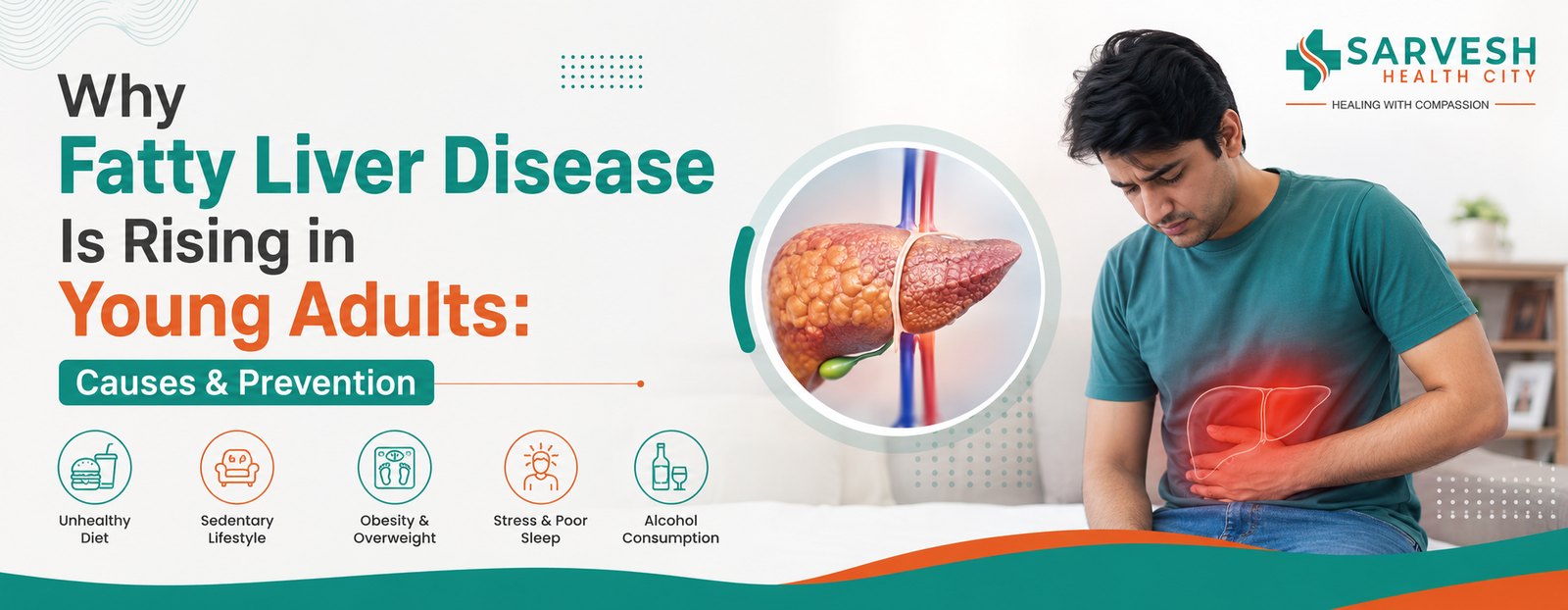
Fatty Liver is no longer limited to only affecting the older adults or those who were heavy alcoholics, because today it can happen to anyone at almost any age. Now doctors are witnessing an increase of this disease among teenagers and young people who are still in their 20s or 30s.
Poor exercise habits, unhealthy food choices, being overweight or obese, and metabolic diseases are all factors that increase young people’s risk to this condition. At Sarvesh Health City, we are a best gastroenterology hospital in hisar, where we are seeing more young patients with fatty liver disease coming for routine health checks up and did not even know that they had symptoms yet.
The good thing about this disease is that it is mostly preventable. And besides early diagnosis, it is generally possible to reverse by changing one’s lifestyle and getting appropriate medical care.
Quick Facts About Fatty Liver Disease
- What is Fatty Liver Disease?
It is excess fat accumulation inside liver cells. - Major Risk Factors
Obesity, insulin resistance, unhealthy diet, physical inactivity - Can It Be Reversed?
Yes, in many early-stage cases. - Which Specialist To Consult?
Gastroenterologist.
What Is Fatty Liver Disease?
Fatty liver disease due to a surplus of fat accumulation in the liver cells. Generally, the liver has only a little fat; however, if a liver is more than 5, 10% fat by weight then it has fatty liver disease.
The condition has two major categories:
- Alcohol-Related Fatty Liver Disease (AFLD): It is the type of diseases that happens due to a lot of alcohol consumption.
- Metabolic Dysfunction-Associated Steatotic Liver Disease (MASLD): Formerly known as Non-Alcoholic Fatty Liver Disease (NAFLD), MASLD is the most prevalent type found in young adults and it is more of a consequence of obesity, insulin resistance, and metabolic disorders compared to alcohol consumption. Furthermore, MASLD is becoming one of the most common liver diseases globally attributed to lifestyle changes.
Why Is Fatty Liver Disease Increasing Among Young Adults?
Arising numbers of patients are not the result of one factor but several bad habits that are harmful to health, and when they come together, result in increased cases of fatty liver disease cases, such as:
1. Unhealthy Eating Habits
A huge factor causing diseases, is the consumption of highly processed foods, sugary drinks, refined carbohydrates, and fast food.
Foods high in added sugars, especially fructose, stress the liver. Since the body does not use sugar right away, the body turns it into fat. That fat eventually accumulates inside the liver cells.
People who regularly consume drinks with a lot of sugar, processed and bakery food items are at a very high risk of getting fatty liver disease.
2. Lack of Physical Activity
Today’s lifestyles involve lengthy sitting at desks, attending online classes, spending time on mobiles, etc.
Less physical activity means the body becomes less capable of burning off stored fat, therefore there’s no place for the body to store extra calories and the liver becomes the site for storage.
The liver is so small in size, it can even develop excess fatty deposits in those who have less weight and who remains completely inactive for a long time.
3. Insulin Resistance and Metabolic Syndrome
Insulin resistance is one of the main causes of fatty liver.
If cells in the body develop an impaired response to insulin, sugar stays in the blood, and calories which are not used up are turned into fat. The majority of this fat accumulate around the waist and ends up in the liver too.
Situations related to fatty liver are:
- Type 2 diabetes
- Prediabetes
- Obesity
- High cholesterol
- High triglycerides
- Polycystic Ovary Syndrome (PCOS)
4. Weight Gain Around the Abdomen
A person with a large abdominal fat is much more likely to have a fatty liver than those with excess weight across whole body. The visceral fat that surrounds the internal organs produces fatty acids into your blood stream that directly goes to the liver. Gradually, that results in fat build-up and inflammation in the liver.
Why Is Fatty Liver Called a “Silent Disease”?
Fatty liver disease is particularly problematic as a big risk factor, because you usually won’t notice any symptoms in the beginning, until it is already quite serious.
In most cases, this problem has been detected only after a person has had a complete medical blood test or has had a scan of the abdomen for other reasons related to the health.
There could possibly be some symptoms that a person might suffer from if they reach a certain stage like:
- Sickness feeling all the time
- Upset stomach or discomfort feeling in the right-side upper area of the abdomen
- Putting on extra weight and not knowing why
- Having the urge to sleep all the time is low
These symptoms are usually mild and not characteristic to the disease, it is only best to visit best gastroenterology hospital in Hisar for medical checkups on a regular basis to discover this problem early before it is too late.
Can Fatty Liver Become Serious?
The answer is definitely yes!. Without any treatment, simple fat accumulation can become liver inflammation, which is one of the symptoms of Metabolic Dysfunction-Associated Steatohepatitis (MASH) (earlier known as NASH).
In the end, prolonged inflammation will cause:
- Liver fibrosis (scarring)
- Cirrhosis
- Liver failure
- Higher incidence of liver cancer
Fortunately, the disease most often develops slowly, providing opportunity for intervention before reaching to a point where it is too late if the condition is detected early enough.
How Can Fatty Liver Disease Be Prevented or Reversed?
The liver is capable of recovering if harmful lifestyle factors are paid attention and corrected early, such as:
- Consume Nutritious Meals: To keep your liver healthy, your diet should consist primarily of fresh fruits and vegetables, whole grains, lean proteins, healthy fats from nuts, seeds, and oily(fish), and foods that are fiber-rich. Limit intake of sugary drinks, processed foods, fried foods, and refined carbohydrates for liver health as consuming them can increase liver fat.
- Stay Active: Physical activity makes insulin more effective which aids the body in utilizing glucose. Usually specialists advise that the minimum of 150 mins of moderate-intensity exercise weekly combined with strength workouts is a good way to make metabolism healthy and get more muscular.
- Sustain a Healthy Weight: Dropping approximately 7 – 10% body weight usually causes a major decrease in liver fat and liver inflammation. Even small-weight losses are enough to bring great benefit to the entire body.
- Blood Glucose and Cholesterol Regulation: The control of blood glucose and cholesterol levels helps protect the heart but also reduce the burden on the liver and risk of worsening hepatic conditions.
- Avoid Excess Alcohol: Although alcohol does not cause MASLD, it can contribute a lot if one is already having liver damage and this could lead to a faster spread of liver disease. Doctors usually advise their fatty liver patients to either minimize alcohol drinking or stop it altogether.
Final Thoughts
It’s important to discover early as the fatty liver disease may progress quietly without any signs appearing until much later.
Sarvesh Health City is a place where every patient gets a thorough assessment of the liver, gets access to latest diagnostic services, a custom made treatment plan, a dietitian for proper nutrition, and a program for long-term management of metabolism that affects the liver. The hospital’s multi-specialist team helps patients pinpoint the cause while supporting them to make lifestyle changes that last.
For people seeking the best gastroenterology hospital in Hisar, receiving help from an expert can really change the risk of progressing the disease, and one of the most vital organs the liver will be preserved!
Frequently Asked Questions
Q1. Can young adults develop fatty liver disease even if they do not drink alcohol?
Ans. Yes. In fact, about 80%-90% young adults diagnosed with fatty liver have MASLD, have nothing to do with alcohol consumption. Infact, it is more due to obesity, insulin resistance, unhealthy diets, and physically inactive lifestyles.
Q2. Is fatty liver disease reversible?
Ans. Yes. In fact, for most of the early stage cases of fatty liver disease, the liver has the potential to completely restore itself through weight loss, regular physical exercise, healthier diet, as well as better management of their metabolic problems.
Q3. What food items should be avoided if you have a fatty liver?
Ans. Soft drinks and sweetened beverages, fast-food, deep-fried and oily foods, refined carbohydrates, too much sugary snacks and desserts, and saturated-fat-rich foods should be consumed sparingly in order to limit the build-up of fat in the liver.
Q4. How is fatty liver detected?
Ans. Fatty liver is diagnosed in many people during liver tests, ultrasound of the abdomen, and FibroScan, combined with checks on blood sugar and cholesterol levels.
Q5. Does fatty liver always cause symptoms?
Ans. No. Most cases does not show any symptoms during the initial phase of the disease. Hence, those who are at risk should take health check-ups regularly so that any problem can be detected as early as possible.
Q6. When should I consult a gastroenterologist for fatty liver?
Ans. If your liver enzymes stay high, overweight, diabetes, high cholesterol, you have no energy anymore, or your ultrasonography shows fatty liver, then a gastroenterologist is the one you should get an appointment with so that all your medical problems can be examined thoroughly and treatment can be started.
Media Enquiries
- Sarvesh Health City
- Sarvesh Health City Site No. 1, Sector 14, Hisar – 125001 (Haryana)
- +91 6901 626262
- +91 6901 636363
Social Media
Healthcare at your fingertips



GASTROENTEROLOGIST