- Specialities
- Center of Excellence
- Specialitites
- ANAESTHESIA & INTENSIVIST
- BREAST SURGERY
- CRITICAL CARE
- DERMATOLOGY
- DIALYSIS
- DENTISTRY & MAXILLOFACIAL SURGERY
- ENT
- INTERNAL MEDICINE
- INTERVENTIONAL RADIOLOGY
- LAPAROSCOPIC & GENERAL SURGERY
- OBSTETRICS & GYNAECOLOGY & COSMETOLOGY
- OPHTHALMOLOGY (EYE CARE)
- PEDIATRIC CARE & NEONATOLOGY
- PHYSIOTHERAPY & REHABILITATION
- Services
- AMBULANCE SERVICES (24/7)
- BONE MARROW TRANSPLANT
- BLOOD CENTER (OPEN 24/7)
- EMERGENCY SERVICES (AVAILABLE 24/7)
- LAB AND PATHOLOGY (OPEN 24/7)
- NEONATAL INTENSIVE CARE UNIT (NICU) & PEDIATRIC INTENSIVE CARE UNIT (PICU)
- NUTRITION & DIETETICS
- PHYSIOTHERAPY & REHABILITATION SERVICES
- PREVENTIVE HEALTH CHECKUPS
- PHARMACY (OPEN 24/7)
- PET/CT SCAN
- RADIOLOGY & IMAGING SERVICES
- Blogs
- Health Library
- Our Empanelment
- About Sarvesh

- Specialities
- Center of Excellence
- Specialitites
- ANAESTHESIA & INTENSIVIST
- BREAST SURGERY
- CRITICAL CARE
- DERMATOLOGY
- DIALYSIS
- DENTISTRY & MAXILLOFACIAL SURGERY
- ENT
- INTERNAL MEDICINE
- INTERVENTIONAL RADIOLOGY
- LAPAROSCOPIC & GENERAL SURGERY
- OBSTETRICS & GYNAECOLOGY & COSMETOLOGY
- OPHTHALMOLOGY (EYE CARE)
- PEDIATRIC CARE & NEONATOLOGY
- PHYSIOTHERAPY & REHABILITATION
- Services
- AMBULANCE SERVICES (24/7)
- BONE MARROW TRANSPLANT
- BLOOD CENTER (OPEN 24/7)
- EMERGENCY SERVICES (AVAILABLE 24/7)
- LAB AND PATHOLOGY (OPEN 24/7)
- NEONATAL INTENSIVE CARE UNIT (NICU) & PEDIATRIC INTENSIVE CARE UNIT (PICU)
- NUTRITION & DIETETICS
- PHYSIOTHERAPY & REHABILITATION SERVICES
- PREVENTIVE HEALTH CHECKUPS
- PHARMACY (OPEN 24/7)
- PET/CT SCAN
- RADIOLOGY & IMAGING SERVICES
- Blogs
- Health Library
- Our Empanelment
- About Sarvesh
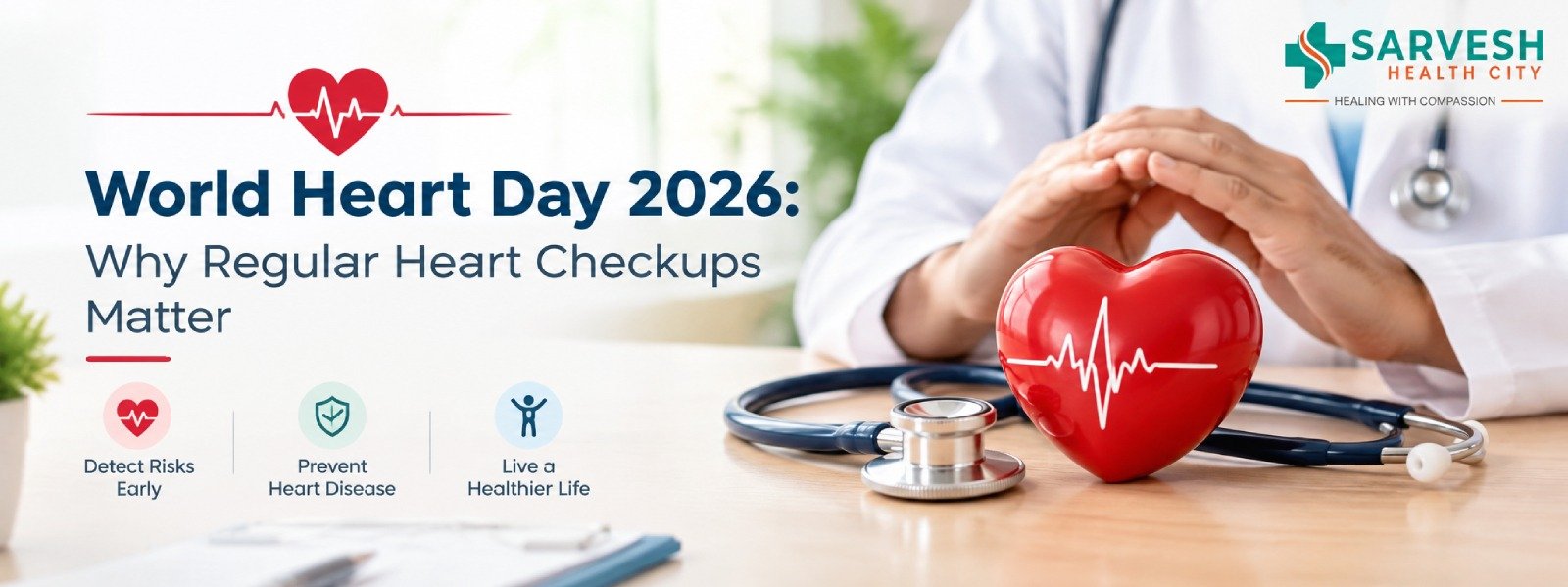
A healthy heart is a very vital component of a healthy lifestyle; however, various heart-related issues may occur without the person suffering from any symptom in the beginning stages. Getting yourself checked for your heart health on a regular basis may help identify any risks before they turn out to be serious ones. In order to ensure good heart health this World Heart Day 2026, try taking a step in ensuring that your heart remains healthy by undergoing regular heart checkups.
Whether you are concerned about heart issues in the family, hypertension, diabetes, high cholesterol, or just want to be extra cautious regarding your health, consulting the Best Cardiology Hospital in Hisar may help you out.
Quick Facts About World Heart Day
- Why is heart health important?
Heart disease can affect people at different ages, and many risk factors can be managed through healthy lifestyle choices and regular health checks. - Common Heart Disease Risk Factors?
High blood pressure, high cholesterol, diabetes, smoking, obesity, physical inactivity, and an unhealthy diet can increase cardiovascular risk. - When should you get a heart check-up?
Regular heart health checks can help identify risk factors early, especially if you have a family history or other cardiovascular risk factors.
What Is World Heart Day 2026?
Every year on September 29, World Heart Day is observed as an awareness day to educate people worldwide on the dangers of heart diseases. People are encouraged to learn more about risk factors for heart disease and stroke such as high blood pressure, high cholesterol, diabetes, obesity, smoking, physical inactivity and poor dietary habits.
Moreover, World Heart Day allows reminding people of the importance of taking care of one’s heart throughout the entire life cycle. It does not take much to keep heart healthy: eating healthy food, exercising, reducing stress, quitting smoking, keeping appropriate weight and attending routine health screenings.
Thus, in 2026, World Heart Day will continue to increase knowledge about heart disease prevention and the importance of contacting a doctor whenever there is some symptom like chest pain, difficulty breathing, unusual sweating, dizziness, and others.
What Is a Regular Heart Checkup and Why Does It Matter?
Regular heart checkup is a preventive health screening that helps you understand your cardiovascular health and find potential risks early. The evaluation is derived from age, symptoms, family history, lifestyle and current health conditions.
A typical heart checkup may include:
- Blood pressure – To see if blood pressure is high or low.
- Cholesterol levels – To test for heart related risk.
- ECG/EKG – Recommended when symptoms or medical history indicate a need.
- Other cardiac tests – Suggested by your doctor when clinically appropriate.
Heart-related risk factors can develop without obvious symptoms.Check-ups help you stay aware of your numbers and any changes. They also provide your physician a chance to advise you on what lifestyle modifications are appropriate, if needed.
Blood Pressure and Heart Health
Blood pressure is defined as the pressure exerted by the blood against the walls of the arteries during circulation from the pumping action of the heart. Abnormally high blood pressure may lead to heart problems and strokes with no symptoms at all. Monitoring of the blood pressure regularly will help in detecting any abnormalities.
Heart Checkups for Younger Adults
Younger adults can also face heart health risks due to tobacco use, obesity, diabetes, high blood pressure, high cholesterol, family history and certain medical conditions. Heart attacks can occur in young adults too, making early awareness important.
A routine heart checkup can help establish a baseline for blood pressure, cholesterol and blood sugar, allowing potential risk factors to be identified early. Not every young adult needs advanced cardiac scans; the appropriate screening depends on individual risk factors and should be discussed with a healthcare professional.
Family History and Your Heart Risk
A family history of heart disease, stroke, high cholesterol or other cardiovascular problems at a young age can indicate a higher risk, so it is important to share this information with your doctor.
While you cannot change your genes or family history, many cardiovascular risk factors can be managed. Regular checkups, healthy lifestyle choices and timely treatment of conditions such as high blood pressure and high cholesterol can help reduce your overall risk.
Family history is a risk factor, not a prediction. Knowing it early can help you take appropriate steps to protect your heart.
Warning Signs You Should Never Ignore
Some signs may indicate an individual of an impending cardiovascular disorder. Any of the following symptoms should be noted by an individual if it occurs abruptly or with great severity:
- Pain, pressure, or tightness in the chest area
- Shortness of breath that is abrupt or unexplained
- Loss of consciousness, feeling dizzy, and fainting
- Sweating, vomiting, nausea, or weakness that is unexplained
- Numbness, weakness, or problems with speech that occur suddenly
- Signs that occur abruptly or worsen progressively
The above signs may not necessarily manifest in everyone in the same way.
Lifestyle Habits That Support Heart Health
Small, consistent lifestyle choices can play an important role in maintaining cardiovascular health and reducing the risk of heart-related problems.
Here are some habits that can help promote good heart health:
- Have a healthy heart diet
- Be physically active
- Keep yourself at a healthy weight
- Stay away from smoking and tobacco
- Consume alcohol moderately
- Ensure proper sleep
- Deal with your stress properly
- Keep track of blood pressure, cholesterol, and blood sugar levels
- Go for routine health checks
World Heart Day 2026: Make Heart Health a Routine
World Heart Day 2026 falls on 29 September, and its message—“Heart disease can hide in plain sight: Don’t miss a beat”—is a powerful reminder that prevention should not wait for symptoms.
This year, instead of treating World Heart Day as just another awareness date, use it as a personal health checkpoint. Know your blood pressure. Ask whether your cholesterol and blood sugar should be tested. Understand your family history. Discuss your lifestyle and cardiovascular risk with your healthcare professional. If you already have a heart condition or risk factor, make sure your follow-up remains on track.
Your heart does not take a holiday. It beats while you work, sleep, travel, exercise, celebrate, and spend time with the people you love. Giving it regular attention is not an act of fear—it is an investment in the years ahead.
Conclusion
They may not cause symptoms initially. Risk factors for the heart include high blood pressure, high cholesterol, high blood glucose, tobacco use, obesity, family history, and others. This is where World Heart Day 2026 can play a vital role to remind to identify such risks early. Regular screenings of heart health at Sarvesh Health City can help people understand their risk of cardiovascular disease and help them take the right preventive measures.
It’s not to fret over every beat of your heart. It’s to keep you posted. Know your numbers. Understand your own risk. Adopt healthy habits and follow the screening schedule recommended by your health care professional.
Frequently Asked Questions
Q1. Why are regular heart checkups important?
Ans. Routine heart check-ups may show the risk factors like hypertension, high cholesterol levels, diabetes, obesity, and any other cardiovascular diseases in their early stages. It will enable you to make modifications in your lifestyle and treatment.
Q2. How often should you get a heart checkup?
Ans. This varies from person to person and depends on such factors as your age, your health history, risk factors and your lifestyle. The adults should discuss the optimal timing of their screenings with their physicians, especially in case if you suffer from high blood pressure, diabetes, high cholesterol, obesity, and any previous heart conditions in your family.
Q3. What tests are included in a routine heart checkup?
Ans. Depending on your condition and symptoms, heart examination can include such procedures as measurement of blood pressure, blood tests for cholesterol and glucose, measurement of your weight and BMI, ECG, and others if needed.
Q4. Can young adults need heart checkups?
Ans. Yes. Young adults can be at risk for factors like high blood pressure, diabetes, high cholesterol, obesity, smoking, or a family history. This will depend on the level of risk as far as the kind of checkup and frequency goes.
Q5. What are the warning signs of a heart problem?
Ans. Indicators can be in the form of chest discomfort, shortness of breath, sweating, nausea, dizziness, or pain that moves from your arm, shoulder, back, neck, and jaw.
Q6. What is the importance of World Heart Day 2026?
Ans. World Heart Day offers the perfect chance for people to be aware of the condition of their hearts and their risks of heart diseases.
Media Enquiries
- Sarvesh Health City
- Sarvesh Health City Site No. 1, Sector 14, Hisar – 125001 (Haryana)
- +91 6901 626262
- +91 6901 636363
Social Media
Healthcare at your fingertips


CARDIOLOGIST
Looking for the best cardiologist in Hisar? Dr. Abhishek Gupta at Sarvesh Health City offers expert care for your heart health. Book an appointment today!