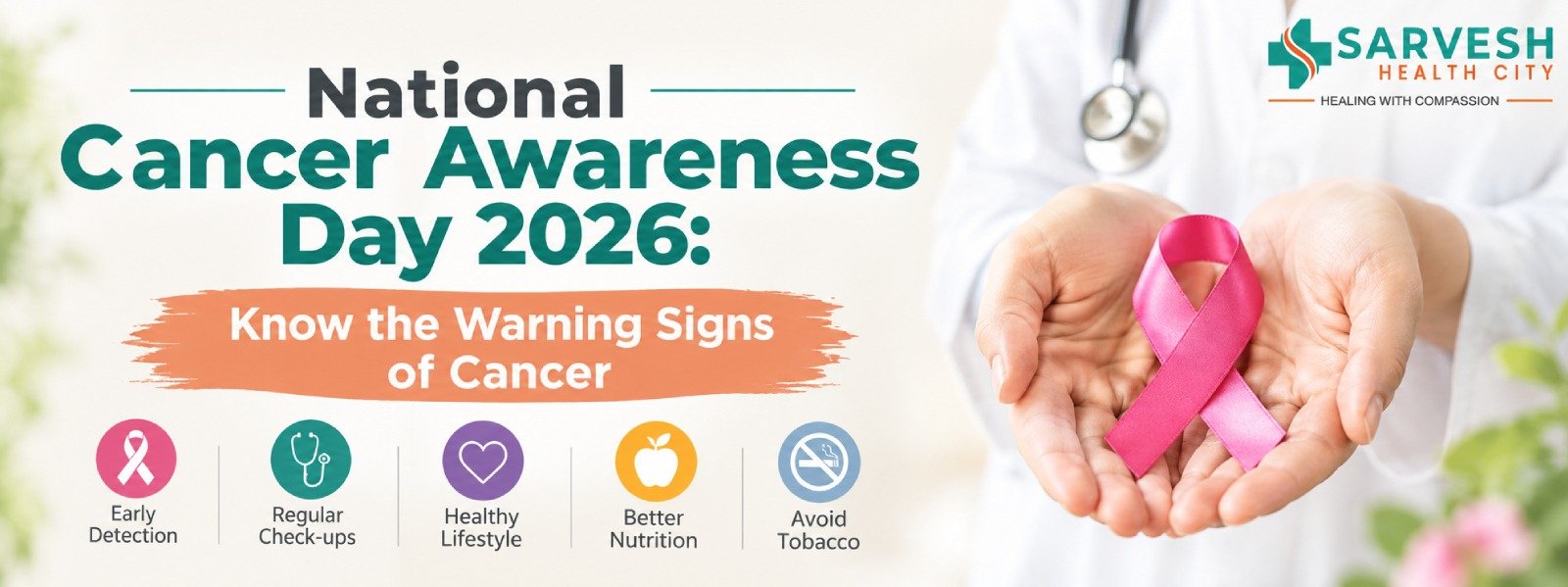
Cancer can affect at any point of life, and the early signs that cancer is developing are often quite difficult to identify. Advances in cancer detection and therapy techniques has raised the quality of treatment for many patients, therefore increasing the value of awareness and medical care.
Sarvesh Health City, the best surgical oncology hospital in hisar, emphasizes on recognizing potential body changes on National Cancer Awareness Day 2026, whether it is unexpected weight loss, tiredness, or bleeding.
In this article, we are listing some of the most frequently noticed symptoms of cancer and describe how they may differ depending on the region of the body. If one knows what the symptoms mean and how to react to when symptoms are visible, people may reach out for early diagnosis and timely treatment.
Why Is It Important to Recognise Cancer Warning Signs?
Cancer may develop in different organs and affect the body in different ways. Some symptoms appear because a tumour grows or presses against nearby tissues, while others may result from changes in how the body functions.
Recognising possible warning signs does not mean trying to diagnose yourself. It means noticing changes and discussing them with a healthcare professional for early medical evaluation before the disease advances.
Common Warning Signs of Cancer
A number of cancers may share the following symptoms but these also could be signs of some non-cancerous conditions as well. It is the persistence, progression or the combination of other symptoms that determine if a more thorough investigation is necessary.
1. Unexplained Weight Loss
You could unintentionally and gradually lose weight without changing your eating habits or exercise routines, and this can be a sign of an unhealed illness, especially in lung, oesophagus, pancreas, and stomach cancer.
This kind of unintentional weight loss is alarming when it continues, or it happens along with the feeling of not getting hungry, having continuous abdominal pain or some sudden weakness.
2. A New Lump or Unusual Swelling
A new lump or swelling in unusual areas like the breast, neck, armpits, abdomen, or groin should be investigated. Such developments deserve attention, in particular if the bump grows, never goes away or changes in texture and feel over time.
Some types of cancer manifest themselves as a distinct mass in the body, while in others patients have their lymph nodes swell up to the point that it becomes very visible. One must remember that most lumps happen because of other, more innocent causes like cysts, infections or other non-cancerous conditions. However, one must not take a lump for granted even if it does not cause distress.
3. Persistent Cough or Changes in the Voice
A constant coughing without getting relief, a voice permanently affected (i.e., hoarse), or chest symptoms happening repeatedly often point to a underlying pulmonary issues and lung or throat cancer. If there is blood during coughing, chest discomfort (which was never an issue before), or breathlessness, you should get it checked by a doctor right away.
4. Unusual Bleeding
A sudden bleeding for no good reason might be a serious medical issue calling for investigation. According to the location, it might well reveal a different organ involved.
Possible situations:
- Blood in stools or urine.Haemoptysis (coughing up blood).
- Vaginal bleeding between menstrual cycles or even after menopause.
- Unexpected or continued gum bleeding.
Such complaints are not always cancer-related, yet it is necessary to find out their cause.
5. Changes in Bowel or Bladder Habits
Occasionally, bowel movement habits or urination that is quite unusual and has lasted for a long period is a sign of cancer. Signs that could suggest cancer are constant constipation or diarrhoea that is hard to control, a change in the texture of the faeces, the struggle or the failure to pass urine or needing to urinate often than normal.
However, such symptoms can also be due to infections, side effects from drugs or medical issues affecting the digestive and urinary systems.
6. Changes in the Skin or Non-Healing Sores
The skin can provide visible clues to an underlying problem. A mole that changes in size, shape or colour, develops an irregular border or starts bleeding should be examined. A sore that does not heal, including a persistent ulcer in the mouth, also warrants medical attention.
People who use tobacco should be especially alert to persistent white or red patches, sores or other unusual changes inside the mouth.
7. Persistent Fatigue, Pain or Fever
Continuous fatigue that never gets better by resting is sometimes a sign of cancer. Anaemia or other changes in the body may cause it alongside the weakness. Pain that is persistent in one particular place, recurring fever without an obvious cause or night sweats also need further investigation.
Infectious diseases are the usual culprits that account for these signs and are sufficient for a cancer diagnosis. Whether those signs are serious is also a matter of how long they have been occurring, whether they get worse, and if other inexplicable symptoms are simultaneously present.
When Should You Seek Medical Advice?
There is no specific waiting time that fits all cancer symptom cases. Get an appointment to check a sudden change that does not subside completely or keeps coming back, like blood in the cough, unusual bleeding or a rapidly growing tumour.
Difficulty in breathing or bleeding with heavy loss may be life-threatening and requires emergency treatment.
Make sure to inform your doctor about any other alterations that you have detected. It will assist your doctor to take the next step, which may be an examination or a lab test.
Also, noticing a warning signal is one thing, being diagnosed with cancer is a very different thing. Only a thorough medical examination at the best surgical oncology hospital in Hisar can help determine which causes are behind the symptoms so that they can be handled if they are serious ones.
Final Thoughts
National Cancer Awareness Day 2026 reminds of the importance to pay attention over our body changes and visiting doctors when something seems unusual or strange and does not go off easily. Weight loss without weight lifting, lumps for no reason, bleeding without injury, coughs not getting cured easily, and sores that do not heal are warning signs to be discussed with your doctor.
Still, these symptoms usually do not mean there is a cancer, it could be other things that might be causing them but ignoring the signs may prevent the discovery of a real health issue.
Sarvesh Health City offers special cancer care treatment. The biggest thing that you can help is not only by recognising the changes but also by bringing them to the attention of the right doctors. This is what will help determine the level of care you need afterwards.
Frequently Asked Questions
Q1. What are the most common warning signs of cancer?
Ans. Common warning signs include unexplained weight loss, a new lump, unusual bleeding, a persistent cough, changes in bowel or bladder habits, non-healing sores and ongoing fatigue.
Q2. Can cancer develop without causing pain?
Ans. Yes. Some cancers do not cause pain in their early stages. A painless lump, unexplained bleeding or another persistent change may still require medical evaluation.
Q3. How much should I wait before consulting a doctor if I have symptoms?
Ans. Do not wait if a symptom is severe, worsening or concerning and arrange a medical consultation instead of relying on a fixed waiting period.
Q4. Does weight loss always mean cancer?
Ans. Not necessarily. Weight loss can be traced to a bunch of conditions such thyroid disorders, gastrointestinal problems, infections and other diseases.
Q5. Is it possible to have cancer and not even knowing any warning signs?
Ans. Yes. This happens when cancer is at an early stage and not a single physical change has occurred. This is why a good health check is sometimes advised for cancers which might not show signs unless they have progressed.
Media Enquiries
- Sarvesh Health City
- Sarvesh Health City Site No. 1, Sector 14, Hisar – 125001 (Haryana)
- +91 6901 626262
- +91 6901 636363
Social Media
Healthcare at your fingertips



HOD & SR.CONSULTANT SURGICAL ONCOLOGY AND ROBOTIC SURGERY