- Specialities
- Center of Excellence
- Specialitites
- ANAESTHESIA & INTENSIVIST
- BREAST SURGERY
- CRITICAL CARE
- DERMATOLOGY
- DIALYSIS
- DENTISTRY & MAXILLOFACIAL SURGERY
- ENT
- INTERNAL MEDICINE
- INTERVENTIONAL RADIOLOGY
- LAPAROSCOPIC & GENERAL SURGERY
- OBSTETRICS & GYNAECOLOGY & COSMETOLOGY
- OPHTHALMOLOGY (EYE CARE)
- PEDIATRIC CARE & NEONATOLOGY
- PHYSIOTHERAPY & REHABILITATION
- Services
- AMBULANCE SERVICES (24/7)
- BONE MARROW TRANSPLANT
- BLOOD CENTER (OPEN 24/7)
- EMERGENCY SERVICES (AVAILABLE 24/7)
- LAB AND PATHOLOGY (OPEN 24/7)
- NEONATAL INTENSIVE CARE UNIT (NICU) & PEDIATRIC INTENSIVE CARE UNIT (PICU)
- NUTRITION & DIETETICS
- PHYSIOTHERAPY & REHABILITATION SERVICES
- PREVENTIVE HEALTH CHECKUPS
- PHARMACY (OPEN 24/7)
- PET/CT SCAN
- RADIOLOGY & IMAGING SERVICES
- Blogs
- Health Library
- Our Empanelment
- About Sarvesh

- Specialities
- Center of Excellence
- Specialitites
- ANAESTHESIA & INTENSIVIST
- BREAST SURGERY
- CRITICAL CARE
- DERMATOLOGY
- DIALYSIS
- DENTISTRY & MAXILLOFACIAL SURGERY
- ENT
- INTERNAL MEDICINE
- INTERVENTIONAL RADIOLOGY
- LAPAROSCOPIC & GENERAL SURGERY
- OBSTETRICS & GYNAECOLOGY & COSMETOLOGY
- OPHTHALMOLOGY (EYE CARE)
- PEDIATRIC CARE & NEONATOLOGY
- PHYSIOTHERAPY & REHABILITATION
- Services
- AMBULANCE SERVICES (24/7)
- BONE MARROW TRANSPLANT
- BLOOD CENTER (OPEN 24/7)
- EMERGENCY SERVICES (AVAILABLE 24/7)
- LAB AND PATHOLOGY (OPEN 24/7)
- NEONATAL INTENSIVE CARE UNIT (NICU) & PEDIATRIC INTENSIVE CARE UNIT (PICU)
- NUTRITION & DIETETICS
- PHYSIOTHERAPY & REHABILITATION SERVICES
- PREVENTIVE HEALTH CHECKUPS
- PHARMACY (OPEN 24/7)
- PET/CT SCAN
- RADIOLOGY & IMAGING SERVICES
- Blogs
- Health Library
- Our Empanelment
- About Sarvesh
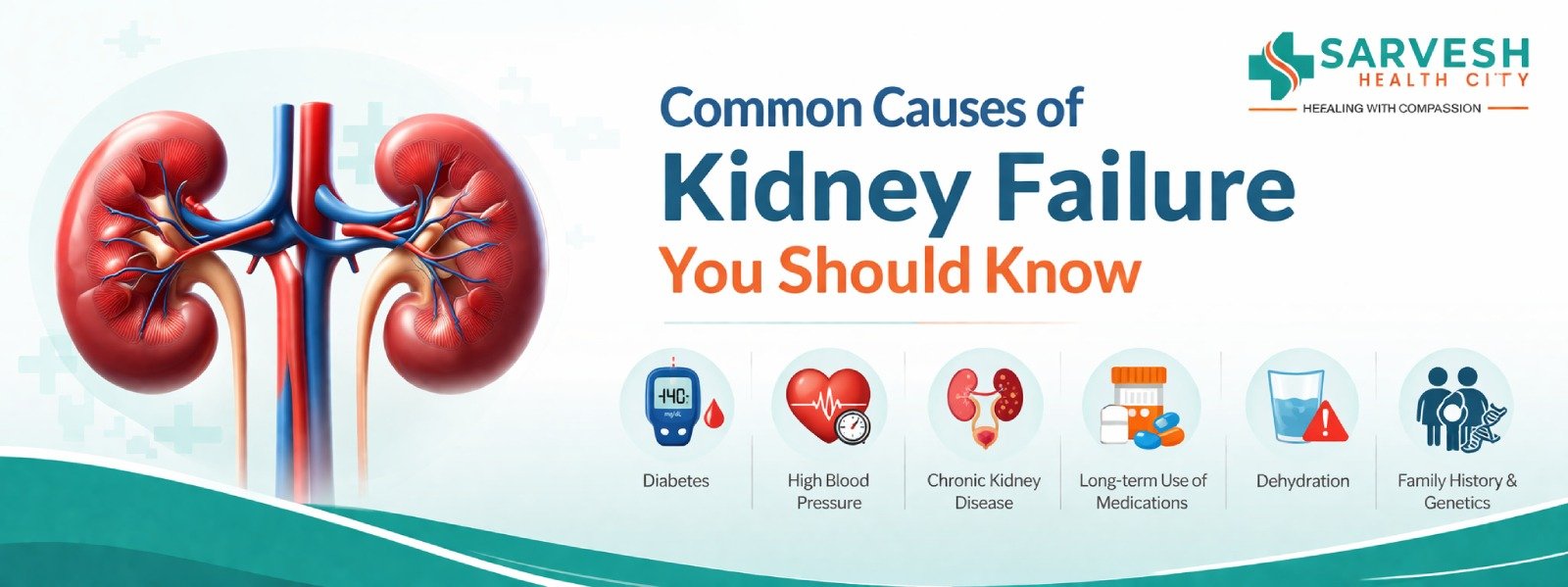
Kidney health is not given much thought till it develops into unwanted complications, however, it is an essential part of staying healthy. Considering the increasing incidence of kidney diseases and failure, knowing the causes can help identify the problem timely and take appropriate steps to enhance one’s lifestyle.
Sarvesh Health City is committed to providing the highest level of care and support to help patients recover from kidney problems. The hospital is also known as the best nephrology hospital in Hisar, and could be your go-to place to understand, prevent and avert kidney failure causes before it becomes life-threatening.
What is Kidney Failure?
Kidney failure or end-stage renal disease (ESRD) is the situation when kidneys can no longer work effectively in filtering the blood from wastes and extra fluids.
The disease escalates slowly over time, termed as chronic kidney disease (CKD), or rapidly, referred to as acute kidney injury (AKI).
The functions of healthy kidneys include the regulation of blood pressure, maintenance of electrolyte balance and supporting red blood cell production. However, when kidneys have ceased working, toxins start building up in the body and as a result severe health problems begin to deteriorate the health.
Medical, Health, and Lifestyle conditions that cause kidney failure
Kidney failure is most often the consequence of continuous damage rather than a single incident. Various health conditions, lifestyle choices, and even sudden medical emergencies can slowly or quickly impact how well your kidneys work. Knowing the main causes below can help you act promptly and lessen the chance of long-term damage.
- Diabetes: Prolonged high sugar levels in the blood, harm the small kidney filtering units (nephrons). Eventually, their ability to clear waste diminishes, which is why diabetes is the number one cause of kidney failure globally.
- High Blood Pressure: The elevated pressure in the blood vessels continually stresses the kidneys, breaking down the fragile filtration system and causing slow, often unnoticed, damage.
- Autoimmune Diseases: In diseases like lupus and IgA where the immune system goes out of control and attacks the viruses and bacteria but also the bodies own healthy cells. As a result, the kidneys get inflamed and gradually lose their capacity to function.
- Genetic Disorders: A family history of polycystic kidney disease or other inherited conditions may trigger an abnormal growth of cysts in the kidneys. This may cause the cysts to increase in size and the kidneys to lose their ability to function normally.
- Chronic Infections: Frequent or unresolved infections, most notably urinary tract infections (UTIs), may reach the kidneys and cause them to scar and infect in a bad way. This results in a gradual decrease in the kidney’s working capacity.
- Urinary Tract Obstruction: Blockages in the urinary tract that are caused by kidney stones, tumors, or an enlarged prostate, can interfere with the normal flow of urine. As a result, pressure builds up and the kidneys may get damaged.
- Nephrotic Syndrome: When there is a large amount of protein in the urine, it leads to nephrotic syndrome, which is detrimental to the kidney’s function and predisposes to complications that are severe and long-term.
- Overuse of Medications: If used inappropriately, some drugs, especially painkillers (NSAIDs) or medicines like lithium, can lead to kidney damage that worsens gradually. Unfortunately, this type of damage remains without symptoms most of the time; however, it can be reversed if the drugs are used only under the strict supervision of the doctor.
- Severe Dehydration: When the body is low on water, the blood supply circulating to the kidneys gets reduced. This not only hampers the ability of the kidneys to perform their functions but may also cause acute kidney injury (AKI).
- Heart Attack or Low Blood Flow: If blood circulation to the kidneys is suddenly decreased due to any condition, their functioning can be affected and if very bad, it may result in failure.
- Drug Abuse or Toxic Exposure: Harmful chemicals, drugs, or toxins poisoning can cause kidney cells damage and interfere with their normal functioning.
- Severe Infections: Killer infections like sepsis can leave a person’s body so wrecked it becomes inflamed and if not attended to, the kidneys end up failing suddenly as a result of it.
Foods to Include and Avoid For Kidney Health
The right food choices help reduce the workload on your kidneys, maintain fluid balance, and support overall body functions. It is, however, not just about limiting yourself; it is about finding an eating pattern that will not only nourish your body but also be kind to your kidneys.
In order to keep your kidneys functioning at their best, you need to include healthy and nutrient-rich foods into your diet, and at the same time, eliminate those food items that cause your kidneys to work harder than necessary.
- Adding more fresh and natural foods such as fruits like apples and berries, green leafy vegetables, and whole grains like oats and brown rice, as they provide the necessary nutrients without being a burden on the kidneys.
- Meat and other protein sources should be lean and taken in small amounts. For instance, fish and eggs are ideal sources, and they will help in supporting body functions without leading to protein waste buildup.
- It is important that you stay hydrated. Drinking enough water will not only help the kidneys to cleanse the body of toxins but also maintain fluid balance.
- Cut down on the consumption of high-sodium and processed foods. Since, too much salt can increase blood pressure and possibly even further damage kidneys.
- Stay away from sugary drinks and too much red meat, as they can lead to metabolic stress and add extra work for your kidneys.
- If you have kidney problems and nutrient balance is a serious issue, then you must strictly follow your doctor’s advice regarding the food that is high in potassium and phosphorus.
Final Thoughts
Kidney failure is a critical condition, however, in many cases, it is preventable with proper awareness and lifestyle. Knowing major causes of disease, observing early symptoms, and adhering to the best diet for kidney health play an integral part in kidney protection. Additionally, on time medical support can help postponing or even controlling the severity of kidney diseases. Sarvesh Health City is where patients get expert care and custom treatment plans, making it a highly reliable option for those who are looking for the best nephrology hospital in Hisar.
FAQs
Q1. What usually causes kidney failure?
Ans. Diabetes tops the list of causes, with hypertension as the next major factor both of which gradually impair kidney functions.
Q2. Is it possible to prevent kidney failure?
Ans. It’s quite possible through engaging in a healthy lifestyle, and having the health checkup done regularly.
Q3. Which foods help promote healthy kidneys?
Ans. It is usually recommended to consume fresh fruits, vegetables, whole grains, and lean meat for a kidney-friendly diet.
Q4. Does kidney failure go away?
Ans. Sometimes, if it’s sudden, the kidneys can recover with correct treatment, but most of the time if it’s a chronic disease, the situation worsens.
Media Enquiries
- Sarvesh Health City
- Sarvesh Health City Site No. 1, Sector 14, Hisar – 125001 (Haryana)
- +91 6901 626262
- +91 6901 636363
Social Media
Healthcare at your fingertips



.
Best Nephrologist in Hisar at Sarvesh Health City offers expert care for kidney health