What Is Chemotherapy
Chemotherapy is a cancer treatment method that uses strong drugs to kill or turn off the growth of cancer cells. Since cancer cells grow very fast, these drugs are made to specifically attack and kill those cells. Chemotherapy can be used for several objectives, such as eradicating cancer, reducing tumors so that surgery becomes easier, stopping the disease from coming back, or even providing relief to patients at the last stage of the illness.
Even though therapy can harm a few healthy cells, evolution in treatment planning has made recovery faster and more accurate. Nowadays, chemotherapy has become a part of a larger and more individualized treatment approach that may also involve surgeries, radiation therapies, or targeted treatments depending on the patient’s condition.
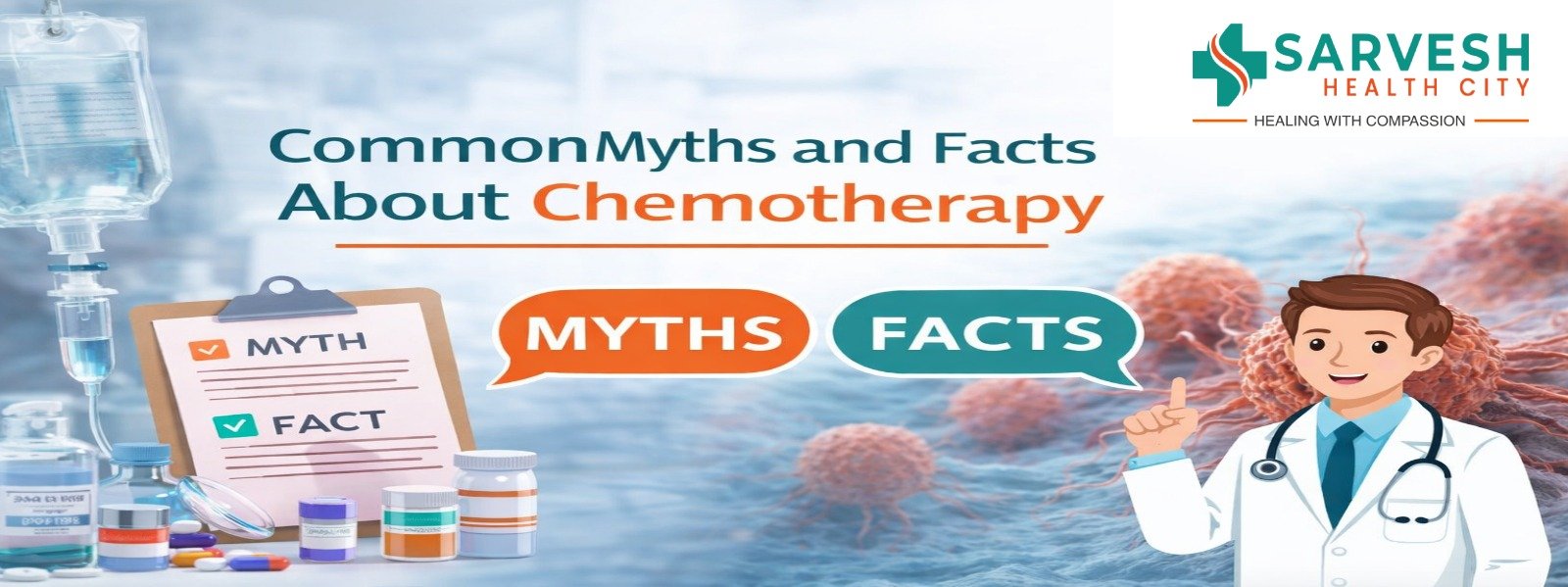
Common Myths and Facts About Chemotherapy
For a lot of patients, what scares them about chemotherapy isn’t the treatment, but the misconceptions that blows its effects out of proportion. Here is a breakdown of the usual myths and the medical reality that can guide you in making the right choices.
Myth 1: Chemotherapy Causes Hair Loss Always
Hair loss is one of the most asked about side effects and understandably so since it is quite visible. Although it is one of the common side effects of chemotherapy, it is not necessarily a certainty for every patient.
What is the truth?
Hair loss, is determined by the kind of chemotherapy drugs used, their concentration, and an individual’s reaction to the treatment. Many contemporary chemotherapy treatment plans aim at limiting side effects like hair loss and not every patient loses hair noticeably. It is also the case that even if hair loss happens, it is generally a reversible side effect and hair starts to grow once the treatment is over. Besides that, there are few ways that doctors recommend to reduce the effect including scalp cooling.
Myth 2: Chemotherapy Makes You Constantly Sick
Many people think that chemotherapy means being sick all the time like nausea, weakness, and not being able to do normal activities. This is usually because of traditional treatments in the past.
What is the truth?
Nowadays, side effects control is a lot better because of the development of supportive care. Chemo sickness pills, better drug combos, and individualized dosages have all contributed greatly. A lot of patients can still do their everyday stuff by just making little changes. The effect really depends on the individual, and doctors are always checking patients to keep the side effects at a minimum during the treatment period.
Myth 3: Chemotherapy Is Only Given Through IV
Many visualize chemotherapy as a patient sitting in a hospital for hours while the drug is being administered via an IV. Although this most widely used method is still being used, it is not the only option.
What is the truth?
Depending on the cancer type and the treatment plan, chemotherapy is able to be delivered in various ways.
- Oral chemotherapy drugs that are taken at home
- Injections given under the skin or into muscles
- Topical therapies for some skin cancers
All these make treatment more flexible and convenient while minimally affecting the patient’s daily life compared to prolonged hospital stays.
Myth 4: Chemotherapy permanently causes infertility
It is a common concern that chemotherapy may lead to an irreversible loss of fertility which, understandably, adds to the emotional burden of the already difficult situation.
What is the truth?
Results vary depending on one’s age, the type and dosage of chemotherapy drugs used, among other factors. Often, fertility is only affected for a period and reproductive organs can regain their full function post-therapy. Furthermore, techniques are available to freeze eggs or sperm before treatment begins if one decides to opt for this. Most people, with the right support and doctor’s advice, manage to have children after their cancer therapy.
Myth 5: Chemotherapy is only given to those with terminal cancer
Many people think that chemotherapy is only for cancer cases of an advanced stage or are considered incurable.
What is the truth?
Contrary to popular beliefs, chemotherapy can be part of the treatment protocol at any cancer stage. It has been instrumental in the cure of early-stage cancers, acts as a neoadjuvant shrinks tumors making surgery easier, serves an adjuvant function by killing remnant cells thus preventing relapses in most cases, and beyond this, it may be used as palliative therapy to control symptoms and extend survival. To equate chemotherapy solely with palliative care is both an understatement and potentially fear-provoking.
Myth 6: Chemotherapy Works the Same for Everyone
Many people think that each patient who is given chemotherapy will go through the same experience and will even have the same type of side effects and results.
What is the truth?
Nowadays, chemotherapy is very much a personalized treatment. Treatment protocols are adjusted not only to the type and stage of a cancer, but also to the condition of a patient and how well he/she can tolerate it. So, it is possible that one person feels somewhat tired while another experiences more evident symptoms. Besides, physicians are always refining therapy to improve effectiveness with as little discomfort as possible.
Final Thoughts
Knowing the real facts about chemotherapy is a key step to get rid of your fears and make well-thought healthcare decisions. On the other hand, being misinformed can postpone treatment or cause the unnecessary emotional stress in patients and their families. Patients who take their decisions on true facts and seek professional advice will have less worries about the future. Additionally, having an open talk with the cancer specialist at Sarvesh Health City, the best medical oncology hospital in Hisar, can help you dispel the myths and discover the real facts about the chemotherapy for best results.