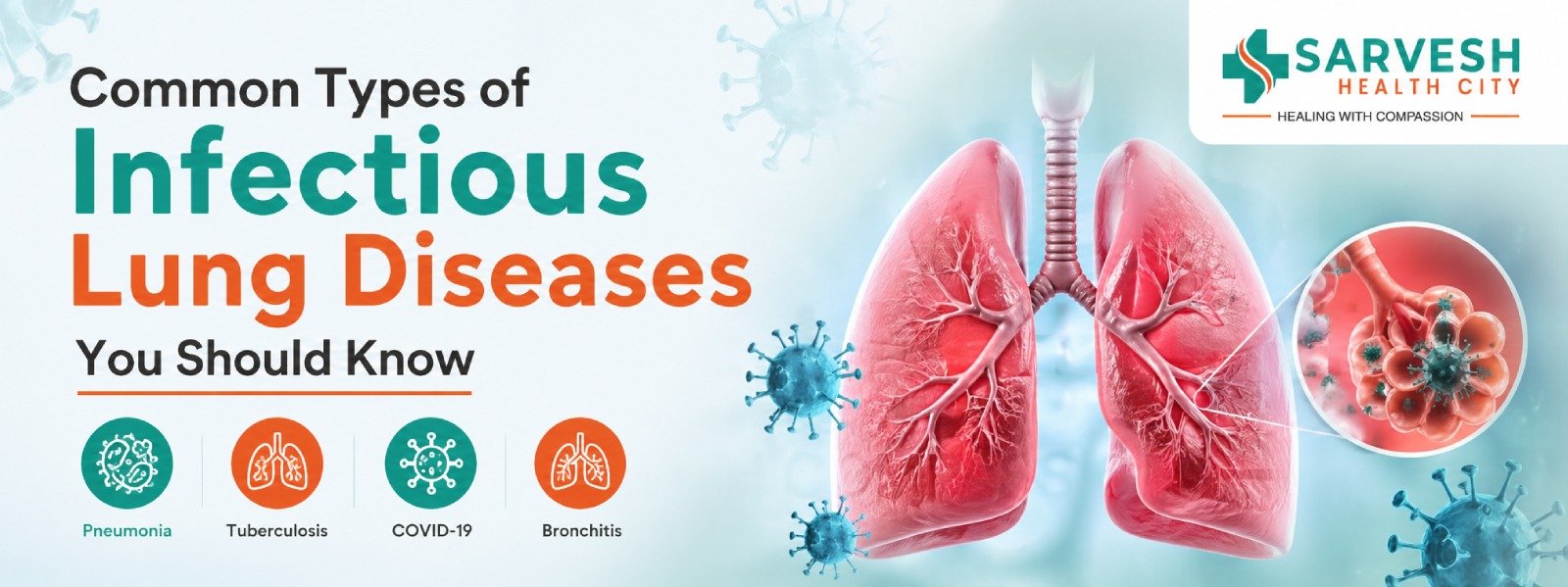
What Are Infectious Lung Diseases?
Infectious lung diseases, also known as respiratory tract infections which targets the airways and alveoli of the lungs. These diseases develop when harmful bacteria, viruses, or fungi get into the respiratory system and start reproducing, causing the inflammation and making it hard to breathe. Although a few infections may be mild and heal on their own, some might become quite serious and need urgent medical intervention. Additionally, person’s susceptibility to such diseases is influenced by factors like a weakened immune system, pollution, smoking, and pre-existing illnesses.
Common Types of Infectious Lung Diseases
Infectious lung diseases have the potential to target various sections of the respiratory system including the airways and the lung tissues. Familiarity with the most prevalent types is a good guide to identifying signs early and getting medical attention sooner.
1. Bronchitis
Bronchitis occurs when your bronchial tubes, which are responsible for bringing air in and out of your lungs, get infected and inflamed. Most of the times it’s the viruses that cause it and a person can develop it after having a cold or any respiratory infection.
How to Identify It
- Coughing for a long time, mostly producing mucus
- A feeling of pressure or pain in the chest
- A little fever and tiredness
- Breathing is harder, more so when you are exerting yourself
2. Pneumonia
Pneumonia is a deadly lung infection where the air sacs fill with fluid or pus, making it hard to breathe. It can be caused by bacteria, viruses, or fungi and symptoms can range from mild to severe.
How to Identify It
- High fever with chills
- Coughing up phlegm
- Chest hurting when breathing or coughing
- Shortness of breath and feeling tired
3. Tuberculosis (TB)
Tuberculosis is a spreading bacterial infection transmitted by Mycobacterium tuberculosis. It mostly impacts lungs but if left untreated it can go to other body parts.
How to Identify It
- Unrelenting cough for more than 2-3 weeks
- Spitting of blood while coughing
- Night sweats and fever
- Loss of weight without known reason and feeling of weakness
3. Viral Lung Infections
Viruses like the flu and others that attack the respiratory system cause viral lung infections. These infections can cause inflammation of the lung tissues.
Viral infections are mainly transmitted through tiny droplets in the air and touch.
How to Identify It
- Dry cough and sore throat
- Fever and muscle aches
- Runny or congested nose
- Some what difficulty in breathing
4. Fungal Lung Infections
They are less frequent but the occurrence of fungal lung infections is a possibility for immunocompromised patients. The occurrence of these infections is linked with the inhalation of fungal spores present in the environment.
How to Identify It
- Continuous cough
- Fever which is resistant to treatment
- Chest discomfort
- Tiredness and difficulty in breathing
5. Lung Abscess
A lung abscess is a very serious infection that results in the production of a pus-filled cavity in the lung. In most cases, this happens because of the infection that has not been treated or due to the bacteria being aspirated to the lungs.
How to Identify It
- Long lasting cough with the production of bad smelling sputum
- Fever with drenching night sweats
- Chest pain
- Fatigue and loss of weight
When to See a Doctor
A mild respiratory infections can sometimes get better with rest and simple remedies, however, some signs should not be ignored.
For instance, if a cough persists for more than a couple of weeks, if you have a high fever, experience shortness of breath, or if you cough blood, it is crucial that you go to a doctor without delay. If you postpone treatment, you could run into problems and your recovery might be much longer. People with compromised immune systems, kids, and the elderly need to be very careful.
Getting the opinion of a lung doctor at the right moment will help in correctly diagnosing and promptly treating lung infections.
Final Thoughts
Infectious lung diseases include the most minor problems to very serious health issues which, if untreated, may lead to death. Knowledge of their types and spotting the symptoms at an early stage will help you act in time and prevent the development of complications.
The emphasis on good pulmonary health, regular hygiene, and the help of a qualified doctor when necessary are the chief ways to get well. In case you or your family members are suffering from long-lasting respiratory symptoms, a visit to best pulmonology treatment hospital in Hisar at Sarvesh Health City would help you get the right advice and treatment plan.