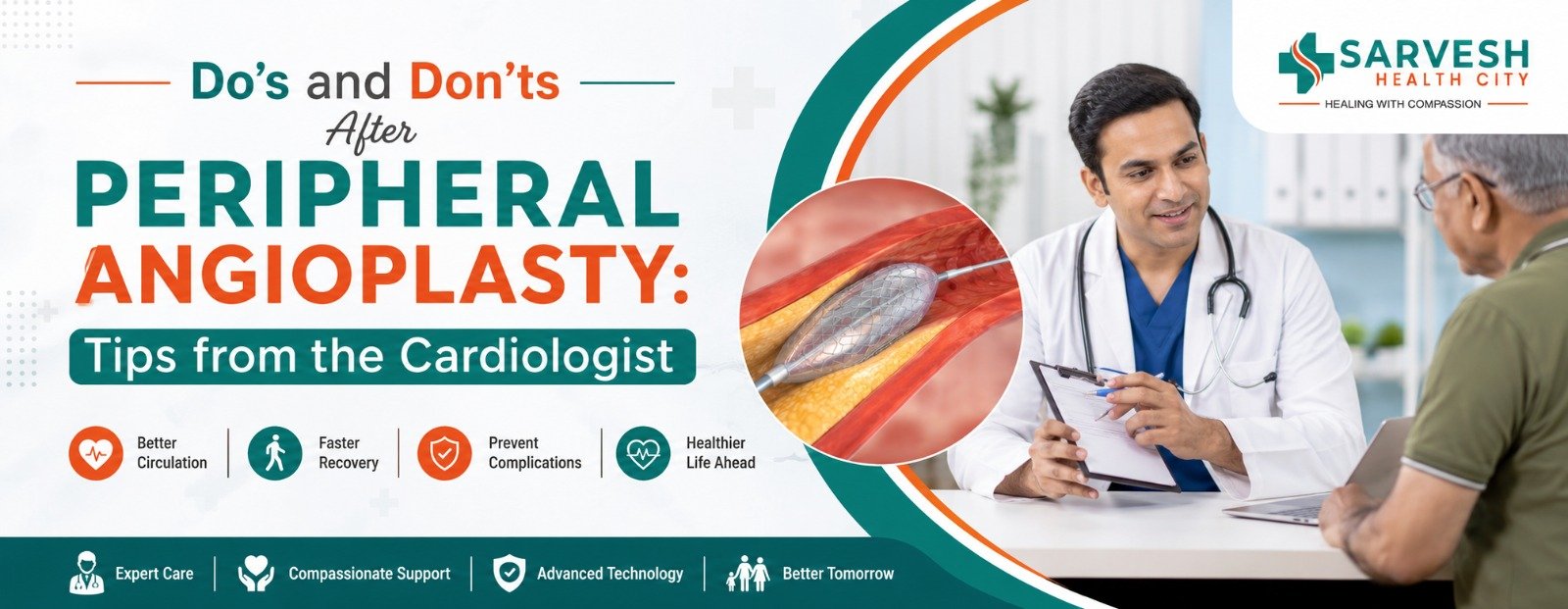
Do’s and Don’ts During First 48 Hours After Peripheral Angioplasty
During the first several days post angioplasty, the body is mainly engaged in recovery and healing processes. Given that the procedure is done by assessing artery via the groin or wrist, maintaining appropriate care of the operation site is crucial.
Do’s After Peripheral Angioplasty
- Keep an eye on the Access Site every day: Bruising and minor soreness may occur after the procedure. Nevertheless, it is crucial to see if the site is showing signs of redness, swelling, warmth, discharge, or a growing lump. Early detection of possible problems can be a great help in avoiding major matters.
- Keep well hydrated: Angioplasty usually involves the use of a contrast dye to help in seeing the blood vessels. Having enough fluids, especially water, aids your body in getting rid of the dye and it also helps the kidneys in their function during healing.
- Follow doctor’s advice on activity limitation: Your cardiologist might advise you not to do any heavy lifting, hard exercises, or bending too much at least for a few days. These advise can help you prevent bleeding but also help the access site to get healed properly.
Don’ts After Peripheral Angioplasty
- Don’t Ignore Sudden or Severe Pain: It is ok to have some minor discomfort but you have to tell your healthcare provider if you have a severe pain, if the swelling is increasing, if the limb is becoming numb or if there is a sudden feeling of coldness in the limb that has been treated.
- Don’t Soak in Bathtubs or Swimming Pools: You shouldn’t use a swimming pool, hot tub, or bath until the puncture site is fully healed. Staying in water for a long time will increase the chances of getting an infection. Taking a shower is usually fine when the doctor gives you the go-ahead.
Dos and Don’ts for Medication Adherence
Taking medicines exactly as your doctor has prescribed is one of the most critical elements of recovery. While the procedure opens up the blood flow, medications work to hold that through and also lower the chances of further heart problems.
Do’s While Following Medication Treatment
- Make sure to use antiplatelet medications: Post angioplasty, a lot of patients are given antiplatelet medication to stop blood clots from forming in the artery again.
- Keep using cholesterol-reducing medicines: Most people are put on statins after angioplasty. These are helpful for reducing cholesterol while also stabilising plaque formation in the blood vessels and calm down inflammation as well.
- Maintain healthy blood pressure: When blood pressure is high it impacts and put strain on artery walls, that will increase the risk of vascular damage in the future. It is best to keep a check on your blood pressure and stick to the treatment you were given, to keep your arteries healthy.
Don’ts While Following Medication Treatment
- Don’t discontinue medicine therapy without consulting your doctor: Even after the symptoms have disappeared, the untimely discontinuation of the medicines may pose a risk of complications, including the formation of blood clots and repeat blockage of coronary arteries.
- Don’t use herbs or vitamin pills without consulting your doctor: Some herbal medicine and non-prescription products could interact with prescribed medicines or could increase the risk of hemorrhages. So, you should always ask for medical advice before starting any supplement.
Dos and Don’ts During Lifestyle Changes
Peripheral angioplasty is like giving your blood circulation a new life. Nonetheless, if you want to keep your blood vessels in good shape, you will have to make some life-long changes in your lifestyle.
Dos to Make Your Lifestyle Healthy
- Follow a Heart-Healthy Diet: A diet that is high in fresh fruits, vegetables, whole grains, lean meats, fish, nuts, and healthy fats will help keep your blood vessels healthy and slow down the progression of artery disease. Avoiding processed foods, sugary drinks, and foods that are high in saturated fat will also help your heart.
- Make Walking Part of Your Recovery: Walking is the best exercise after peripheral angioplasty. If you walk regularly, your circulation will get better and body will develop more blood vessels that are able to carry blood.
- Maintain a Healthy Weight: Increased weight is one of the main contributor to heart issues, because your circulation system has to overwork. However, by keeping your body weight under check will reduce your chances of developing any health issues.
Don’ts to Avoid in Your Lifestyle
- Don’t Smoke: Smoking is a big contributor to the development of Peripheral Artery Disease. It harms blood vessels, causes plaque to form, and makes it more likely for arteries to get blocked again after surgery. Best thing you can do is give up smoking.
- Don’t Be Sedentary: While intense exercise might be off limits for a while, being inactive for a long time will decrease blood flow and make it hard for you to recover. It is important to maintain an active lifestyle that fits your doctor’s advice to have a successful long-term result.
Why Follow-Up Care Matters
Peripheral Artery Disease is a long-term illness that demands continuous management. Follow up with your cardiologist make it possible to evaluate blood flow, make changes in medication, control the risk factors, and spot problems in time for effective treatment.
Sarvesh Health City is a place that combines modern diagnostic equipment, highly skilled doctors, and specialized heart care services that aim to maintain vascular health over the years. Consulting with the best cardiologist in Hisar will help you to keep your recovery going and to deal with any issues quickly.
Final Thoughts
Peripheral angioplasty is a great procedure to improve your blood flow, ease your pain, and basically help you get back on your feet. But it’s not the last stage of treatment for Peripheral Artery Disease. What happens after the procedure and what you do are the two big factors that decide whether or not you will need the procedure again.
If you stick to your medications, change your lifestyle to be more heart-friendly, do regular exercises, and have your check-ups, then you can protect the good effects of your angioplasty and minimize the chance of having vascular problems in the future.