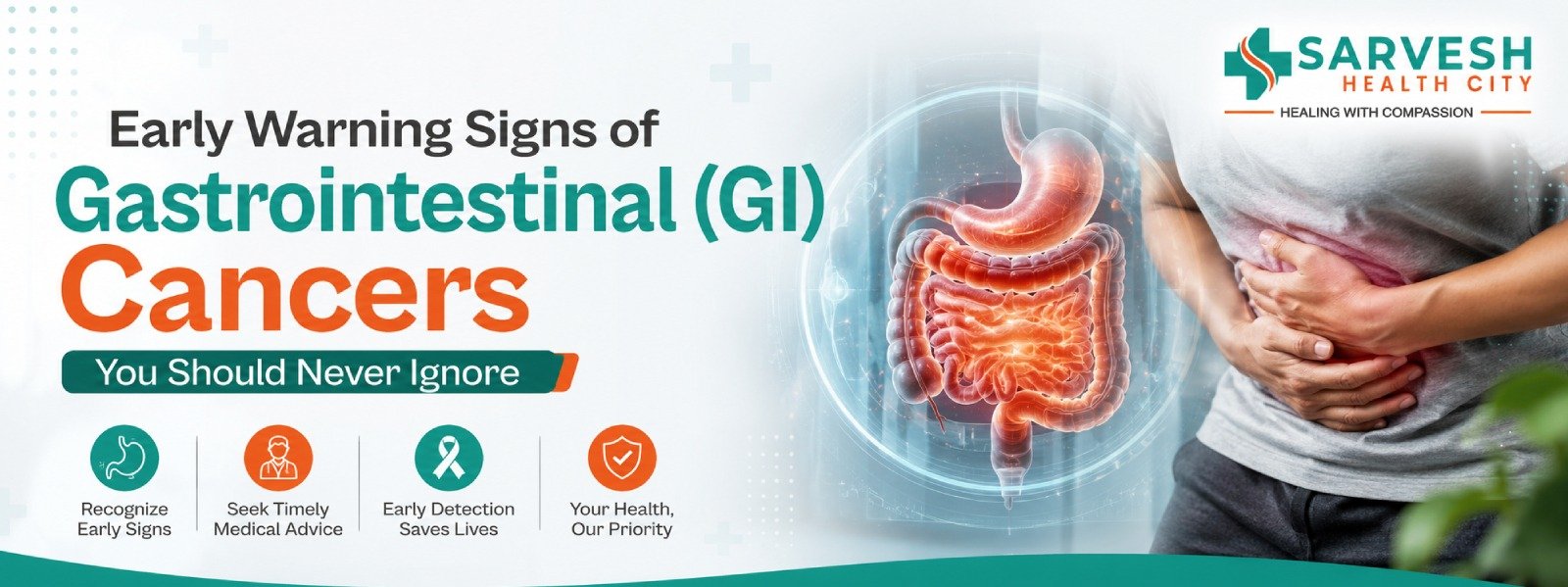
What Are Gastrointestinal (GI) Cancers?
Gastrointestinal cancers refer to malignancies that affect the stomach, esophagus, liver, pancreas, small intestine, colon, and rectum. As these organs play a major role in the digestion of food and absorption of nutrients, cancer in these areas heavily affects overall health and the ability to carry out daily activities.
A number of risk factors for GI cancers have been identified, such as tobacco use, heavy drinking, excess weight, poor diet, long-term digestive diseases, inherited conditions, and increasing age. Regular screenings and monitoring by a doctor can lead to the discovery of this cancer even before it has spread, greatly enhancing the likelihood of effective treatment.
Early Warning Signs of Gastrointestinal (GI) Cancer
Unfortunately, cancer of the digestive tract develops slowly and therefore, it is very important to be able to identify persistent digestive changes or physical changes that cannot be explained, early, so as to avoid delay in diagnosis and serious complications.
1. Difficulty in swallowing
If you have a sensation that the food is always getting stuck when you swallow, it is a sign that there may be problems with your esophagus and stomach.
2. Stomach pain or discomfort
Pain, bloating or cramping in the stomach that is constant may be a sign of digestive system problems. One should not ignore such discomfort or try self treatment again and again.
3. Vomiting repeatedly
Vomiting frequently without any known reason, signifies an obstruction or irritation in the digestive tract and must.be checked for an underlying cause.
4. Unexplained weight loss
Losing weight rapidly without making any changes in diet or without indulging in exercise can be a sign of cancers that affect digestion, metabolism or absorption of nutrients.
5. Loss of appetite
Going on for a long time without interest in food or feeling full after eating are signs that there may be abnormalities in the gastrointestinal system which will require further diagnosis.
6. Blood in vomit
Finding blood or dark coffee-ground-like material while vomiting suggests bleeding within the digestive tract that needs immediate medical attention.
7. Blood in stool
Similarly blood in stool indicates something wrong with the digestive system. In case of blood in stool, it could be due to bleeding inside the colon, rectum, or stomach.
8. Changes in bowel habits
Continuous diarrhea, irregular bowel movement, constipation that lasts several weeks or come back again and again may signal colorectal or intestinal abnormalities.
9. Narrow stools
When the intestine passage is constricted, stools may become very narrow or pencil thin. Any lasting change in the shape of the stool should be checked without delay.
10. Weakness or fatigue
Lack of nutrients, internal bleeding, or anemia can make you feel tired or weak all the time and this is one of the signs of digestive cancers and other long-term digestive problems.
11. Persistent indigestion or heartburn
If you often feel indigestion, acid reflux, or frequency of heartburn increases and gets worse even after the regular treatments, it indicates problems in the stomach or esophagus.
12. Jaundice
The white part of the eyes turning yellow can be a sign of liver or pancreas problems, and needs immediate medical attention seeking treatment for jaundice.
13. Clay-colored stools
Whether it is light colored or clay colored feces, it could be due to bile duct blockage or liver disease. These conditions often occur alongside digestive system or pancreatic cancer.
14. Itching
If you have itching in the whole body that is persistent and unexplained, it could be a liver problem that interferes with bile flow and might be due to GI cancer.
15. Abdominal lump
A visible mass or bulge in the tummy area may represent an abnormality in one of the digestive organs and should get a doctor’s attention right away.
16. Low red blood cell count
Internal bleeding hidden from being seen is a cause of anemia and can result in symptoms such as dizziness, weakness or lack of energy. Any constant low level of hemoglobin needs medical assessment without fail.
17. Change in voice
A hoarse or altered voice that remains for several weeks may be caused by acid reflux or a tumor exerting pressure on the upper part of the digestive tract.
Symptoms You Should NOT Ignore
Some gastrointestinal symptoms may seem pretty minor at first, but they can be warning signs of serious digestive diseases if they don’t go away or get worse over time.
- Blood in stool or vomit
- Sudden unexplained weight loss
- Persistent abdominal pain or bloating
- Difficulty swallowing food
- Long-term changes in bowel habits
- Continuous fatigue or weakness
- Yellowing of the skin or eyes
- Ongoing indigestion not responding to treatment
By not paying attention to these symptoms, one risks postponing diagnosis and treatment that might still be successful. In fact, gastrointestinal cancers tend to be much more controllable when they are found at an early stage. Getting checked out promptly by a doctor not only uncovers what is going on but also allows treatment to start before things get worse.
Final Thoughts
Symptoms of gastrointestinal cancers may be so mild that we tend to overlook them. But sustained digestive issues, physical changes without an obvious cause or bleeding are indications that should never be ignored. Early detection is still the best method of increasing treatment success and reducing the risk of other problems.
The department of gastrology at Sarvesh Health City offers latest treatments for the stomach and intestines by the team of best doctors using the state-of-the-art tools for diagnosis including the endoscopy, imaging methods and tests in the lab. Visiting the best gastroenterologist in Hisar is not only a step towards knowing what is wrong with you, but also making sure that you do the right thing in case more serious medical conditions are diagnosed.