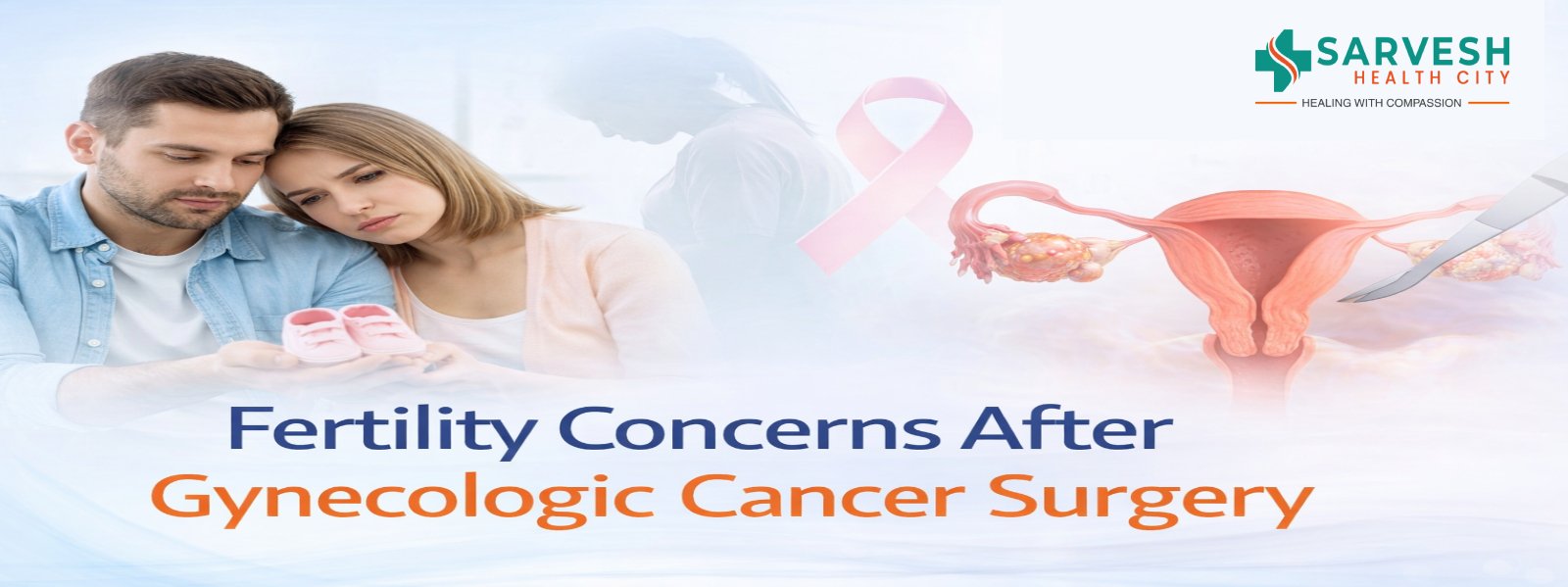
Relationship Between Gynecologic Cancer and Fertility
Gynecologic cancers develop in organs that are directly involved in reproduction, including the Gynecologic cancers develop in reproductive organs such as ovaries, uterus, cervix, and fallopian tubes. Thus, the cancer therapies aimed at controlling or eliminating the disease might also compromise a woman’s capability to get pregnant. In some cases, surgical intervention might necessitate the removal of reproductive system parts, whereas chemotherapy and radiation might not only harm eggs but also affect the production of hormones.
Besides, women have a finite number of eggs and cancer treatments might lead to a faster depletion of this reserve.
On the other hand, the degree to which fertility gets compromised depends on a number of aspects including the woman’s age, the cancer stage, and the type of treatment needed.
Why Fertility Concerns Arise After Cancer Surgery
Surgery is one of the effective treatment options for gynecologic cancers. But because these cancers involve the reproductive organs, the operations can sometimes affect a woman’s ability to have children later. These surgeries may also involve removal of reproductive organs. Though such operations are vital for getting rid of cancer, they also bring up fertility issues and family planning concerns.
Several reasons that cancer surgery can cause fertility problems:
- Removal of the uterus (hysterectomy): In some cancers, this operation is necessary and the woman will no longer be able to give birth since the uterus is the place where a baby grows.
- Removal of the ovaries: If both ovaries are taken out, the person’s body will no longer produce eggs and also the reproductive hormones, which results in inability to get pregnant and experiencing menopause very early.
- Removal of fallopian tubes: Besides being the site where fertilization takes place, fallopian tubes also function as the path for the egg to reach the uterus. Thus, their removal means that natural conception will not be possible.
- Effects of chemotherapy: Many chemotherapy medications are harmful to cells that divide rapidly e.g. ovarian follicles that store eggs, therefore, may lead to diminished ovarian function.
- Impact of radiation therapy: Radiation aimed at the pelvic area can kill eggs and also affect the uterine lining which is necessary for pregnancy, so it becomes difficult to carry a pregnancy.
Life After Cancer Treatment: Pregnancy and Parenthood
Sometimes, to help women retain their ability to have children, doctors may suggest fertility-preserving methods as a way of treating the cancer.
Some cancer treatment methods that can help in fertility preservation are:
- Radical trachelectomy: In case of very early cervical cancer, the surgeon may choose to remove the cervix, the uterus being left intact and hence the woman can get pregnant in the future.
- Removal of one ovary: In certain types of ovarian tumors, the decision is made to operate on the ovary that has the problem and the fallopian tube, whereas the other ovary continues to be unaffected and almost completely functional.
- Hormonal therapy for early endometrial cancer: Some women will be treated with hormones instead of immediately going through surgery for fertility preservation purposes.
- Egg or embryo freezing: At the very beginning of cancer treatment, eggs or embryos may be collected and saved in a frozen state (cryopreservation) for later use.
- Ovarian tissue preservation: If circumstances allow, ovarian tissue may be taken, stored and later grafted so as to restore fertility.
Even after undergoing cancer treatment, a large number of women may get pregnant without any aid, while a few may require the use of reproductive techniques such as IVF (in vitro fertilization). Most often doctors advise that women should not try getting pregnant for a few months to a couple years because by then the body would have recovered and also the doctors will be closely monitoring the risk for cancer coming back.
Importance of Early Consultation With Specialists
Consulting specialists such as gynecologic oncologists, surgical oncologists, fertility experts help patients know how their reproductive health will be affected by treatment and what options they have.
Specialists can identify what type of cancer a patient has, its stage, the patient’s age, health, etc., to come up with the most efficient and safest treatment. Early consultation gives the patients the power to make decisions and opens the doors to fertility preservation.
Final Words
Unfortunately, dealing with gynecologic cancer deeply affects both the mind and body of the women who want to have children and face fertility issues after the treatments.
However, there are medically advanced techniques that can help preserve fertility in many cases. If you have any fertility-related concerns or are seeking answers to cancer treatment, Sarvesh Health City, a surgical oncology hospital in Hisar, can be the best treatment center.