What are Brain Tumors?
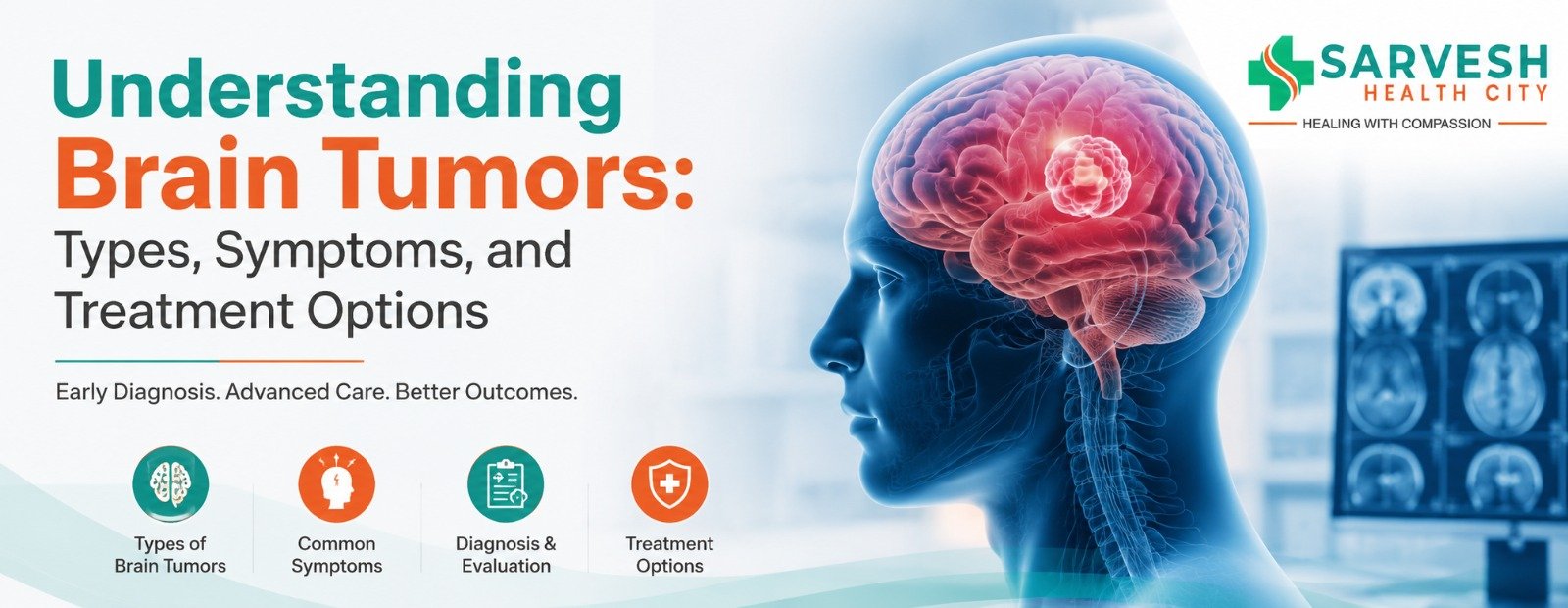
A brain tumor is an abnormality in the cells that forms the mass or cluster in the brain. The word “tumor” normally refers to cancer but very often brain tumors are benign and not cancerous. Some may be benign (non-cancerous) not spreading to other parts of the body though they may still cause a lot of pressure to the brain tissue.
Because of the complexity of brain activities, even a small tumor can interfere with essential functions like speech, movement or recalling the memory depending on in which location the tumor is found.
Types of Brain Tumors
Brain tumors are typically classified according to their origin and the type of cells that make them up.
1. Primary Brain Tumors
These are tumors that are developed from brain cells.
They are classified into:
Gliomas: These are the most common type, arising from the glial cells. They include astrocytomas and glioblastomas.
Meningiomas: Most of these tumors are benign and they originate from the membranes surrounding the brain.
Pituitary Tumors: Tumors of the pituitary gland that may cause changes at the hormonal levels.
Acoustic Neuromas: These tumors are non-cancerous tumors that grow on the nerve that connects the inner ear and the brain.
2. Secondary (Metastatic) Brain Tumors
They arise when cancer cells from other parts of the body such as lungs, breast, or colon get into the bloodstream and reach the brain. Adults usually have these types of tumors more commonly than primary brain ones.
Recognizing the Symptoms
Symptoms of brain tumor depend on the size, type, and location of where the tumor is. Since the brain consists of different specialized parts, the “warning signs” can be very diverse.
- New or Changing Headaches: When a headache keeps you awake at night, gets worse with time and is very strong in the morning, you may also feel nausea.
- Seizures: The brain suddenly being over-stimulated can cause shaking, fainting or convulsions.
- Cognitive and Personality Changes: Getting angry out of the blue, not being able to remember, being confused or having a completely different personality.
- Motor Skill Impairment: Trouble in maintaining body balance, un-skilled movements, or feeling of weakness in one arm or leg.
- Sensory Loss: Seeing things unclearly, double vision, or losing the ability to hear, speak, or understand.
Diagnosis and the Role of Modern Technology
Early detection makes a huge difference. So, the moment a patient is at the doorstep of the best neurosurgeon in Hisar at Sarvesh Health City, a thorough diagnosis is set into motion:
- Neurological Examination: It is meant to check the patient’s vision, hearing, muscle strength, and reflexes.
- Imaging: Our advanced MRI (Magnetic Resonance Imaging) and CT scans are capable of showing us precisely where the tumor is and its size.
- Biopsy: A very tiny piece of tissue is extracted for testing whether the tumor is cancerous or not.
Treatment Options for Brain Tumors
The way tumor treatment should be conducted relies heavily on the tumor’s situation and grade, and hence there are several therapies for its treatment, such as the following:
Surgery is usually first-line therapy. It aims at resecting as much of the tumor as possible while avoiding harming the unaffected brain tissue. With the help of a surgical microscope, neurosurgeons can highlight and dissect the tumor very accurately.
- Radiotherapy: High-energy rays are most commonly used to target tumors and kill the cancerous cells. It may be used as an existing therapy in some tumor cases or used as an after-surgery therapy to eliminate any left microscopic cells.
- Chemotherapy: Some malignant gliomas are very aggressive, and drug therapy is used to stop the growth of cancerous cells. These are often used for high-grade malignant tumors.
- Targeted Therapy and Steroids: Medical practitioners can decide to give medicines called corticosteroids to decrease brain swelling (edema) and inflammation. This will reduce the headache and pressure.
Recovery and Rehabilitation
Surgery is just one part of treatment. A person, after an operation, needs rehabilitation to recover his/her lost functions, including
- Physical Therapy: to help people move well and have good balance.
- Speech Therapy: to help communication skills after brain-tumor surgery.
- Occupational Therapy: To help patients perform their usual tasks after surgery.
Final Thoughts
It takes a lot of courage, help, and top-notch medical skill to face a brain tumor diagnosis. We at Sarvesh Health City have advanced technology, offering heartfelt compassionate care and modified treatment plans for each patient individually.
From accurately guiding brain tumor surgery to offering rehabilitative therapy sessions, consulting the best neurosurgeon in Hisar would help you uplift your treatment outcome. Please do not overlook any neurological symptoms, as early diagnosis and treatment will definitely result in a better prognosis and healthier living.