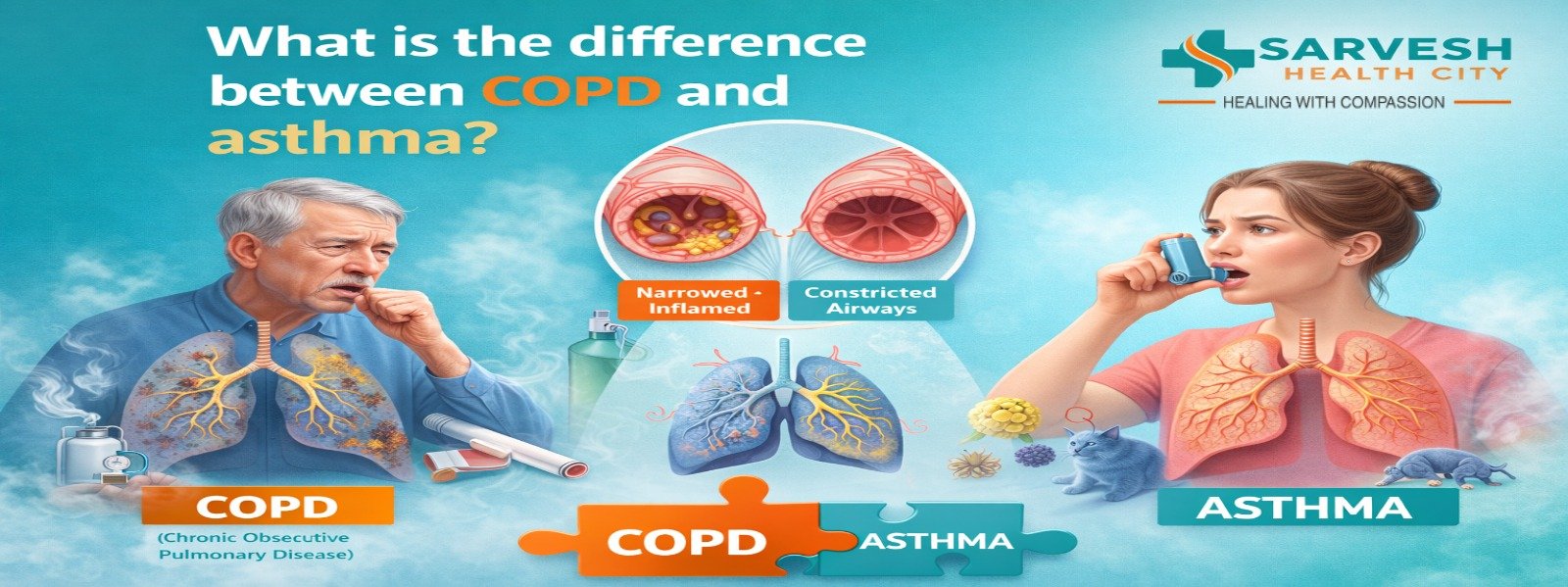
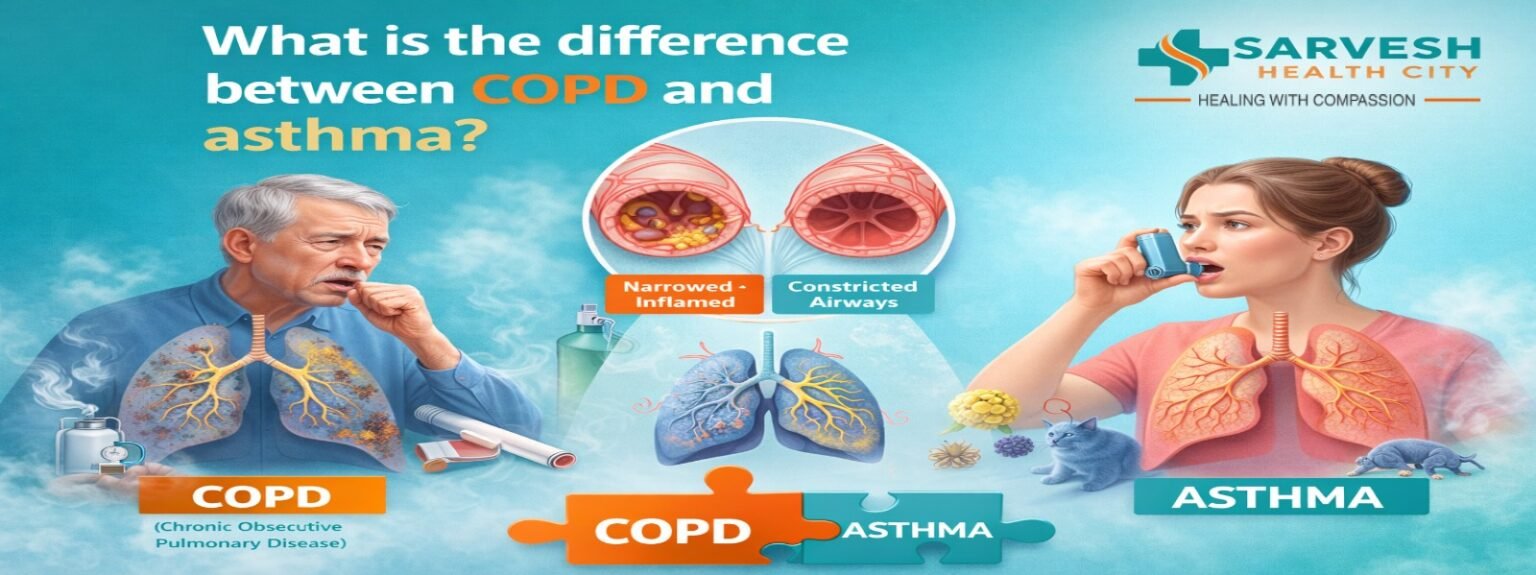
Understanding Asthma and COPD
Both lung conditions, asthma and chronic obstructive pulmonary disease (COPD), result in inflamed and narrowed airways. Nevertheless, they are two different diseases which vary in their causes and development.
Asthma is, in most cases, a lifelong disorder where airways react abnormally to triggers such as allergens, cold air, or physical activity. Most of the time, symptoms are absent, and after proper treatment, many individuals even become completely symptom-free for long periods.
On the contrary, COPD is a condition that keeps getting worse with time. It refers to diseases like emphysema and chronic bronchitis, most of the time caused by inhaling harmful substances for a long time, e.g., cigarette smoke or air pollution.
Key Differences Between COPD and Asthma
Breathing is the main aspect of life that both of these illnesses impair, however, they vary greatly in their causes, development and effects on the activities of daily life.
- Root cause: Asthma is usually an allergic reaction to something or an effect of exposure to different environmental agents. Also, it can be a hereditary trait. Besides, a lot of times, COPD is a result of a prolonged contact with harmful substances such as cigarette smoke, air pollution, and/or occupational chemicals.
- Age at which the disease appears: Asthma is known to start at childhood or early youth. On the other hand, COPD is mostly identified in people over 40 years of age, particularly those who have a smoking history.
- Symptom Pattern and Frequency: The symptoms of asthma, for example, come in episodes, the patients may have sudden attacks followed by very long periods without any symptoms. COPD symptoms are different in that they are persistent and present almost every day, getting gradually worse over time.
- Nature of Symptoms (Key Clinical Difference): Despite sharing some similar symptoms, their manifestations differ. For instance, during asthma flare-ups, it is common to have dry cough, wheezing, and chest tightness. COPD, on the other hand, is more often characterized by a chronic cough with mucus (phlegm), breathlessness, and a decrease in the ability to exercise. In asthma, breathing may become normal between episodes, whereas in COPD, the air flow limitations are almost continuous
- Disease Progression: Properly treated, asthma is mostly under control and does not continue to get worse. COPD is a progressive disorder and lung function declines over time even with treatment.
- Reversibility of Airflow Limitation: This may well be the biggest difference between the two. Asthma-related airway constriction is predominantly reversible with treatment, while COPD results in permanent structural changes of the lungs.
Causes, Risk Factors, and Treatment Approach
While asthma and COPD both target the lungs, the origins of these diseases are quite separate. Knowing these originators not only facilitates diagnosing the ailment but also deciding on the treatment and management effectively.
Asthma is a disorder of hypersensitivity. The bronchial tubes react excessively to certain external or internal triggers causing inflammation and a temporary restriction of airflow. These triggers are different for each individual but some are common:
- Environmental allergens like pollen, dust, and mold
- Cold air or sudden change of weather
- Physical activity or exercise
- Air pollution and smoking
However, COPD is a disease caused by tissue damage that acts up over the years. It usually happens due to exposure to toxic substances that lead to lung tissue damage and cause a decrease in the air flow that is permanent. Besides smoking, the main risk factors are:
- Exposure to passive smoke for a long time
- Constant exposure to polluting air
- Chemicals, dust, and smoke in the workplace
- A hereditary condition such as alpha-1 antitrypsin deficiency
Physicians often use the patient’s medical history, identifying symptom patterns, and conducting lung function tests like spirometry to distinguish between the two diseases.
Regarding the therapies, the used methods depend on how the diseases affect the lungs individually. Treating asthma is mainly about controlling inflammation and preventing crisis by using inhalers, corticosteroids, and trigger avoidance. Managing COPD focuses on decelerating the illness and enhancing the patient’s life standards by using bronchodilators, oxygen therapy in the cases of advanced disease, and, most importantly, major changes of lifestyle like smoking cessation.
Final Thoughts
When you know the distinction between asthma and COPD, you can reach out for prompt treatment. On one hand, asthma is manageable in most cases, on the other, COPD demands ongoing care to minimize its advancement.
Don’t overlook signs of continuous breathing issues and consult a specialist at best pulmonology treatment hospital in Hisar, Sarvesh Health City. Early treatment has the potential to greatly impact one’s ability to live a healthy and energetic life.