- Specialities
- Center of Excellence
- Specialitites
- ANAESTHESIA & INTENSIVIST
- BREAST SURGERY
- CRITICAL CARE
- DERMATOLOGY
- DIALYSIS
- DENTISTRY & MAXILLOFACIAL SURGERY
- ENT
- INTERNAL MEDICINE
- INTERVENTIONAL RADIOLOGY
- LAPAROSCOPIC & GENERAL SURGERY
- OBSTETRICS & GYNAECOLOGY & COSMETOLOGY
- OPHTHALMOLOGY (EYE CARE)
- PEDIATRIC CARE & NEONATOLOGY
- PHYSIOTHERAPY & REHABILITATION
- Services
- AMBULANCE SERVICES (24/7)
- BONE MARROW TRANSPLANT
- BLOOD CENTER (OPEN 24/7)
- EMERGENCY SERVICES (AVAILABLE 24/7)
- LAB AND PATHOLOGY (OPEN 24/7)
- NEONATAL INTENSIVE CARE UNIT (NICU) & PEDIATRIC INTENSIVE CARE UNIT (PICU)
- NUTRITION & DIETETICS
- PHYSIOTHERAPY & REHABILITATION SERVICES
- PREVENTIVE HEALTH CHECKUPS
- PHARMACY (OPEN 24/7)
- PET/CT SCAN
- RADIOLOGY & IMAGING SERVICES
- Blogs
- Health Library
- Our Empanelment
- About Sarvesh

- Specialities
- Center of Excellence
- Specialitites
- ANAESTHESIA & INTENSIVIST
- BREAST SURGERY
- CRITICAL CARE
- DERMATOLOGY
- DIALYSIS
- DENTISTRY & MAXILLOFACIAL SURGERY
- ENT
- INTERNAL MEDICINE
- INTERVENTIONAL RADIOLOGY
- LAPAROSCOPIC & GENERAL SURGERY
- OBSTETRICS & GYNAECOLOGY & COSMETOLOGY
- OPHTHALMOLOGY (EYE CARE)
- PEDIATRIC CARE & NEONATOLOGY
- PHYSIOTHERAPY & REHABILITATION
- Services
- AMBULANCE SERVICES (24/7)
- BONE MARROW TRANSPLANT
- BLOOD CENTER (OPEN 24/7)
- EMERGENCY SERVICES (AVAILABLE 24/7)
- LAB AND PATHOLOGY (OPEN 24/7)
- NEONATAL INTENSIVE CARE UNIT (NICU) & PEDIATRIC INTENSIVE CARE UNIT (PICU)
- NUTRITION & DIETETICS
- PHYSIOTHERAPY & REHABILITATION SERVICES
- PREVENTIVE HEALTH CHECKUPS
- PHARMACY (OPEN 24/7)
- PET/CT SCAN
- RADIOLOGY & IMAGING SERVICES
- Blogs
- Health Library
- Our Empanelment
- About Sarvesh
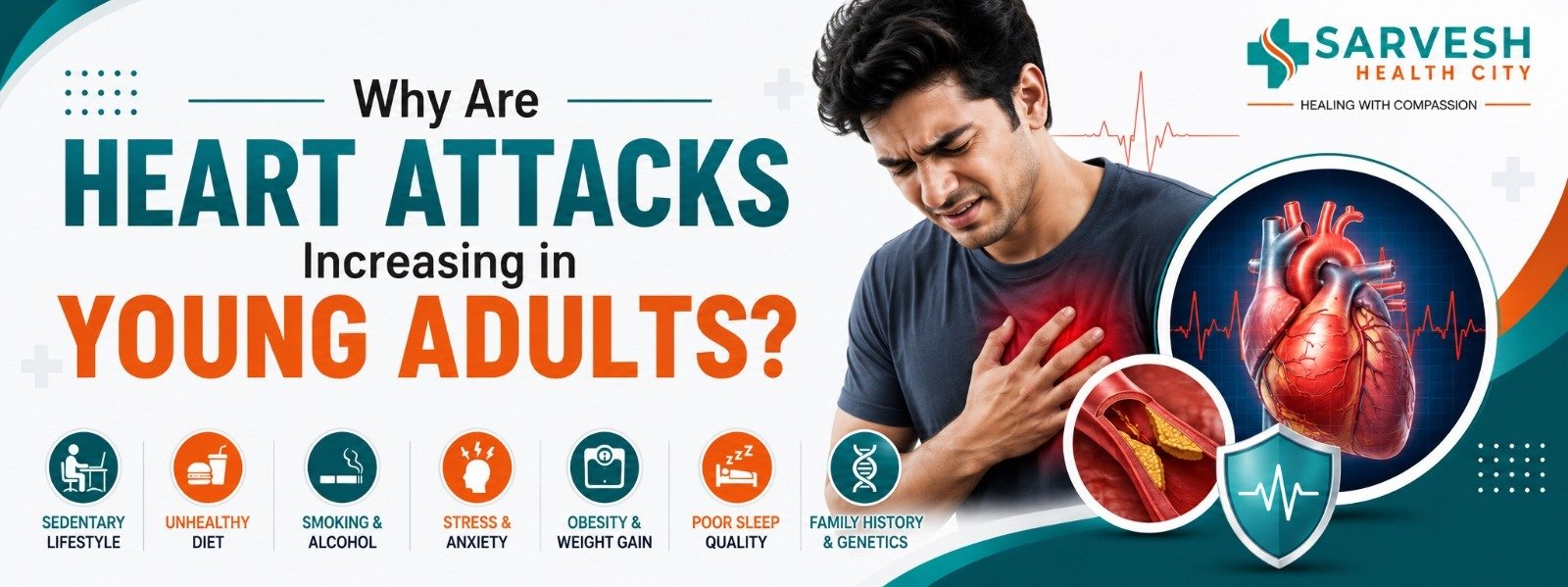
Heart attacks were thought to be mainly a health problem of older people. But nowadays, cardiologists are getting worried by the increasing number of heart attack cases in people in their 20s, 30s, and 40s. Age is still a risk factor for heart disease but today’s lifestyle choices, metabolic disorders and postponed health check-ups are making the cardiovascular problems to start at much younger ages.
The team of experts at Sarvesh Health City says that most of the heart attacks that have happened are not “sudden”. Visiting the best cardiologist in hisar can help you avoid big cardiac troubles in future and also take care of your heart health over time.
Here we will discuss the warning signs of heart attacks and what makes the young population vulnerable to them. Heart attacks usually come due to risk factors that have been gradually accumulating, often without one being aware.
Quick Facts About Heart Attacks in Young Adults
- What is the common age group affected?
It is mainly seen in adults below 45 years old
- What are the leading risk factors?
High blood pressure, diabetes, smoking, obesity, high cholesterol, and stress
- Can young adults have heart attacks?
Yes, 20-30 years-old population can also suffer from heart attacks
- Can heart attacks be prevented?
A lot of cases can be prevented by changes in lifestyle and early detection through screening tests
Why Are Heart Attacks Becoming More Common in Young Adults?
The reason for the increase in heart attacks among young individual may vary from person to person but generally, a combination of lifestyle changes and medical conditions slowly contribute to blood vessel damage and heart attacks, such as:
1. Sedentary Lifestyle
Youth are increasingly affected due to factors like desk jobs, long hours at desks, extended screen time, and lack of physical activity.
Periods of inactivity result in difficulty maintaining low blood pressure, healthy cholesterol and blood sugar levels, and body weight. Such situations may lead to plaque formation along arteries, which may cause heart attack eventually.
2. Unhealthy Diet
Excessive eating of highly-processed foods, sugary drinks, fast food, and those foods that are high in saturated and trans fats causes an imbalance between the levels of “good” and “bad” cholesterol and leads to obesity.
Eventually, such fatty deposits build up over the coronary arteries that decreases the blood supply to the heart. A diet lacking the essential nutritional components such as fruits, vegetables, whole grains, and healthy fats further heightens risk of cardiovascular disease.
3. Higher Prevalence of Diabetes and High Blood Pressure
Type 2 diabetes and hypertension do not only affect the elderly anymore.
Elevated blood sugar damages the blood vessels and high blood pressure causes an extra load on the artery walls. When both these problems combine, it leads to development of atherosclerosis- narrowing and hardening of the arteries that can cause heart attack.
4. Chronic Stress and Poor Sleep
Lifestyle nowadays involves long working hours, financial worries, sleep disturbances, and prolonged exposure to stress.
Continuously stressed condition raises levels of stress hormones such as cortisol and adrenaline which may have adverse effects: increased blood pressure, more inflammation, damage to heart etc.
Lack of sleep has also been linked to an increased risk of cardiovascular diseases.
5. Smoking, Vaping, and Tobacco Use
Smoking is known to be one the main risk factors for heart attacks, as it’s a preventable one.
Nicotine is one of the chemicals present in tobacco, along with carbon monoxide, which narrows vessels, supports the blood clot, raises heart rate and BP, and also causes the heart not to receive enough oxygen.
Vaping is relatively new that people have started to experiment with so they can get a taste of the smoking experience without inhaling a single puff. However, this is also loaded with chemicals which may result in severe damage to the heart if one regularly uses them.
6. Family History and Genetics
In the realm of genetics, it is important to remember that if a person’s relatives are predisposed to heart disease, then the chances of person getting that disease are very high.
Even if someone has never had symptoms, and someone in his or her immediate family has experienced a heart attack at a relatively young age, it would still make sense to conduct cardiological tests periodically.
What Are the Early Warning Signs of a Heart Attack?
When you are young or a woman you must know that the symptoms can be different from the usual ones.
Typically, a heart attack may show signs of:
- Severe, squeezing, or discomfort in the chest, usually experienced as a chest pain
- Pain in the left hand, shoulder, neck, jaw, or back when the blood flow in one’s heart muscles is restricted.
- Difficulty breathing
- Unusual signs of sweating
- An unexpected tiredness or fatigue and fainting.
It would certainly be wise to call 911 in emergency cases. A sudden occurrence of any of the above-mentioned signs and symptoms, regardless of the time they happen, warrants serious attention and immediate medical intervention.
How Can Young Adults Reduce Their Risk?
Fortunately, many heart attacks could indeed be avoided by tackling changeable risk factors, such as below:
1. Physical activity is essential
Try to aim for at least 150 minutes every week of moderate-intensity cardiovascular activity, combined with muscle strengthening exercises.
Regular exercise helps circulation, promote normal lipid level, lowers blood pressure, and promotes normal blood sugar levels.
2. A Heart-Healthy Meal Plan
You should try to include the following in your daily meal plan:
– Fresh fruits and veggies
– Cereal products, especially whole-grain
– Meat and meat-based dishes in relatively low quantities, or alternative lean protein sources, etc.
– Nuts and seeds
– Sources of unsaturated fats, especially the kind found in olive oil
Avoid the following to some degree:
– Greasy meals
– Snacks that are heavily processed
– Drinks full of sugar
– Too much salt
– Food products loaded with saturated and trans fats
3. Stop Smoking and Avoid Tobacco
There is no better way of saving yourself from heart-related issues than quitting smoking altogether.
After years of cigarette use, giving up the habit significantly reduces the risk of the heart getting diseases.
4. Manage Stress
Engagement in various recreational activities like yoga and meditation can alleviate stress. So can regular physical exercise in conjunction. Maintaining a sound and reasonable balance between work and leisure activities also helps.
5. Schedule Regular Health Check-Ups
The best way of catching health problems at an early stage is to undergo periodic screening at the clinic for various cardiovascular risk factors such as blood pressure, blood sugar levels, lipid profile & body weight.
Treating health problems early on drastically lowers the chance of experiencing a heart attack.
Final Thoughts
In cases of heart diseases, timely identification and thorough treatment are crucial.
Sarvesh Health City helps patients to consult best cardiologist in hisar who have good experience in treating these conditions. The hospital offers top notch health and medical services with help of state-of-the-art techniques, preventive cardiac check-ups, emergency cardiac treatments, and customized therapy plans to reduce the risk factors of each patient.
Here, as the best cardiology hospital in Hisar we believe it is not only about curing the patients but also helping them prevent further incidents related to cardiovascular problems through detecting early signs followed by proper lifestyle guidelines.
It is through this combination of expert cardiac care and periodic health evaluations that heart health can be safeguarded over the years.
Frequently Asked Questions
Q1. Why are heart attacks increasing in people under 40?
Ans. The main reason behind heart attacks at younger ages is lifestyle choices such as not engaging in physical activities, eating foods high in fats, carbohydrates and salt leading to obesity, intake of tobacco, having diabetes, high blood pressure, chronic stress and insufficient sleep all together make up the major triggers.
Q2. Can a healthy-looking young person have a heart attack?
Ans. Absolutely. It’s true that some young people may not show any signs of a medical problem but it doesn’t mean they are free from them. In reality, there may be risk factors such as high cholesterol level, the inherited disorder of heart, undiagnosed hypertension or diabetes.
Q3. What tests can help identify heart disease early?
Ans. Your cardiologist might suggest the following diagnostic procedures, like taking blood pressure readings, testing for the levels of cholesterol and triglycerides in blood plasma (lipid profile), measuring the sugar level in blood, performing an electrocardiogram, and the heart function analysis through echocardiography.
Q4. Is stress alone enough to cause a heart attack?
Ans. A heart attack by stress only is unlikely but stress does contribute significantly to the heart health deterioration as long as it is constant. That could be related to multiple physiological mechanisms, to elevation of blood pressure, increased inflammatory processes in the body, development of bad habits such as sedentary lifestyle and smoking, all of them being major contributors to heart disease.
Q5. When should I consult a cardiologist even if I have no symptoms?
Ans. Even if you are showing no visible symptoms but have diabetes, high blood pressure, high cholesterol, you smoke, or a family member suffers from early heart disease, you should take up a preventive cardiac check-up.
Media Enquiries
- Sarvesh Health City
- Sarvesh Health City Site No. 1, Sector 14, Hisar – 125001 (Haryana)
- +91 6901 626262
- +91 6901 636363
Social Media
Healthcare at your fingertips


CARDIOLOGIST
Looking for the best cardiologist in Hisar? Dr. Abhishek Gupta at Sarvesh Health City offers expert care for your heart health. Book an appointment today!