- Specialities
- Center of Excellence
- Specialitites
- ANAESTHESIA & INTENSIVIST
- BREAST SURGERY
- CRITICAL CARE
- DERMATOLOGY
- DIALYSIS
- DENTISTRY & MAXILLOFACIAL SURGERY
- ENT
- INTERNAL MEDICINE
- INTERVENTIONAL RADIOLOGY
- LAPAROSCOPIC & GENERAL SURGERY
- OBSTETRICS & GYNAECOLOGY & COSMETOLOGY
- OPHTHALMOLOGY (EYE CARE)
- PEDIATRIC CARE & NEONATOLOGY
- PHYSIOTHERAPY & REHABILITATION
- Services
- AMBULANCE SERVICES (24/7)
- BONE MARROW TRANSPLANT
- BLOOD CENTER (OPEN 24/7)
- EMERGENCY SERVICES (AVAILABLE 24/7)
- LAB AND PATHOLOGY (OPEN 24/7)
- NEONATAL INTENSIVE CARE UNIT (NICU) & PEDIATRIC INTENSIVE CARE UNIT (PICU)
- NUTRITION & DIETETICS
- PHYSIOTHERAPY & REHABILITATION SERVICES
- PREVENTIVE HEALTH CHECKUPS
- PHARMACY (OPEN 24/7)
- PET/CT SCAN
- RADIOLOGY & IMAGING SERVICES
- Blogs
- Health Library
- Our Empanelment
- About Sarvesh

- Specialities
- Center of Excellence
- Specialitites
- ANAESTHESIA & INTENSIVIST
- BREAST SURGERY
- CRITICAL CARE
- DERMATOLOGY
- DIALYSIS
- DENTISTRY & MAXILLOFACIAL SURGERY
- ENT
- INTERNAL MEDICINE
- INTERVENTIONAL RADIOLOGY
- LAPAROSCOPIC & GENERAL SURGERY
- OBSTETRICS & GYNAECOLOGY & COSMETOLOGY
- OPHTHALMOLOGY (EYE CARE)
- PEDIATRIC CARE & NEONATOLOGY
- PHYSIOTHERAPY & REHABILITATION
- Services
- AMBULANCE SERVICES (24/7)
- BONE MARROW TRANSPLANT
- BLOOD CENTER (OPEN 24/7)
- EMERGENCY SERVICES (AVAILABLE 24/7)
- LAB AND PATHOLOGY (OPEN 24/7)
- NEONATAL INTENSIVE CARE UNIT (NICU) & PEDIATRIC INTENSIVE CARE UNIT (PICU)
- NUTRITION & DIETETICS
- PHYSIOTHERAPY & REHABILITATION SERVICES
- PREVENTIVE HEALTH CHECKUPS
- PHARMACY (OPEN 24/7)
- PET/CT SCAN
- RADIOLOGY & IMAGING SERVICES
- Blogs
- Health Library
- Our Empanelment
- About Sarvesh
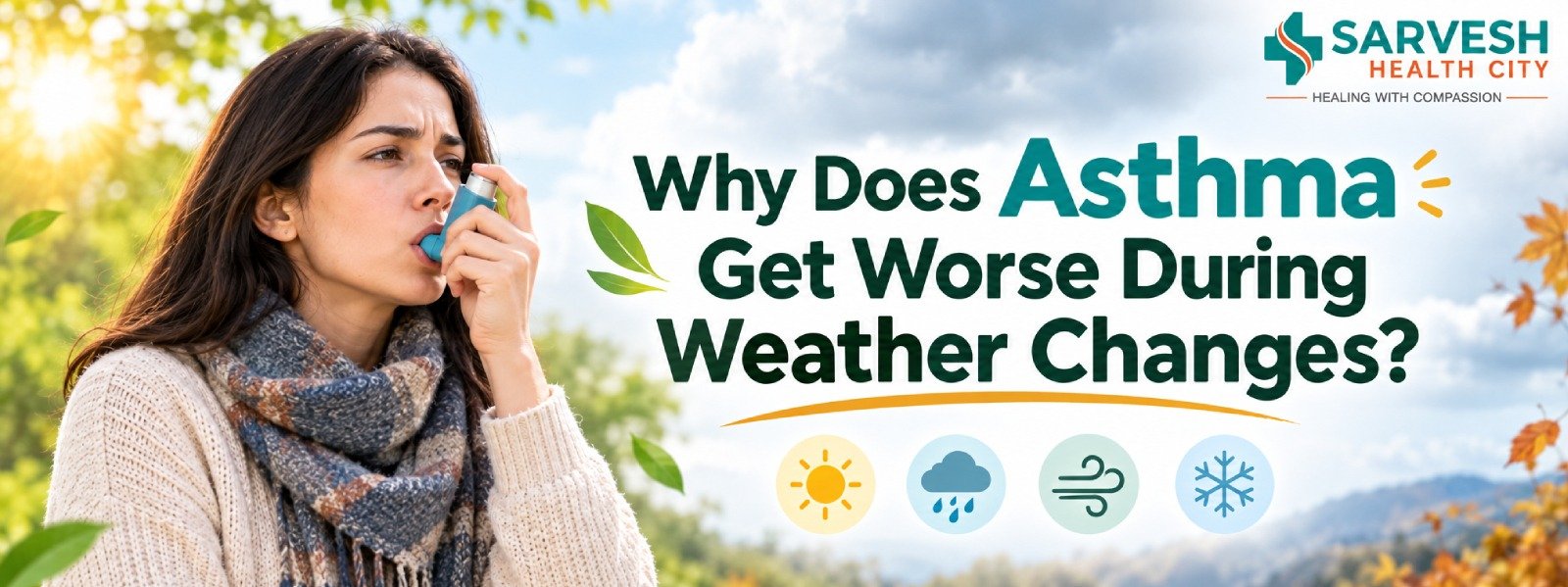
For people with asthma, weather changes not only bring changes in temperature but is also the starting point for their asthma symptoms. Weather changes such as dry and cold climate, high humidity, a storm, pollen and damp conditions can all trigger asthma symptoms like coughing, wheezing, chest tightness or shortness of breath. This is why people report asthma worsening during weather changes.
Through this article, we will talk about why asthma get worse during weather changes, so you can take preventive measures and manage asthma accordingly. If symptoms become difficult to handle, consulting with a doctor at the best pulmonology treatment hospital in Hisar, Sarvesh Health City, helps determine the cause and recommend suitable treatment options.
Why Does Weather Affect Asthma?
In asthma, the airways may get swollen and constricted at times, which results in breathing difficulties for such people. Since they are more sensitive, some environmental factors may lead to asthma attacks or aggravate the existing symptoms.
The weather may influence asthma through two mechanisms: one being direct influence like cold, dry air and the other through changes in pollen levels, humidity, mold growth and air quality.
1. Cold and Dry Air Can Irritate the Airways
Cold, dry air is a typical trigger to provoke asthma symptoms. If a person inhales such air, especially when one is exercising or running outdoors, the airways might get irritated and constricted, causing cough, wheezing, tightness in the chest, or even breathing difficulties.
Winter is not only a season of cold but may also affect in several other ways making it difficult for a person who have asthma. Cold, common flu, and other viral infections can also result in the worsening of asthma symptoms.
2. Heat, Humidity and Poor Air Quality Can Trigger Symptoms
Asthma affects everyone in a different way and not all will experience problems with warm and humid weather, but it may still cause discomfort to some. Excess humidity alone can make breathing difficult, while in hot weather, there may be simultaneous high levels of air pollution.
Air pollutants and other irritants that come with the wind can provoke asthma symptoms in sensitive people.
On days with very polluted air, reducing intense outdoor activities might be helpful to avoid being exposed much.
3. Thunderstorms Can Trigger Sudden Asthma Symptoms
Thunderstorms can be a threat to some people suffering from asthma with pollen allergies and strong winds. Such winds along with the different atmospheric pressures may carry pollen and various particles through air. In few situations, the pollen may break into smaller particles that can easily enter air pathways through nostrils.
In fact, this phenomenon is quite common and referred as thunderstorm asthma, and is reason why susceptible people to such conditions experience a very sudden and dramatic increase in respiratory distress symptoms. The degree of risk in each case is also influenced by local pollen levels, weather conditions and personal sensitivity.
4. Seasonal Allergens Can Worsen Asthma
In some cases, it is the allergens rather than a temperature change that is responsible for a person’s problem. Pollen, especially coming from the plants on trees and grasses along with certain weeds, often plays a key role in allergic asthma.
Pollen levels vary with the season, plant varieties and location. In addition to pollen, other allergens that may contribute to asthma could include house dust, mould, pet dander or even certain foods and food additives.
5. Damp Conditions Can Increase Mold Exposure
Continuously wet or rainy weather that lasts for days can introduce extra moisture into the houses. The situation becomes even worse if there are leaks or flooding or poor ventilation, which gives a favorable environment for mold growth. It is possible that asthma symptoms could get exacerbated not in those who is allergic to mold, but also in another individual who has no prior history of mold allergy, simply as a result of being exposed to molds.
Controlling indoor temperature so that relative humidity does not rise above 50% and allowing time to dry the damp sections immediately may help in decreasing mold production.
How Can You Manage Asthma During Weather Changes?
Being aware of your own triggers is one of the most essential things to do to manage asthma year-round. Moreover, having a written copy of an asthma management plan can help you identify when your asthma symptoms get worse by looking at your asthma symptoms and also decide which medicines to take and at which point to seek medical help.
Some practical measures are:
- Never miss a dose of your asthma medication without prior consultation.
- If your asthma is aggravated by pollen and air quality check if these are your triggers, use pollen and air quality forecasts regularly.
- In order to prevent your lungs from freezing when you are out at low temperatures, cover your nose and mouth with a scarf.
- Avoid going outside during high levels of pollen or pollution.
- Keep your indoor areas dry by addressing any moisture problems or leaks and mold as soon as they show up.
- Steer clear from tobacco smoke or any other substances that may hurt your respiratory system.
- Instead of self-modifying medication discuss with your physician if your symptoms are recurring in a particular season.
Final Thoughts
Asthma get worse during weather changes due to changes in environmental conditions, triggering sensitive airways or increase exposure to allergens such as cold air, pollen, mold, high humidity and air pollution. Everyone is sensitive to different triggers which is why it’s important to understand your own symptom patterns to take the best care of asthma.
Keeping a symptom list, adhering to a customized asthma action plan and administering prescribed medications are ways one can minimize the effects of winter changes. If you are looking for a pulmonologist, you can visit the best pulmonology treatment hospital in Hisar at Sarvesh Health City; the pulmonary and critical care medicine department provides asthma treatment, along with pulmonary studies and allergy assessment. Its pulmonary services include customized asthma treatment and diagnostics.
Note: Severe asthma symptoms that don’t get better even after a complete asthma action plan must be considered medically emergency.
Frequently Asked Questions
Q1. Why does asthma get worse during weather changes?
Ans. Changes in weather, such as cold and dry air, may irritate the air passages making the symptoms of asthma appear more severe in some individuals. At this time, the winter months could result in exposure to illnesses like flu or to common allergens at home which might elevate asthma symptoms.
Q2. Can cold air trigger asthma symptoms?
Ans. Yes, cold dry air can aggravate the respiratory tract and lead to coughing, wheezing, and breathing difficulty among people who have asthma.
Q3. Can rain and humidity make asthma worse?
Ans. Yes, moisture gives the favourable environment for mold growth while high humidity along with associated air-quality changes may act as asthma triggers.
Q4. What is thunderstorm asthma?
Ans. Thunderstorm asthma is a flare-up linked to specific conditions when pollen levels increase in strong winds resulting in dispersion of airborne pollen particles that can enter the lungs of susceptible individuals, increasing asthma problems.
Q5. When should asthma symptoms be treated as an emergency?
Ans. If you cannot get your breathing back to normal after following your asthma action plan and using the prescribed rescue medicine, you should seek emergency treatment. The asthma action plan should tell you clearly whether and when emergency help is required.
Media Enquiries
- Sarvesh Health City
- Sarvesh Health City Site No. 1, Sector 14, Hisar – 125001 (Haryana)
- +91 6901 626262
- +91 6901 636363
Social Media
Healthcare at your fingertips



PULMONOLOGIST
Discover why Dr. Nidhi Mahajan at Sarvesh Health City is regarded as Hisar’s leading pulmonologist, offering expert care, advanced treatments, and trusted results.