- Specialities
- Center of Excellence
- Specialitites
- ANAESTHESIA & INTENSIVIST
- BREAST SURGERY
- CRITICAL CARE
- DERMATOLOGY
- DIALYSIS
- DENTISTRY & MAXILLOFACIAL SURGERY
- ENT
- INTERNAL MEDICINE
- INTERVENTIONAL RADIOLOGY
- LAPAROSCOPIC & GENERAL SURGERY
- OBSTETRICS & GYNAECOLOGY & COSMETOLOGY
- OPHTHALMOLOGY (EYE CARE)
- PEDIATRIC CARE & NEONATOLOGY
- PHYSIOTHERAPY & REHABILITATION
- Services
- AMBULANCE SERVICES (24/7)
- BONE MARROW TRANSPLANT
- BLOOD CENTER (OPEN 24/7)
- EMERGENCY SERVICES (AVAILABLE 24/7)
- LAB AND PATHOLOGY (OPEN 24/7)
- NEONATAL INTENSIVE CARE UNIT (NICU) & PEDIATRIC INTENSIVE CARE UNIT (PICU)
- NUTRITION & DIETETICS
- PHYSIOTHERAPY & REHABILITATION SERVICES
- PREVENTIVE HEALTH CHECKUPS
- PHARMACY (OPEN 24/7)
- PET/CT SCAN
- RADIOLOGY & IMAGING SERVICES
- Blogs
- Health Library
- Our Empanelment
- About Sarvesh

- Specialities
- Center of Excellence
- Specialitites
- ANAESTHESIA & INTENSIVIST
- BREAST SURGERY
- CRITICAL CARE
- DERMATOLOGY
- DIALYSIS
- DENTISTRY & MAXILLOFACIAL SURGERY
- ENT
- INTERNAL MEDICINE
- INTERVENTIONAL RADIOLOGY
- LAPAROSCOPIC & GENERAL SURGERY
- OBSTETRICS & GYNAECOLOGY & COSMETOLOGY
- OPHTHALMOLOGY (EYE CARE)
- PEDIATRIC CARE & NEONATOLOGY
- PHYSIOTHERAPY & REHABILITATION
- Services
- AMBULANCE SERVICES (24/7)
- BONE MARROW TRANSPLANT
- BLOOD CENTER (OPEN 24/7)
- EMERGENCY SERVICES (AVAILABLE 24/7)
- LAB AND PATHOLOGY (OPEN 24/7)
- NEONATAL INTENSIVE CARE UNIT (NICU) & PEDIATRIC INTENSIVE CARE UNIT (PICU)
- NUTRITION & DIETETICS
- PHYSIOTHERAPY & REHABILITATION SERVICES
- PREVENTIVE HEALTH CHECKUPS
- PHARMACY (OPEN 24/7)
- PET/CT SCAN
- RADIOLOGY & IMAGING SERVICES
- Blogs
- Health Library
- Our Empanelment
- About Sarvesh
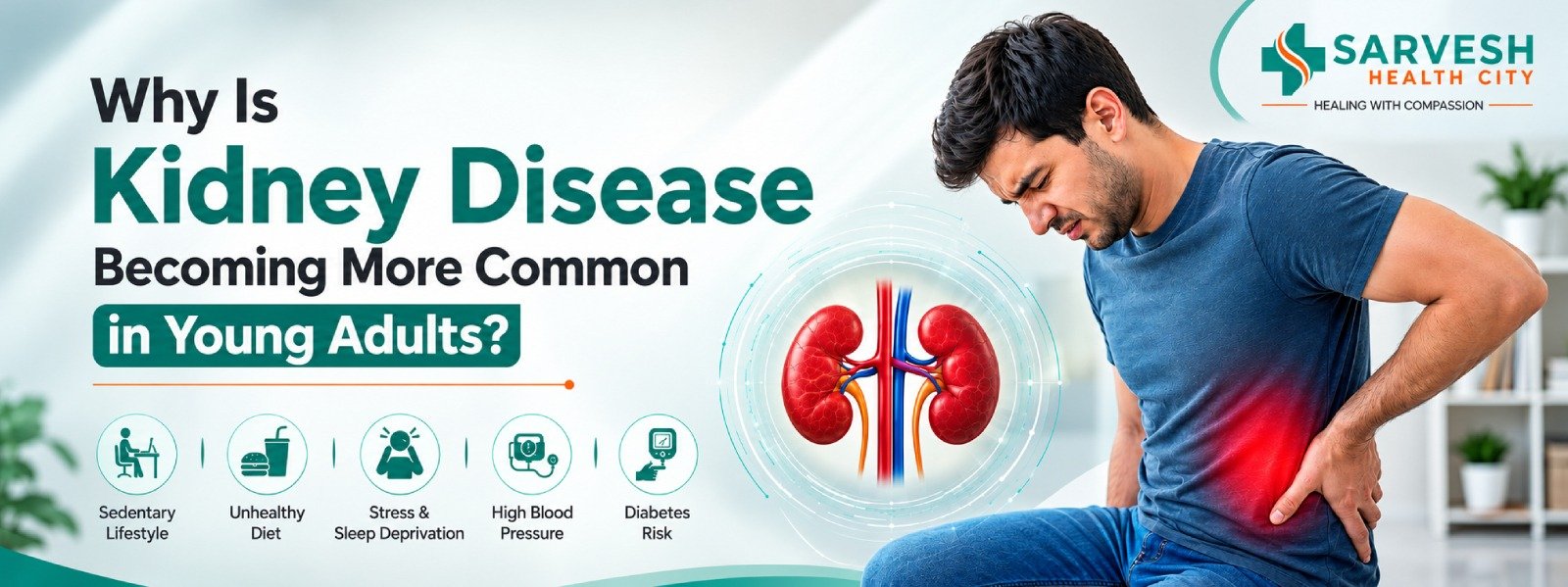
Kidney disease has been traditionally thought to be a problem of elders suffering from some chronic health issues. However, now people of all young ages who are in their 20s, 30s, and 40s, also suffer from kidney problems.
Rising cases of diabetes, high blood pressure, obesity, consumption of unhealthy food, leading a sedentary lifestyle, and medication use over the years are linked to changes in kidney health trends.
Sarvesh Health City specialises in early detection of kidney problems and helps the patient in preserving their renal function to prevent deterioration. If you are searching for the best nephrology specialist in Hisar, for kidney screening and expert advice, our nephrology expertise can help you stop the deterioration of kidney disease.
Quick Facts About Kidney Disease
- Major Risk Factors of Kidney Diseases:
Diabetes, high blood pressure, obesity, smoking, family history, and certain medications. - Early Warning of Kidney Diseases:
Kidney disease often causes few noticeable symptoms in its early stages. - Important Tests:
Blood creatinine/eGFR and urine albumin testing can help detect kidney problems early. - How to Prevent Kidney Disease?
Maintaining healthy blood pressure, blood sugar, diet, weight, and regular physical activity can lower kidney disease risk.
Why Is Kidney Disease Becoming More Common in Young Adults?
There is not only one, but multiple factors of modern life and health that might contribute to kidney diseases in young adults gradually.
1. An Increase in Diabetes
Type 2 diabetes is now diagnosed at very earlier stages and persistently high blood sugar may eventually damage the tiny blood vessels that helps in filteration inside the kidneys.
Gradually, the damage might result in protein being secreted into the urine and a drop in kidney functions. For diabetic young people or those with other metabolic risk factors, controlling blood sugar levels and having proper check-ups can be very crucial in keeping kidney damage from occurring.
2. High Blood Pressure
Hypertension is one of the leading factors for kidney damage. The constant high pressure from hypertension can gradually weaken the tiny blood vessels of the kidney making it difficult to clean up waste in the long run.
At the same time, kidney disease may also result in high blood pressure. This interaction between kidney disease and blood pressure can lead to situation where both get worst gradually.
Although hypertension does not show symptoms, one should check for high blood pressures carefully in young adults.
3. Unhealthy Eating Patterns
Eating processed food, packaged snacks, fast food, sugary drinks and high-sodium meals can result in health complications that are known to be kidney-risk related. Excess sodium may encourage fluid buildup and elevate blood pressure, which can further impose an extra burden on the kidneys. High sugar diets also causes obesity and insulin resistance.
Young adults doing high-protein diets should also limit drastic or unreasoned protein consumption, especially when they have an undiagnosed kidney condition.
4. Lazy Lifestyle and Obesity
Too much screen time means that the amount of physical movement you do per day is reduced to the minimum. This in addition to high-calorie consumption might lead to an overweight and overweight condition.
Obesity can result in insulin resistance, diabetes, hypertension, and an undue workload for the kidneys. Engaging in sport or workout regularly would help in lowering blood pressure and blood sugar levels and weight management; thus the kidneys won’t have to work as hard.
5. Regular Consumption of Pain Relief Drugs
Another overlooked risk is the regular consumption of over-the-counter painkillers.
Non-steroidal anti-inflammatory drugs (NSAIDs) can effect blood supply to the kidneys and causes damage to them. Taking them occasionally is probably alright, however, regularly taking or prolonging their use could pose a threat of kidney injury, particularly among individuals who are dehydrated or have already suffered kidney problems.
When pain persists it should not be an excuse for painkiller overuse, they should rather consult healthcare professionals who may treat it, but also advise on other ways of pain management.
6. Smoking and Other Lifestyle Factors
Smoking is quite injurious to the blood vessels and, hence, raises the likelihood of developing chronic heart and blood vessels diseases. In addition, such diseases could negatively affect the kidneys. Over-drinking alcoholic drinks possibly results in dehydration, high blood pressure, and being under metabolic stress, which may be conducive for many other kidney problems.
Lack of proper sleep and constant or long-term stress might encourage unhealthy eating, not getting enough physical activity, and making it harder to manage diabetes and hypertension.
What Are the Early Warning Signs?
The challenge is that damage by early kidney disease can leave you with only very few symptoms that can be hard to notice and may show up likely as:
- The foaminess of the urine which could reflect the presence of too much protein in it.
- You notice swelling especially around your eyes, your feet or your ankles, which could be due to fluid retention.
- The need to pee more frequently or get up to go in the middle of the night.
- A continuous feeling of tiredness and weakness also explains declining kidney function.
- High blood pressure that’s really hard to control.
- Vomiting or a drop in meal quantity in advanced diseases stages.
These symptoms could also have several other reasons therefore these are not enough to say your kidney health is declining. The situation demands professional diagnosis when symptoms come from nowhere or keep reappearing.
How Can Young Adults Protect Their Kidney Health?
Fortunately, you can work on the common causes of kidney disease with easy and steady changes in daily life.
- Maintain the level of blood pressure and blood sugar at normal level, over time they won’t harm your kidneys.
- Consume a healthy balanced diet: Eat more leafy vegetables, fruits, wholesome grains and legumes, and have moderate quantities of protein. But limit high salt, excessive sugar, and deep-fried, ultra-processed, unhealthy foods.
- Keep doing physical exercises: A regular fitness plan can really contribute to the maintenance of a good health, low blood pressure, and improved resistance to insulin.
- Visit your doctor for testings routinely: If you have diabetes, high blood pressure, are overweight, or there was kidney disease family history, visit your doctor to check kidney function on a regular basis.
Final Thoughts
An increase in kidney disease cases among young adults is a concerning situation where kidneys get damaged due to lack of healthy lifestyle habits. Kidney damage could be due to diabetes, high blood pressure, obesity, eating an unhealthy diet, leading a sedentary existence, or misuse of medicines.
Due to its hidden nature during the first stage of kidney disease, it is really difficult to detect without specific tests and blood work. Hence, it is really crucial to have regular screening and prevent disease development, especially for kidney related issues.
Sarvesh Health City, best nephrology hospital in Hisar helps patients who have kidney-related problems, and provides them specialized care, and customized support at different levels.
Frequently Asked Questions
Q1. Can young adults develop kidney disease?
Ans. Yes. Young adults can suffer kidney disease due to diabetes, high blood pressure, obesity, hereditary conditions, autoimmune diseases, infections, or certain medications.
Q2. Can kidney disease be cured?
Ans. In some cases, causes of kidney issues can be managed especially when problem is caught early on. However, kidney scarring results in loss of kidney function can not be reversed.
Q3. How do I know about my kidney health?
Ans. The most common tests to identify existing kidney problems are serum creatine with eGFR (estimated glomerular filtration rate) and urine albumin-to-creatine ration (UACR).
Q4. Is foamy urine always due to kidney disease?
Ans. No. sometimes small amounts of bubbles in the urine can be due to harmless reasons as well. But upon seeing persistent foamy urine, needs expert evaluation as it could mean protein in urine.
Q5. Do protein supplements cause problems for kidneys?
Ans. Protein supplements are not always bad as long as you are taking the right amount and your kidney condition is normal. It is only a problem when you take excessive protein which can worsen existing kidney disease.
Media Enquiries
- Sarvesh Health City
- Sarvesh Health City Site No. 1, Sector 14, Hisar – 125001 (Haryana)
- +91 6901 626262
- +91 6901 636363
Social Media
Healthcare at your fingertips



Nephrologist & Kidney Transplant
Sarvesh Health City offers expert care for kidney health with advanced nephrology services in Hisar.