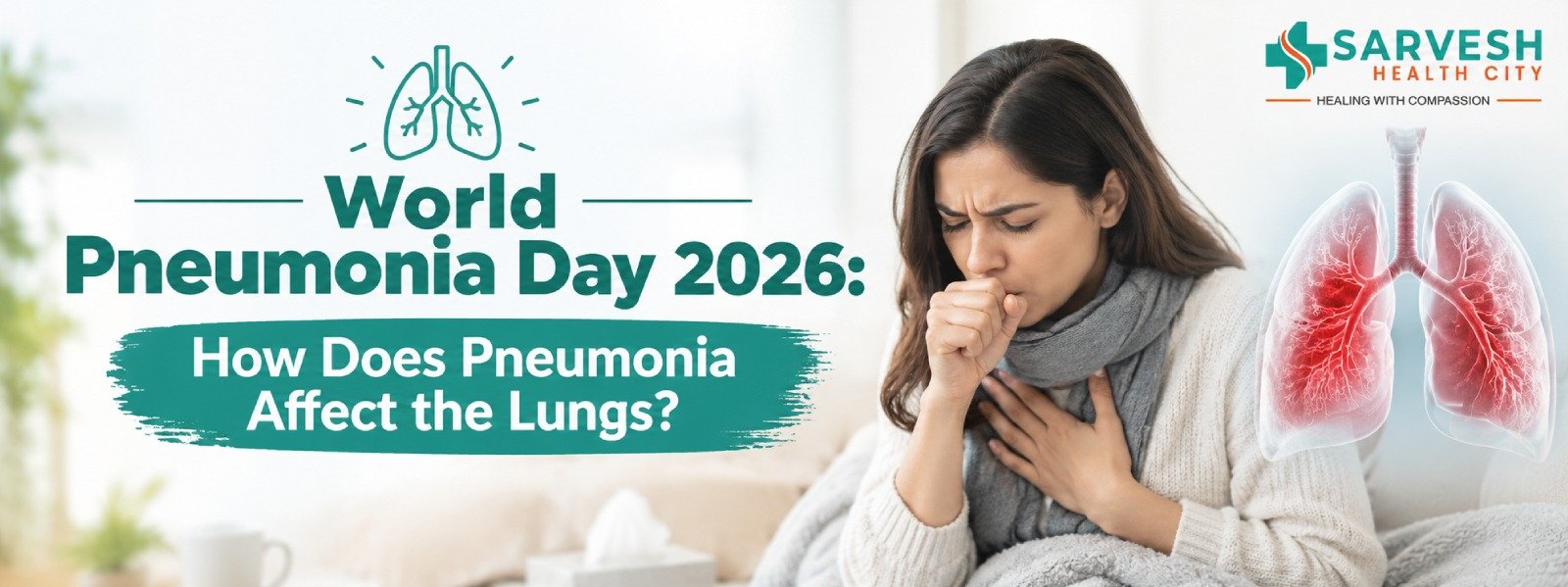
World Pneumonia Day 2026 is an opportunity to raise public awareness about pneumonia, a lung infection that causes inflammation in the lungs and can make breathing difficult. It can affect people of all ages but is particularly dangerous for young children, older adults, and individuals with weakened immune systems. Understanding its symptoms and seeking timely medical attention are essential for preventing complications.
Pneumonia is an infection that causes inflammation in the air sacs of one or both lungs. This inflammation can cause the air sacs (alveoli) to fill with fluid or pus, making it difficult for oxygen to enter the bloodstream. Sarvesh Health City aims to raise awareness about pneumonia symptoms, prevention, and the importance of timely medical care. For expert care and advanced treatment, consult the Best Pulmonology Treatment Hospital In Hisar.
What Is Pneumonia?
Pneumonia is a lung infection caused by bacteria, viruses, or, in some cases, fungi. Normally, the alveoli absorb oxygen from the air we breathe and transfer it into the bloodstream while helping remove carbon dioxide from the body. During pneumonia, the immune system responds to the infection, causing inflammation in the lungs. Fluid and inflammatory material may accumulate in the alveoli, reducing the efficiency of oxygen exchange.
Pneumonia can range from mild to severe. While some people recover with treatment and care at home, others may require hospital admission, oxygen therapy, or intensive medical support. The severity depends on the cause of infection, the patient’s age, overall health, and the extent of lung involvement.
How Does Pneumonia Affect the Lungs?
1. Inflammation Occurs
Microorganisms that cause pneumonia enter the lower respiratory tract and trigger an immune response. This response leads to inflammation and swelling in the lungs, which can interfere with normal breathing.
2. Air sacs contain fluid
Under normal conditions, oxygen passes from the alveoli into nearby blood vessels. However, during pneumonia, these air sacs may fill with fluid and inflammatory material, making oxygen exchange less efficient. If a large portion of the lungs is affected, oxygen levels in the blood may decrease.
3. Difficulty in Breathing
When oxygen exchange becomes less efficient, the body may increase its breathing rate to compensate. Patients may experience breathlessness while walking, climbing stairs, or performing everyday activities. In severe cases, breathing difficulties can also occur while resting.
4. Coughing and Low Oxygen
Coughing helps the body clear mucus and secretions from the respiratory tract. The mucus may appear yellow or green, but its colour alone cannot determine whether the infection is bacterial or viral. When oxygen levels fall significantly, the heart and other organs may not receive enough oxygen. Some patients may require oxygen therapy or advanced respiratory support.
Severe breathlessness, blue or grey lips, confusion, or reduced alertness are emergency warning signs that require immediate medical attention.
What are the symptoms of pneumonia?
Pneumonia symptoms may develop suddenly or gradually over several days.
The common symptoms include:
- Persistent cough, with or without mucus.
- Fever, chills, and sweating.
- Shortness of breath during physical activity or even at rest.
- Chest pain that becomes worse while breathing deeply or coughing.
- Fatigue, weakness, and muscle pain.
- Rapid breathing and reduced appetite.
Older adults may not always develop a fever. Instead, they may experience confusion, extreme weakness, or sudden changes in their usual behaviour. In infants, warning signs may include rapid breathing, difficulty feeding, unusual weakness, and chest indrawing while breathing.
If a person experiences severe breathing difficulties, blue or grey discolouration of the lips or skin, confusion, or excessive drowsiness, seek immediate medical help.
What Are the Treatment Options?
Pneumonia treatment depends on the underlying cause, severity of infection, patient’s age, and the presence of other medical conditions.
The treatment options may include:
Antibiotics: Antibiotics are prescribed for bacterial pneumonia. Patients should complete the prescribed course as advised by their doctor. Avoid using leftover antibiotics or starting treatment without medical consultation.
Supportive care: Adequate rest, sufficient fluid intake, and appropriate symptom management can support recovery. Certain antiviral medicines may be prescribed for specific viral infections.
Oxygen therapy: Patients with low blood oxygen levels may require supplemental oxygen to maintain adequate oxygen supply to the body.
Hospital care: Hospital admission may be necessary for patients experiencing dehydration, confusion, low oxygen levels, unstable blood pressure, or other complications. Seriously ill patients may require intensive care and mechanical ventilation.
Antibiotics are not effective against viral pneumonia. Therefore, proper diagnosis is important to determine the appropriate treatment. Consult a healthcare professional if symptoms worsen or fail to improve.
How Can Pneumonia Be Prevented?
Although pneumonia cannot always be prevented, certain measures can help reduce the risk of developing the infection and its complications:
- Get recommended vaccinations: Stay up to date with recommended vaccinations based on your age, medical history, and risk factors. Vaccines against pneumococcal disease, influenza, and other respiratory infections can help reduce the risk of certain types of pneumonia.
- Maintain good hygiene: Wash your hands regularly with soap and water, particularly before eating and after coughing or sneezing.
- Avoid smoking and secondhand smoke: Tobacco smoke damages the natural protective mechanisms of the respiratory tract and increases the risk of lung infections.
- Follow a balanced diet: Eat a nutritious and well-balanced diet to support your immune system and overall health.
- Manage chronic conditions: Follow appropriate treatment plans for conditions such as asthma, COPD, diabetes, and heart disease to reduce the risk of complications.
- Practise respiratory hygiene: Cover your mouth and nose while coughing or sneezing, dispose of used tissues properly, and wash your hands regularly.
- Improve indoor ventilation: Maintain proper ventilation in indoor spaces and avoid close contact with people who have respiratory infections whenever possible.
- Seek medical advice early: Do not ignore persistent fever, worsening cough, chest pain, or new breathing difficulties. Early medical assessment can help identify infections and prevent complications.
Respiratory Care at Sarvesh Health City
Symptoms such as persistent coughing, fever, chest pain, and difficulty breathing can occur due to several respiratory conditions. Therefore, proper medical evaluation is essential to identify the underlying cause and determine the appropriate treatment.
People looking for the Best Pulmonary Treatment Hospital in Hisar should consider access to qualified medical professionals, diagnostic facilities, and appropriate respiratory care services, including oxygen therapy when required.
Sarvesh Health City, focuses on providing healthcare services for patients with different medical needs. Individuals experiencing persistent respiratory symptoms or living with chronic lung conditions should consult a healthcare professional for timely evaluation and appropriate treatment.
Conclusion
World Pneumonia Day 2026 highlights the importance of understanding pneumonia and its impact on lung function. Inflammation and fluid accumulation in the air sacs can reduce oxygen exchange and cause symptoms such as coughing, fever, chest pain, and breathing difficulties.
Recognising the warning signs early, following recommended vaccination guidelines, maintaining good hygiene, avoiding tobacco smoke, and seeking timely medical advice can help reduce the risk of serious complications. Extra attention is important for young children, older adults, and individuals with chronic medical conditions or weakened immune systems.
Sarvesh Health City encourages people to take respiratory symptoms seriously and seek professional medical advice whenever necessary.
Frequently Asked Questions
Q1. How does pneumonia affect the lungs?
Ans. Pneumonia causes inflammation in the lungs, which can lead to fluid or pus accumulating in the air sacs. This reduces the efficiency of oxygen transfer into the bloodstream and can make breathing difficult.
Q2. What are the earliest symptoms of pneumonia?
Ans. Early symptoms may include coughing, fever, chills, tiredness, chest pain, and shortness of breath. Older adults may experience confusion or unusual weakness instead of typical symptoms.
Q3. Can pneumonia be treated completely?
Ans. Yes, most people recover from pneumonia with appropriate treatment. Recovery depends on the cause and severity of the infection, the patient’s age, and overall health. However, coughing and fatigue may continue for some time after the infection improves.
Q4. When does pneumonia become dangerous?
Ans. Pneumonia can become serious when it causes severe breathing difficulties, low blood oxygen levels, confusion, or rapid deterioration in health. These symptoms require immediate medical attention.
Media Enquiries
- Sarvesh Health City
- Sarvesh Health City Site No. 1, Sector 14, Hisar – 125001 (Haryana)
- +91 6901 626262
- +91 6901 636363
Social Media
Healthcare at your fingertips



PULMONOLOGIST
Discover why Dr. Nidhi Mahajan at Sarvesh Health City is regarded as Hisar’s leading pulmonologist, offering expert care, advanced treatments, and trusted results.