What Are Sinuses & What Is Chronic Sinusitis?
Sinuses are air-filled cavities in the locations above and around the nose, eyes, cheeks and the forehead. These spaces serve an important function of warming, filtering and humidifying the air that we breath, on the other hand they also trap dust, allergens, and microbes. Normally, sinuses secrete a thin layer of mucus that flows easily through the nasal passages.
Sinusitis is a condition when the lining of these air pockets gets inflamed, resulting in more mucus production and drainage blockage. This may be caused by infections, allergies, nasal polyps, or structural problems like a deviated septum. If this inflammation lasts for more than 12 weeks even after treatment, it is considered chronic sinusitis.
While acute sinusitis lasts a short time, chronic sinusitis is more likely to stay and also come back frequently. Gradually, it can affect breathing, sleeping, and general health, so it is very important to recognize and get treatment for it early.
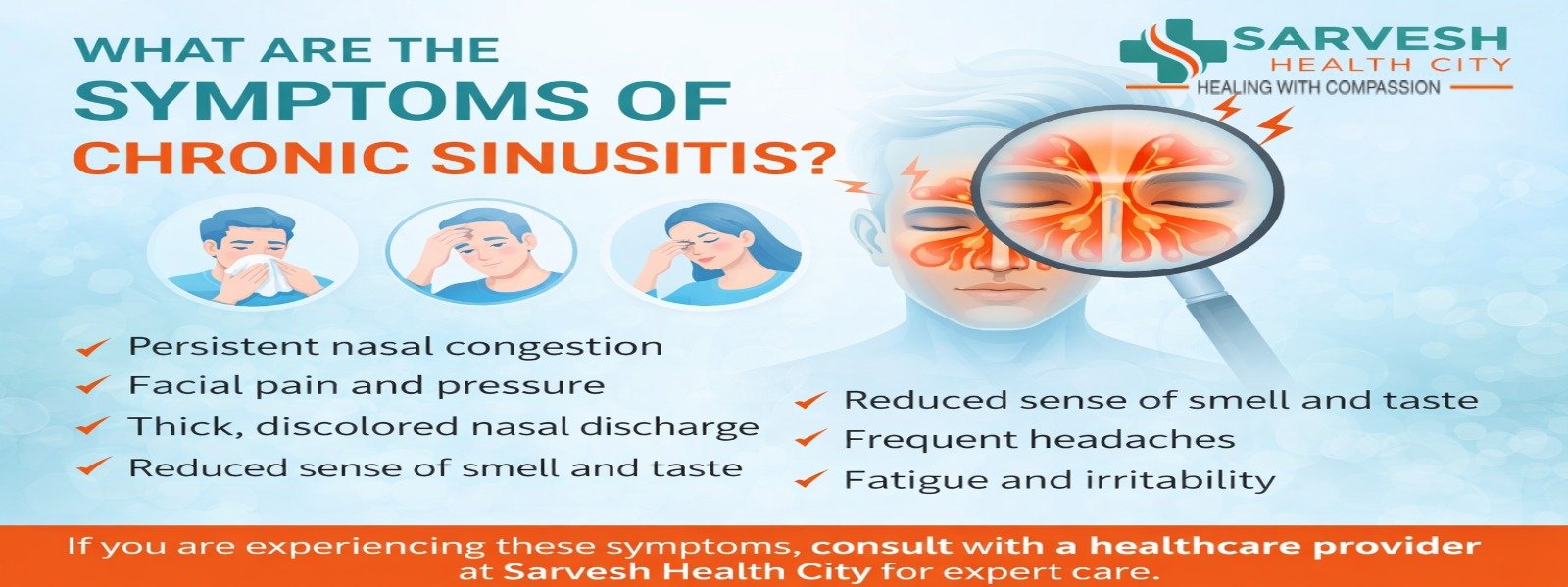
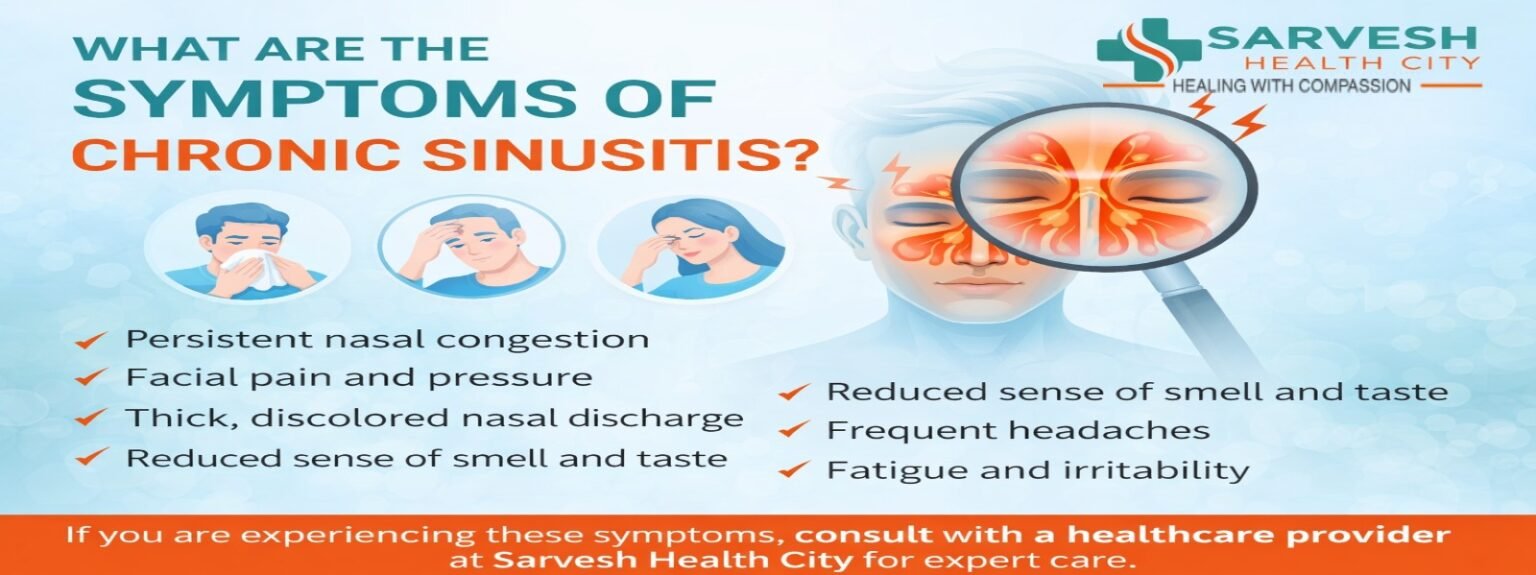
Primary & Secondary Symptoms of Chronic Sinusitis
Long-term inflammation in chronic sinusitis usually causes several symptoms that overlap and impair breathing, facial comfort, and general well-being. Without prompt medical treatment, these problems may get worse.
1. Nasal congestion
One of the most frequent symptoms is a continuous sensation of a blocked or stuffy nose. This problem is caused by the blocking of the nasal passage, which leads to difficulty in breathing. It may be most noticeable at night and during exercise.
2. Thick nasal discharge
The mucus produced may be colored yellow or green and could become quite thick and sticky. It is capable of coming out of the nose or going down the throat, which is very unpleasant.
3. Facial pain/pressure
Normally, pain or pressure is experienced in the regions around the eyes, cheeks, forehead, or nose. Moving the head up and down or suddenly can even make the pain worse.
4. Postnasal drip
The surplus mucus that is produced may travel down the throat which causes irritation, frequent throat clearing, and the constant sensation of having something stuck in the throat.
5. Reduced smell/taste
If the nasal passages are inflamed, it can disrupt the sense of smell and taste. Food might taste bland, and the ability to identify odors can be greatly diminished.
6. Headache
One of the symptoms of sinus pressure is a headache. It is usually felt in the forehead or around the eyes. Such headaches can become more severe towards the end of the day or with body movements.
7. Ear pain/pressure
When sinuses are blocked, they can exert pressure on the ears, causing discomfort or a sensation of stuffiness. Hearing might be temporarily affected in some cases.
8. Toothache
The pain in the upper teeth caused by the inflamed sinuses is often mistaken for dental problems. This is because the upper jaw region is the most common area affected by such discomfort.
9. Cough
Among the symptoms of postnasal drip is a cough. The cough usually becomes worse at night and there can even be one or two episodes of cough right after a person has fallen asleep.
10. Sore throat
One cause of a sore throat is postnasal drip. When the mucous membranes are irritated this can lead to the inflammation of the tissues of the throat causing soreness aside from being dry.
11. Bad breath
Due to postnatal drip, other problem that also arises is bad breath. The mucous drips into the throat and therefore creates a breeding ground for bacteria and hence causing the bad breath which can occur even if oral hygiene is maintained.
12. Fatigue
Persistent inflammation as well as interrupted sleep because of a stuffy nose are the main reasons for exhaustion. Some people always feel that they lack energy and their daily productivity is decreased.
Symptoms You Should Not Ignore
Ignoring these warning signs could lead to further complications.In extremely uncommon situations, sinus infections that are not treated can affect the eyes or brain, thus raising the possibility of very serious problems. Early check-up is a measure to prevent such results and to secure quicker healing. Signs that signal chronic sinusitis might be getting worse and should be taken as a reason for immediate medical attention
- Symptoms extending more than 12 weeks even with treatment
- Extreme pain in the face/ eye area or swelling
- Persistent nasal blockage causing difficulty in breathing through the nose
- Thick and continuous nasal discharge without any relief
- Visual disturbances including double vision or loss of sharpness
- Discomfort so intense that it interferes with one’s sleep and daily activities
Final Thoughts
Getting a consultation with an ENT doctor is a must if your sinus symptoms do not improve and become worse with time. Continuing nasal congestion, facial pressure, and discharge after 12 weeks may be signs of chronic sinusitis that needs medical intervention. Do not ignore recurrent sinus infections, loss of smell, or breathing difficulties.
Chronic sinusitis can be managed effectively with medical help and symptoms can be relieved. In fact, treatment can help patients regain comfort and return to normal life. We recommend consulting expert professionals only at best ENT hospital in Hisar, and at Sarvesh Health City for a correct diagnosis and the best treatment