- Specialities
- Center of Excellence
- Specialitites
- ANAESTHESIA & INTENSIVIST
- BREAST SURGERY
- CRITICAL CARE
- DERMATOLOGY
- DIALYSIS
- DENTISTRY & MAXILLOFACIAL SURGERY
- ENT
- INTERNAL MEDICINE
- INTERVENTIONAL RADIOLOGY
- LAPAROSCOPIC & GENERAL SURGERY
- OBSTETRICS & GYNAECOLOGY & COSMETOLOGY
- OPHTHALMOLOGY (EYE CARE)
- PEDIATRIC CARE & NEONATOLOGY
- PHYSIOTHERAPY & REHABILITATION
- Services
- AMBULANCE SERVICES (24/7)
- BONE MARROW TRANSPLANT
- BLOOD CENTER (OPEN 24/7)
- EMERGENCY SERVICES (AVAILABLE 24/7)
- LAB AND PATHOLOGY (OPEN 24/7)
- NEONATAL INTENSIVE CARE UNIT (NICU) & PEDIATRIC INTENSIVE CARE UNIT (PICU)
- NUTRITION & DIETETICS
- PHYSIOTHERAPY & REHABILITATION SERVICES
- PREVENTIVE HEALTH CHECKUPS
- PHARMACY (OPEN 24/7)
- PET/CT SCAN
- RADIOLOGY & IMAGING SERVICES
- Blogs
- Health Library
- Our Empanelment
- About Sarvesh
- Specialities
- Center of Excellence
- Specialitites
- ANAESTHESIA & INTENSIVIST
- BREAST SURGERY
- CRITICAL CARE
- DERMATOLOGY
- DIALYSIS
- DENTISTRY & MAXILLOFACIAL SURGERY
- ENT
- INTERNAL MEDICINE
- INTERVENTIONAL RADIOLOGY
- LAPAROSCOPIC & GENERAL SURGERY
- OBSTETRICS & GYNAECOLOGY & COSMETOLOGY
- OPHTHALMOLOGY (EYE CARE)
- PEDIATRIC CARE & NEONATOLOGY
- PHYSIOTHERAPY & REHABILITATION
- Services
- AMBULANCE SERVICES (24/7)
- BONE MARROW TRANSPLANT
- BLOOD CENTER (OPEN 24/7)
- EMERGENCY SERVICES (AVAILABLE 24/7)
- LAB AND PATHOLOGY (OPEN 24/7)
- NEONATAL INTENSIVE CARE UNIT (NICU) & PEDIATRIC INTENSIVE CARE UNIT (PICU)
- NUTRITION & DIETETICS
- PHYSIOTHERAPY & REHABILITATION SERVICES
- PREVENTIVE HEALTH CHECKUPS
- PHARMACY (OPEN 24/7)
- PET/CT SCAN
- RADIOLOGY & IMAGING SERVICES
- Blogs
- Health Library
- Our Empanelment
- About Sarvesh
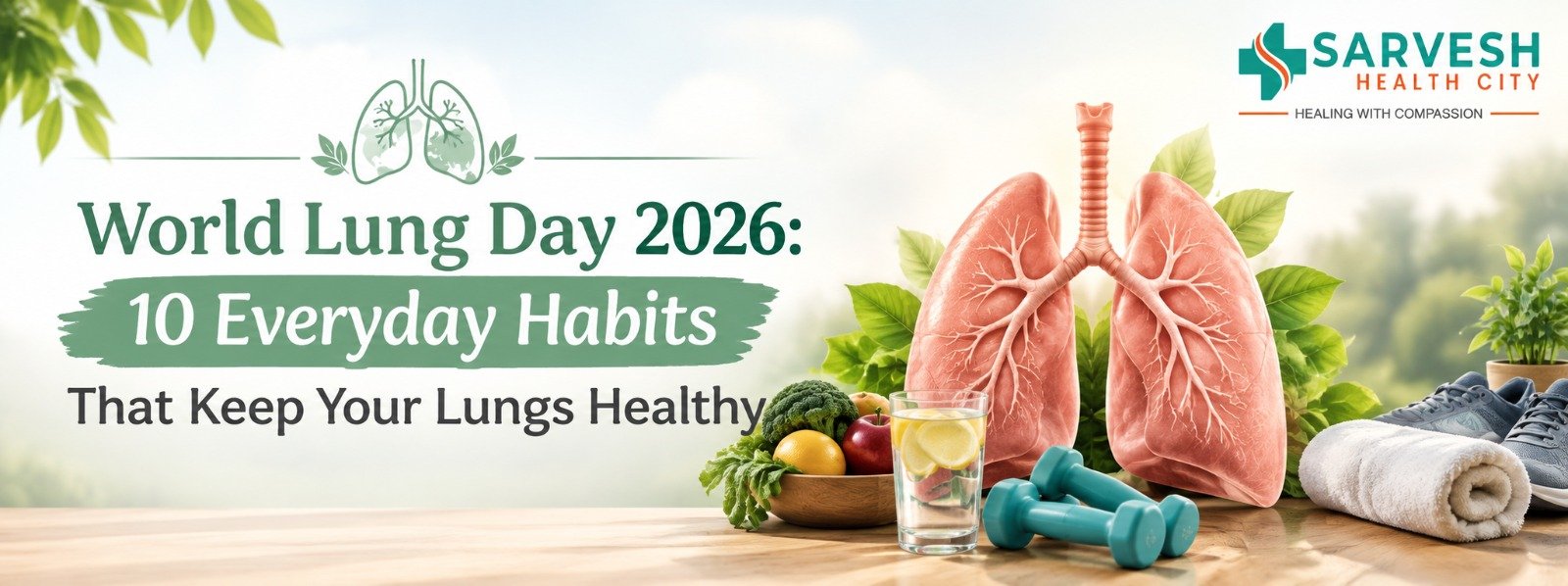
Our lungs are always active and provide oxygen to our body while expelling carbon dioxide from our body. Each breath that we breathe requires healthy lungs, but we never care about the condition of our lungs unless there are some breathing problems. World Lung Day 2026 will help you realize the significance of healthy lungs and the measures which can help you keep your lungs healthy through small activities in daily life.
This is particularly necessary for children, elderly patients, and people suffering from asthma and other types of respiratory diseases. Sarvesh Health City helps families pay attention to respiratory health and consult doctors in case of any breathing problems.
What Is World Lung Day 2026?
World Lung Day is celebrated every year with the aim of promoting good health of the lungs and respiratory diseases. This day focuses on the need for preventing respiratory problems and recognizing the symptoms at an early stage and receiving proper respiratory care.
There are many things that affect the health of lungs, which include air quality, smoking, infections, exercise, allergic reactions and various other health issues. Healthy practices during childhood years could promote good respiratory health in the future.
10 Everyday Habits That Keep Your Lungs Healthy
1. Avoid Smoking and Tobacco Products
Smoking happens to be one of the most serious threats to lung health because cigarettes have a number of dangerous substances in them.Regular smoking increases risk of chronic respiratory diseases and is strongly associated to lung cancer .
Smoking is bad for your lungs no matter your age. Other tobacco products that can expose the respiratory system to harmful substances also need to be given up.
2. Stay Away from Secondhand Smoke
You don’t need to smoke to be exposed to tobacco smoke. Smoking cigarettes, cigars or other tobacco products means that you are inhaling harmful chemicals.
Make your house, car, and workplace smoke free. If you have smokers around you, encourage them to smoke in the open air and not in enclosed spaces. Secondhand smoke is especially harmful to children, older adults and people who already have breathing problems, and they need to be protected from exposure.
3. Keep Your Home and Work Place Free of Dust
Dust, mold, chemicals and other airborne irritants can affect the respiratory system. Regular cleaning of the home can help minimize the buildup of dust and other particles.
Pay special attention to bedding, carpets, curtains, air-conditioning filters and any places where moisture can encourage mold to grow. If you do dusty work or work with chemicals or other respiratory irritants, wear the proper protective equipment as recommended by your workplace.
4. Guard Yourself Against Air Pollution
Fine particles and other substances in outdoor air pollution can irritate the lungs. Limit time outside, particularly in heavy traffic or in visible pollution on days when the air quality is poor.
And when the outdoor air quality is good, good ventilation of indoor spaces can help. If you have a respiratory condition, you should follow your doctor’s advice on precautions to take during times of poor air quality.
5. Be Physically Active
Exercise is good for your overall health and can help increase your cardiovascular fitness and respiratory endurance. Walking, cycling, swimming and other suitable activities can help you to breathe more deeply and keep your body active.
You don’t need to do intense workouts. A regular program of moderate exercise may be a realistic way to help you maintain good health. If you have a respiratory or heart condition, see a health care professional before beginning a new exercise program.
6. Practice Good Hand Hygiene
Infection of the respiratory system occurs through contaminated droplets and surfaces. Practice of good hygiene will reduce the risk of infection of the respiratory system.
It is advisable to wash your hands using soap and water before eating and after visiting public places. Do not touch your face with dirty hands, as it increases the chances of infection entering the body. Stay away from people infected with respiratory illness.
7. Keep Vaccinations Up to Date
However, there are infections that may develop into more dangerous complications especially among the elderly and patients suffering from other diseases. Taking the shots recommended can prevent such infections.
Speak to your health care practitioner about vaccines that may suit you depending on your age, health condition, occupation and risk factors. Recommendations for vaccines may vary from person to person.
8. Keep a Healthy Weight and Eat a Healthy Diet
A well-rounded diet can help provide the nutrients the immune system and body need to work properly. Eat different types of vegetables, fruits, whole grains, legumes, proteins, and other nutritious food products.
It is good to maintain your body weight as excess weight causes breathing problems for some individuals.
9. Know the Warning Signs
Symptoms include persistent cough, shortness of breath without an explanation, chest pain, wheezing, coughing of blood, or repeated respiratory infections.
Ongoing symptoms are not always a sign of serious disease but should not be ignored.Early medical evaluation could help identify the reason behind the disease and initiate proper treatment.
It is even more important for people who smoke regularly or are exposed to dust and chemicals in their workplace or have a family history of certain lung diseases.
10. Get regular lung health check-ups when necessary
It would be wise to undergo an examination by a health specialist if you experience any signs or risk factors for respiratory diseases. Based on your signs and medical background, your physician will suggest some examinations, including breathing test and imaging.
Those who are at increased risk of developing lung cancer might require personalized screenings with their physician.Screening is not for everyone and it is important to discuss your individual risk factors with a qualified doctor.
When to Visit a Pulmonologist?
You must visit a doctor when you have symptoms like:
- Persistent or recurring cough
- Shortness of breath
- Wheezing
- Tightness in the chest
- Blood in sputum
- Frequent respiratory infections
- Difficulty breathing while performing daily tasks
- Problems breathing while sleeping
Depending on the symptoms, the doctor might advise undergoing certain diagnostic tests including pulmonary function tests, chest imaging, etc.
Take a Step Toward Better Lung Health This World Lung Day 2026
World Lung Day 2026 makes one realize that it’s not just the medical treatment but everyday activities which determine our lung health. Avoiding tobacco smoke, being active, avoiding air pollution, maintaining good hygiene practices, having balanced food intake, and watching out for symptoms are some ways that will make your lungs healthier.
When it comes to professional advice or respiratory treatments, Sarvesh Health City offers its full spectrum of pulmonology treatments for all kinds of breathing and lung related disorders. When it comes to a Best Pulmonology Treatment Hospital in Hisar, visit us without any second thoughts.
Conclusion
World Lung Day in 2026, spare a thought to how you care for your lungs. Your lungs have an important part in your body, right from being lively to sleeping well and gaining more energy.
In case you have any symptoms that concern you, refrain from diagnosing yourself. Consultation with a pulmonology expert will be of great help.
Sarvesh Health City offers its patients healthcare services, including pulmonary services in Hisar.
Frequently Asked Questions (FAQs)
Q1. What is World Lung Day 2026?
Ans. World Lung Day 2026 provides an opportunity to learn about the issues related to the health of lungs and its wellbeing, significance of maintaining lung health, diseases, and methods of prevention.
Q2. What are the best routines for having healthy lungs?
Ans. It would be useful to stay away from smoking, to exercise, to minimize the inhalation of air pollution, to have good air quality indoors, to eat right, to practice hygiene and to get vaccinated.
Q3. Why is lung health important for overall health?
Ans. Healthy lungs provides energy, good physical performance, healthy heart, and efficient functioning of the other body parts. Care of the lungs will also lower the possibility of getting infections and chronic problems of the lungs.
Q4. How does regular exercise help keep the lungs healthy?
Ans. Exercise enhances the effectiveness of the heart and lungs. Exercises such as walking, cycling, swimming, and jogging can help in breathing, make the respiratory muscles strong, and increase endurance. Exercises are also one of the best ways to keep the correct body weight.
Media Enquiries
- Sarvesh Health City
- Sarvesh Health City Site No. 1, Sector 14, Hisar – 125001 (Haryana)
- +91 6901 626262
- +91 6901 636363
Social Media
Healthcare at your fingertips



PULMONOLOGIST
Discover why Dr. Nidhi Mahajan at Sarvesh Health City is regarded as Hisar’s leading pulmonologist, offering expert care, advanced treatments, and trusted results.